
The Gene Machine’s Independence
The Selfish GeneThis thread tracks the movement from passive genetic instructions to brains that make rapid decisions and can sometimes resist genetic imperatives.
increasing Bearing strength in each event
 decreasing
Bearing strength in each eventdecreasingBodies as Coordinated Colonies
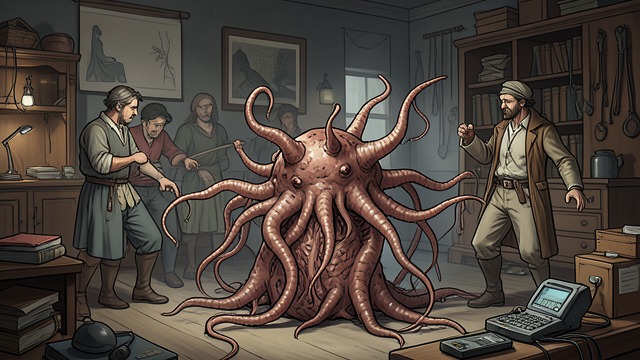
A Unified Vehicle
From cells to behavior
The author treats the body as a cooperative colony of genes whose effects have become integrated. A body moves as a coordinated whole, even though its inherited components have different histories.
A useful simplification
For discussing behavior, the individual can often be treated as an agent pursuing genetic success. The author labels this a language of convenience, not a claim that genes consciously direct each movement.
Nerves and Muscles
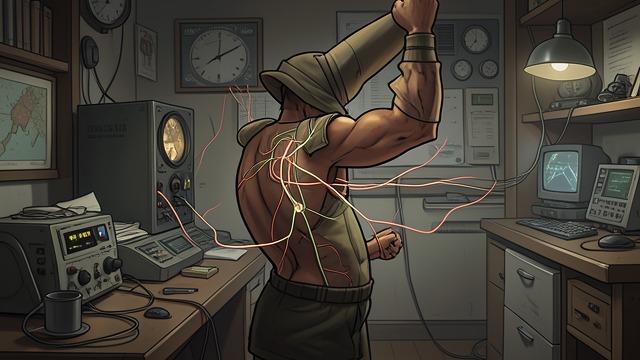
Fast Executive Systems
Movement becomes rapid
Muscles allow animals to act much faster than plants, while neurons carry signals between sensory systems, brains, and muscles. Nervous coordination makes active survival strategies possible.
A timing problem
Genes influence development, but their effects unfold too slowly to command every immediate action. The contrast between slow construction and rapid behavior creates the need for an executive system.
Feedback and Purpose
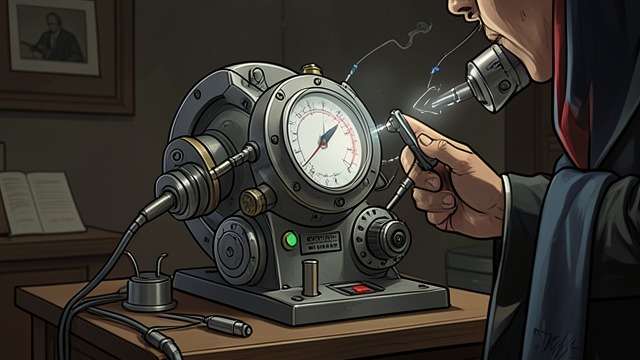
Acting Toward a Target
The engineering analogy
Negative feedback can make a machine behave as if it pursues a goal: it measures a difference between its current and desired state and responds to reduce that difference.
No conscious designer required
The example explains how purposive-looking behavior can arise mechanically. It allows the book to discuss animal aims without assuming that genes or every animal action involve conscious calculation.
Prediction and Simulation
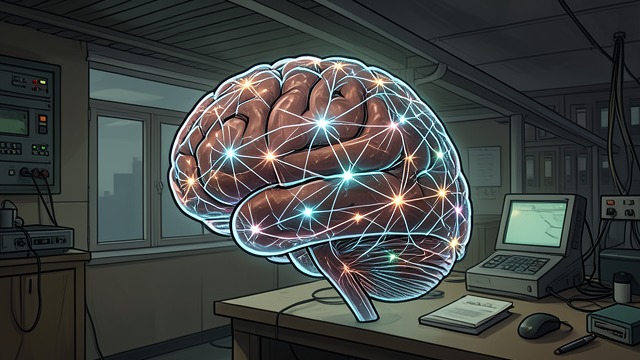
Brains Anticipate
Rules for uncertainty
Genes cannot foresee every danger, so they help build brains with general strategies, learning, and the ability to simulate possible outcomes. Decisions are gambles shaped by inherited and acquired information.
The limits of programming
Simulation can outperform lethal trial and error, but it also moves decision-making away from direct genetic control. The brain becomes an increasingly capable executive inside the survival machine.
A Capacity to Rebel
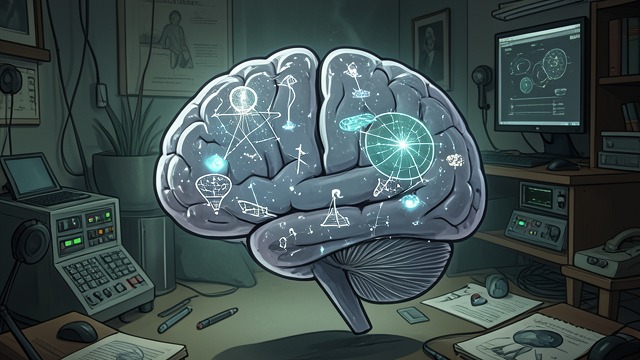
Beyond Genetic Commands
Executive independence
The human brain can model the future and make choices that do not maximize immediate reproduction. Conscious foresight creates a possible distance between inherited tendencies and present decisions.
The book’s opening hope
The author does not claim that humans have escaped biology. Instead, he presents the possibility of resisting genetic imperatives as an unusual human capacity, developed further in the concluding chapter.
At the opening of Chapter 4
Early in Chapter 4
During the discussion of purposeful behavior
Late in Chapter 4
At the end of Chapter 4
