Aslan
The Silver ChairAslan is the great Lion who calls Jill Pole and Eustace Scrubb from their own world into Narnia, entrusts them with finding the missing Prince Rilian, and gives them a set of signs by which to carry out the quest. His role reaches beyond issuing instructions: he brings the children into the story, warns them against mistaking appearance for truth, and finally receives them at the Mountain of Aslan, where Caspian X is restored to life. The journey tests whether they will remain faithful to what Aslan has shown them when he is no longer visibly present to guide them.
Identity and First Appearance
Aslan first appears to Jill as a huge, brightly coloured animal at the edge of the cliff. He is breathing steadily, and Jill sees a tiny dark speck floating away below; she suspects that Aslan’s breath is blowing it away. Only when she turns to look does she recognize the creature as a lion. That encounter establishes the extraordinary physical power of his breath, which will also carry Jill away from the cliff and into the next stage of her journey.
The Lion’s authority is established through a conversation in which Jill wonders whether there has been a mistake: she and Eustace, rather than being summoned, had asked to come. Aslan tells her that her call to him was possible because he had already been calling to her. His response makes their arrival part of a prior relationship and purpose, rather than a chance opening of a door. When Jill asks whether he is the Somebody she had tried to call, he confirms that he is and immediately gives her a task.
The Quest and Its Signs
Aslan charges Jill to search for an aged king’s only son, who was stolen many years earlier and is missing from Narnia. She must find the prince and bring him to his father’s house, or die in the attempt, or return to her own world. The task is therefore framed not as an optional adventure but as a duty with sharply stated possible endings.
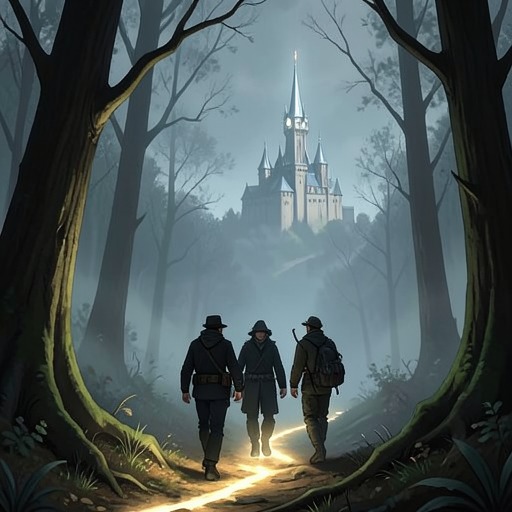
He provides four signs to direct the search. Eustace is to greet an old and dear friend as soon as he reaches Narnia; the children must travel north, out of Narnia, to the ruined city of the ancient giants; they must obey an inscription they will find there on a stone; and the lost prince will be identified as the first person they meet on their travels who asks them to do something in Aslan’s name. The signs are practical instructions, but they also require the travelers to recognize their meaning in circumstances that may not resemble what they expect.
When Jill initially says she understands, Aslan asks her to repeat the four signs in order. Before she leaves, he presses their importance again: she is to remember them in the morning, at night, and when she wakes during the night, and not to let strange events distract her from following them. He warns that he will not often speak to her so clearly once she is in Narnia. The mountain’s clear air corresponds to a clear mind; descending into Narnia brings thicker air that could confuse her. Most importantly, the signs will not look as she expects them to look. Their reliability depends on remembering them and attending to their meaning rather than trusting appearances. Aslan’s parting command is to believe the signs, because nothing else matters to the quest.
Guidance, Absence, and Recognition
Aslan’s instructions shape the children’s journey even when he is not present to explain each decision. At the ruined city, and later in the difficult circumstances of their travels, the signs must be held against distractions and misleading appearances. Their failures to attend to them have consequences: the children reach Harfang and eat meat from a Talking stag before understanding what the giants’ remarks mean. The discovery affects each traveler differently, but Puddleglum sees it as the result of neglecting the signs and fears that they have brought Aslan’s anger upon themselves. This moment makes the moral cost of distraction concrete: the quest’s guidance is not merely a route to the prince, but a discipline of attention to the world and its inhabitants.
In the underground chamber, the Lady of the Green Kirtle tries to make the travelers doubt the world beyond her kingdom. When Eustace identifies Aslan as the great Lion who called them from their world and sent them to find Rilian, she asks what a lion is. Puddleglum later concedes that the travelers might have dreamed or invented the sun, the world above, and Aslan. Yet he insists that even if those things were made up, they would be more important than the Witch’s bleak reality; he will stand on Aslan’s side whether or not Aslan is there to lead them. His declaration gives voice to the faith Aslan’s earlier instructions demand: loyalty persists even in the apparent absence of its object.
As the travelers prepare to leave the enchanted court, Rilian’s shield, previously black and without a device, has become bright as silver and bears the figure of the Lion, red as blood. Rilian interprets this as a sign that Aslan will be their good lord whether they live or die. He asks the others to kneel and kiss the likeness, then to shake hands as friends who may soon be parted. The sign does not promise safety; it gives the group a shared ground for facing danger. They descend together, armed, into the city.
The Return and Caspian’s Restoration
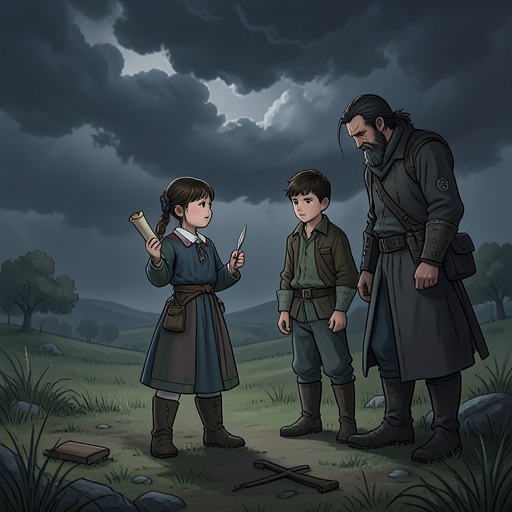
After the rescue and return to Narnia, Aslan appears to Jill and Eustace as they grieve for the dead King Caspian. His presence changes their attention: Jill’s thoughts turn from Caspian’s death to her own part in the quarrels and errors of the quest, but she cannot bring herself to speak an apology. Aslan draws the children toward him, touches their faces, and tells them not to think of those failures any longer. He says that they have done the work for which he sent them to Narnia. When Jill asks to go home, he answers that he has come to bring them home.
Aslan’s breath then removes the ship, the dead king, the castle, the snow, and the winter sky from the children’s view. They find themselves on the Mountain of Aslan beside a stream. There, on the streambed, lies Caspian’s body. The children weep, and Aslan weeps with them. His grief is not separate from his authority: he participates in their mourning before directing the next action.
At Aslan’s instruction, Eustace takes a thorn from a thicket and presses it into the Lion’s paw. A drop of blood falls into the stream over Caspian’s body; the funeral music stops, and Caspian is restored, transformed from an old king into a young man. He embraces Aslan, who returns his kisses. The scene links restoration to a painful act of obedience carried out at Aslan’s command, but it also presents Aslan as sharing in the cost: the blood comes from his own paw.
Homecoming and Narrative Significance
Caspian recognizes that he has died and wonders whether he has become a ghost. Aslan confirms that he has died, while Caspian explains that he is not a ghost in his own country. The children hope they may remain with Aslan, but he tells them they will come to stay when they meet him there again; for now, they must return to their own world. Aslan grants Caspian’s wish to see that world for five minutes of its time, explaining that the brief visit will allow him to set things right there. He already knows about Experiment House, the place to which Jill and Eustace are returning.
Across the narrative, Aslan’s guidance is both direct and mediated. He gives explicit instructions on the mountain, then warns Jill that he will speak less clearly in Narnia; later, a likeness of the Lion on Rilian’s shield offers assurance without removing the danger. The contrast makes remembrance and interpretation central to the quest. Aslan does not make every decision for the travelers or spare them from the consequences of their mistakes; instead, his signs give them a standard by which to recover their purpose. His final appearance gathers the journey’s strands together: he recognizes the children’s completed work, receives their grief, restores Caspian, and sends the children home rather than allowing the quest to become a permanent escape from their own world.