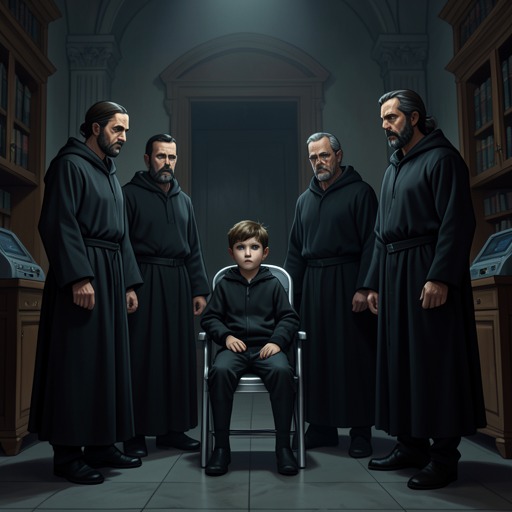
Ban on searching for Prince Rilian
The Silver ChairThe Ban on searching for Prince Rilian is a royal prohibition against seeking the missing prince, adopted after repeated expeditions ended in disappearance. It is meant to protect Narnia’s champions from further loss, yet its rigid enforcement threatens to keep Jill Pole and Eustace Scrubb from undertaking the very search entrusted to them by Aslan.
Origins and Purpose
More than thirty champions—including knights, centaurs, good giants, and others—had set out at different times to find the lost prince. None returned. In response, Caspian decided that he would no longer allow Narnia’s bravest people to be destroyed in the search for his son. The prohibition thus arises from accumulated failure and a protective decision: the danger is not abstract, but marked by the absence of every party that went before.
Enforcement During the King’s Absence
The owls explain that Trumpkin, serving as Lord Regent, would stop the children if he learned of their intention. He would keep them under lock and key rather than permit them to begin the search. Eustace is startled by the prospect and wonders whether Trumpkin has betrayed Caspian, whom he remembers as having trusted him absolutely. Glimfeather rejects that suspicion: Trumpkin is no traitor, but a faithful guardian of the rule.
The distinction matters. The prohibition is not presented as the product of disloyalty or hostility to the prince. Trumpkin is described as true as steel, but also old, deaf, and peppery; with Caspian away, he is expected to follow the existing rule rather than judge that this particular mission warrants an exception. The king’s absence turns a protective policy into an immediate obstacle for the children.
Conflict with the Search
Eustace argues that the regent would surely let them go if he knew who they were and who had sent them. Jill corrects the singular implication, insisting that Aslan sent both of them. Glimfeather agrees that Trumpkin might well have allowed the search had the king been present, but doubts that the regent will make an exception on his own authority. The children therefore face a conflict between the urgency and authority of their commission and the rule designed to prevent more searchers from being lost.
The ban also reveals why the children cannot simply rely on their connection to Caspian or expect the court to receive them at once: the king is away, and the person administering the kingdom is committed to a prohibition grounded in past catastrophe. The owls’ humorous imitation of Trumpkin—imagining him dismissing them as a mere chick he remembers from an egg—mixes apprehension with familiarity. The Narnians fear and tease the crusty regent, but do not dislike him. That social portrait reinforces the central tension: the obstruction comes from a respected and essentially loyal official, not a new enemy.