Ha Fang
The Silver ChairHarfang is the settlement of the Gentle Giants, a conspicuous destination in the travelers’ northern journey and the lure that diverts Jill Pole and Eustace Scrubb from the search for Prince Rilian. Its welcoming reputation promises beds, baths, and hot food, but its hospitality conceals a deadly custom: humans are served at the Autumn Feast. The place’s contrast between apparent gentleness and predation makes it a turning point in the travelers’ loss of direction and their struggle to survive.
Setting and Approach
Harfang is presented as a place of warmth and ease against the exposed country through which the travelers have been moving. The Lady of the Green Kirtle describes it as the home of giants unlike the fierce inhabitants of Ettinsmoor, praising its residents as mild, civil, prudent, and courteous. She suggests that the children might find news of City Ruinous there, but emphasizes the comfortable lodging, steaming baths, soft beds, bright hearths, and abundant meals. The offer meets the travelers at a moment when hardship has made comfort feel urgent.
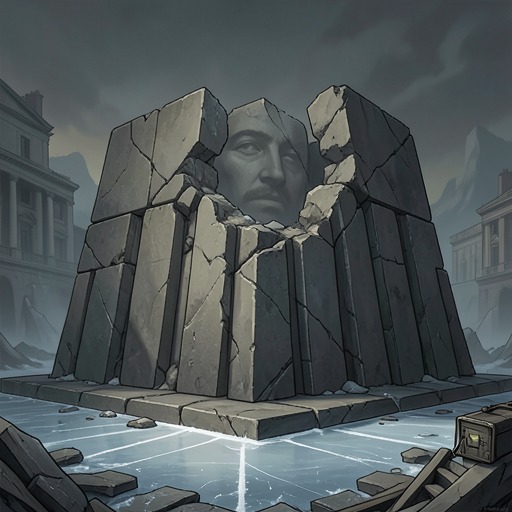
The route toward Harfang intensifies that longing. The travelers pass through narrow valleys exposed to a cruel north wind, with no firewood or sheltered hollows; the stony ground hurts their feet by day and leaves them sore at night. As they reach the mountains’ far side, they see a desolate, rocky plain, distant snow-capped peaks, and a low, flat-topped hill between them. The wind-swept tableland is crossed by banks and dykes, with deep drifts on their northern sides. Jill glimpses shapes resembling factory chimneys and a cliff unnaturally straight, but her thoughts are fixed on the baths and beds awaiting them at Harfang.
The final approach offers another carefully misleading impression. Harfang stands on a high crag and, despite its towers, looks more like a huge house than a castle. Low windows and small doors in the outer wall suggest that it is not built to withstand attack and make it seem friendly and easy to enter. The climb is exhausting: Jill nearly gives up, and Eustace and Puddleglum help her over the last hundred yards. Yet the gate is open and the portcullis raised, and Puddleglum—despite having opposed the visit—shows the greatest courage in approaching the giants’ door.
The Detour and Its Cost
Puddleglum objects to the journey because Aslan’s signs have said nothing about staying with giants, whatever their reputation. Jill and Eustace, worn down by wind, rain, meagre campfire meals, and hard ground, are determined to seek the promised comfort. Puddleglum eventually agrees, but secures their promise not to tell the giants that they come from Narnia or are seeking Prince Rilian unless he gives permission.
The detour changes more than the route. After hearing the Lady’s invitation, the children dwell on the prospect of indoor comforts and stop talking about Aslan or the lost prince. Jill also abandons her habit of repeating the signs each morning and night, first attributing the lapse to exhaustion and then forgetting the signs altogether. Instead of cheering them, the anticipated stay makes them more self-pitying, irritable, and quarrelsome with one another and with Puddleglum. Harfang’s pull is therefore felt before they arrive: the promised refuge has already displaced the purpose of the quest in their attention.
Hospitality and the Autumn Feast
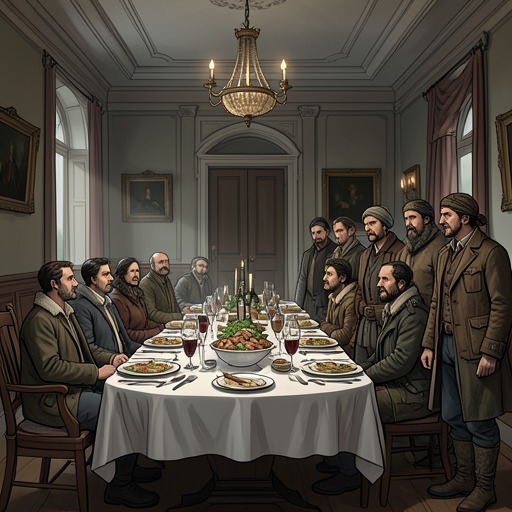
The truth about the giants’ hospitality emerges through a cookery book. While a giantess appears to be asleep, Jill notices an entry for mallard and then reads that man is valued as a delicacy and traditionally served at the Autumn Feast, between the fish and the joint. She cannot bear to finish the entry. When the giantess wakes coughing, Jill alerts the others; Eustace is still reading the instructions for cooking humans when Puddleglum points out the entry for Marsh-wiggle, whose flavour, the book claims, can be reduced by cooking.
The discovery reverses the meaning of Harfang’s welcome. The beds, baths, bright fires, and lavish meals that made the place seem hospitable belong to a household in which the travelers themselves are potential food. The giants’ reputation for gentleness is not a guarantee of safety; it conceals an established practice of eating humans at the Autumn Feast. Harfang thus turns the language of comfort into a threat and confirms the danger in the travelers’ decision to trust appearances.
Place in the Larger Journey
Harfang’s geographical and moral role is sharpened by the landscape around it. The journey there takes the travelers across exposed valleys and the storm-battered, level hill, where their limited sight and physical discomfort narrow their attention to immediate relief. Later, underground, the children huddle beside Puddleglum as a pale lantern illuminates only a small part of a dark subterranean sea. Puddleglum recognizes that, although their path has been badly diverted, they are now under City Ruinous and once again following the instructions. The contrast makes the Harfang detour legible as a loss of direction: the travelers return to the quest not through comfort, but by resuming the route its signs required.
The story’s later images of destruction also oppose Harfang’s seemingly secure domesticity. In the underground city, the Witch’s death is followed by fire, rising water, and ships driving into the streets; the flood spreads rapidly through the low ground. The travelers escape on horseback, crossing water that is still only a foot or two deep but runs so fiercely that swimming would have put the horses in danger. Against such exposed landscapes and unstable refuge, Harfang remains the journey’s most pointed warning: a welcoming threshold may conceal the peril of abandoning the purpose that brought travelers there.