Lady of the Green Kirtle
The Silver ChairThe Lady of the Green Kirtle is the ruler of Underland, a sorceress whose cultivated gentleness conceals her control of Prince Rilian and a scheme to invade the Overworld. Her role turns on the contrast between her welcome and her purpose: first she appears as a beautiful, helpful stranger; later, she denies the reality of Narnia and Aslan; finally, she is revealed as the serpent Rilian had pursued years before. Her death ends her magic and precipitates the collapse of her kingdom.
Identity and Rule
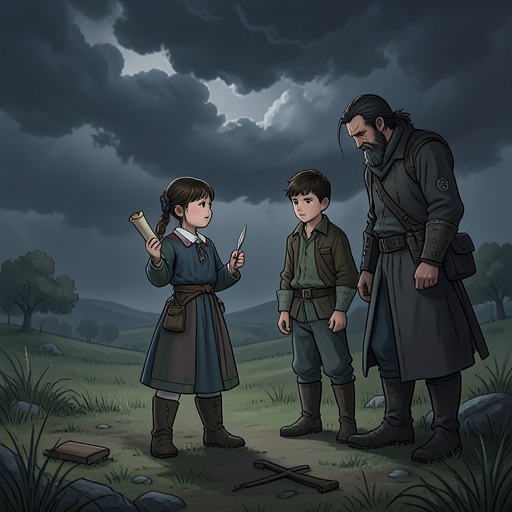
The Lady first appears riding a white horse beside a silent knight dressed entirely in black. She wears a long, fluttering dress of dazzling green, and her voice is sweet and lilting. Her beauty and courteous address make her an inviting presence on the ancient road, while Puddleglum’s stiffness and refusal to discuss the travelers’ business establish an early note of caution.
She identifies the destination ahead as Harfang, home of giants she describes as mild, civil, prudent, and courteous, in contrast with the savage giants of Ettinsmoor. She recommends that the travelers stay there for the winter, praising the comfortable beds, hot baths, warm hearths, and plentiful meals. Her advice sounds like generous hospitality, but it diverts Jill, Eustace, and Puddleglum from their search for the ruined city and leads them into danger.
The Lady is also the Queen of Underland. Rilian’s account of his captivity reveals how thoroughly she has shaped his understanding of himself: he remembers no life before her court and believes she rescued him from an earlier enchantment. Though he experiences a recurring spell that changes his mind and body, he has been taught to regard the Queen as the only person who can release him. Her rule depends not simply on confinement, but on control of what her captive can remember and believe.
The Captive Prince and the Invasion Plan
Rilian describes the nightly spell as a condition he cannot remember once it passes. He is told that, during its return, he becomes furious and dangerous before taking the form of a great serpent. The Lady presents this condition as proof of her kindness: in Rilian’s account, she says she saved him and alone can free him. His enforced forgetfulness leaves him unable to test that account against his own past.
She has also given the enchantment a political purpose. Rilian believes she will free him once she has made him king of a land in the Overworld and placed its crown on his head. Her Earthmen have been tunneling upward toward that country, and he expects the final barrier to be broken soon. He describes a planned assault in which he will lead a thousand Earthmen through the passage, attack suddenly, kill the opposing leaders, and seize the throne. The plan would make him an invader and a foreign ruler over a people who had done him no wrong, though his captivity has led him to imagine it as the path to kingship and release.
When Rilian is freed from the Silver Chair, he rejects that design. He identifies himself as the son of Caspian X and declares that he abhors the plan to conquer another country and overthrow its natural rulers. His restored identity also reverses the Lady’s account of his captivity: the people he names as his true friends have ended the enchantment, while the supposed benefactor has been using him as the instrument of a conquest.
Deception and Enchantment
The Lady’s first encounter with the travelers shows her skill at shaping a decision without issuing an open command. She praises Puddleglum’s discretion rather than challenging it, then volunteers a tempting picture of Harfang as a place of comfort and plenty. Eustace responds enthusiastically to the prospect of sleeping in a bed again. The contrast between their weariness and the promised ease helps explain why her redirection can work: she offers relief at the very point when the travelers are tired and vulnerable.
After the travelers reach Underland, the Black Knight defends the Lady’s character with complete conviction. He calls her a model of virtue and says she has treated him kindly, unaware that he is the enchanted Prince Rilian. The Lady’s power has therefore shaped not only Rilian’s memory but also his judgment of the person controlling him. When Puddleglum and Eustace question her role in sending them to giants who meant to eat them, the Knight rejects their accusation; Jill then reveals that the travelers are seeking Rilian, but he shows no interest.
The Lady’s strongest weapon is the atmosphere she creates in the chamber after Rilian is freed. She throws green powder onto the fire, releasing a sweet, drowsy smell, and plays a steady tune on an instrument like a mandolin. The fragrance grows stronger as the repetitive music becomes harder to notice, together making clear thought more difficult. She then denies that Narnia exists, treating the name as something Rilian has uttered in his ravings. When Puddleglum says he has lived there, she prompts him to explain where it is, drawing the group into an argument on ground her enchantment has prepared.
Her denial expands from Narnia to the Overworld, the sky, the sun, and Aslan. She recasts their knowledge as childish imitation: the sun, she says, is merely an invented larger lamp, and the lion an imagined larger cat. In her account, the world she rules is the only real one, and the others should abandon their memories and sleep. The argument is not detached philosophy: it works alongside the smell and the music, weakening the group’s ability to hold on to what they know.
Puddleglum breaks that influence by stamping on the fire with his bare foot. The partial extinguishing lessens the drowsy smell, and the pain briefly clears his mind. The Lady’s manner changes sharply: she threatens him when he touches the fire again, exposing the menace beneath her earlier sweetness. Puddleglum answers that even if Narnia and Aslan were imagined, they would still seem more important than the bleak world she offers. His resistance restores the others’ attention to their own memories and commitments, and the Lady’s attempt to make them surrender belief fails.
Revelation and Death
Once her argument has failed, the Lady’s musical instrument falls from her hands and her human form changes into that of a great green serpent. The transformation discloses what Rilian’s account of his nightly enchantment had foreshadowed: the serpent is not merely one of the forms associated with his spell, but the Lady herself. She coils around Rilian, who catches her neck and draws his sword; Eustace and Puddleglum rush to help. The three strike together and then continue until the serpent is dead.
Rilian identifies the creature as the same serpent he pursued in vain beside a fountain in Narnia years earlier. He recognizes that the Lady who enslaved him was also his mother’s slayer. His deliverance therefore brings personal vengeance and the recovery of his rightful identity into the same moment. He also explains that he is glad the Witch took serpent form at the end, because killing her in that form did not violate his sense of honor about killing a woman.
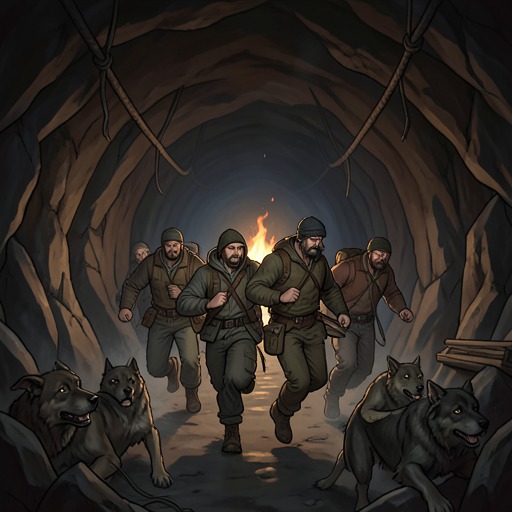
The Lady’s death has consequences beyond the chamber. Rilian explains that the stroke which kills her ends her spells, and Underland begins to collapse. Puddleglum suggests that she had arranged for her entire kingdom to fall apart if she were killed, so that her killer would not survive her; Rilian confirms the connection between her death and the destruction of her magic. Her power thus persists as a final trap even after she can no longer act, turning the defeat of the ruler into an escape from the collapsing realm.
Narrative Role and Significance
The Lady’s appearances are structured around persuasive surfaces that conceal changing stakes. On the road she offers warmth and rest; in Rilian’s account she appears as the compassionate rescuer; in the chamber she presents her denial of Narnia as a reasonable correction of childish beliefs. Each version encourages the hearer to accept her account of reality and of her intentions. The serpent’s emergence makes the concealed connection between her private enchantment and Rilian’s earlier loss visible at last.
Her conflict with the travelers is therefore waged through competing claims about memory and reality as well as through force. Rilian must recover the identity she has obscured; the others must resist the insistence that their knowledge of Narnia and Aslan is imaginary. Puddleglum’s act of stamping out the fire provides a concrete interruption to the spell’s material means, while his argument rejects the Lady’s premise even at the moment when the group has been made to doubt itself. The Lady’s defeat joins these threads: the captives recover their judgment, Rilian recognizes his past and refuses the invasion, and the death of the enchantress releases the force that destroys Underland.