The death of Rilian's mother
The Silver ChairThe death of Rilian's mother is the loss that first reshapes the prince’s life and sets the story of his disappearance in motion. A sudden serpent attack ends the Queen’s life during a May outing in northern Narnia; her son’s grief becomes a search for the creature, while the unanswered message she tried to give him leaves the moment marked by what it cannot disclose.
The ride in northern Narnia
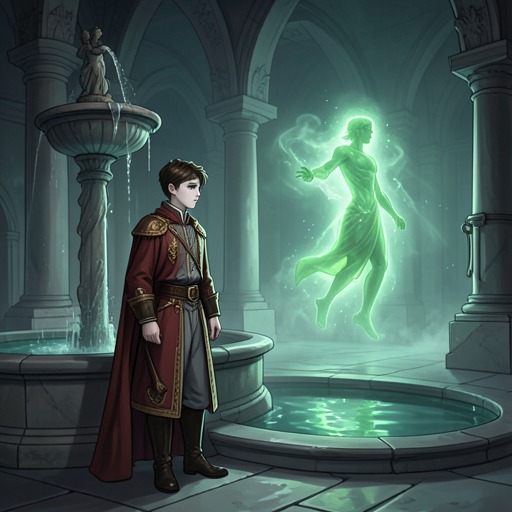
About ten years before the owls recount the story, the Queen rode through northern Narnia with Rilian, then a very young knight, and a company of squires and ladies. They wore garlands of fresh leaves and carried horns, but had brought no hounds: this was a May outing, not a hunt. At midday they stopped in a pleasant glade beside a fountain, where they ate and drank together.
When the Queen grew sleepy, the party spread cloaks for her on the grassy bank. Rilian and the others moved some distance away so that their laughter and conversation would not disturb her. The separation was brief: a great serpent emerged from the thick wood and struck the Queen in the hand. Her cry brought the company running, with Rilian first at her side.
The Queen’s death
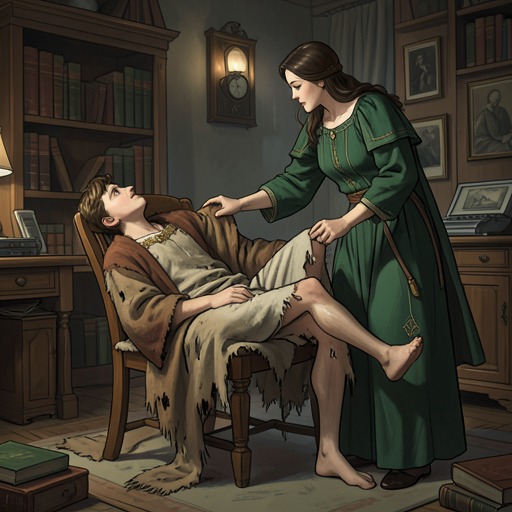
Rilian drew his sword and pursued the serpent, which was large, shining, and green, but it slipped into dense bushes beyond his reach. He returned to find the others attending to his mother. He immediately understood that no medicine could save her. While she was still alive, she seemed to struggle to tell him something, but could not speak clearly; she died without delivering the message. Less than ten minutes had passed since the party first heard her cry.
The Queen was carried back to Cair Paravel. Her death was mourned by Rilian, King Caspian, and all Narnia. The narration remembers her as wise, gracious, and happy, and as Caspian’s bride, whom he had brought home from the eastern end of the world. People also said that the blood of the stars flowed in her veins. These details make the loss both personal and national: the Queen’s death removes a beloved figure from the royal family and from the life of the kingdom.
Rilian’s grief and pursuit
Rilian took his mother’s death hard. He repeatedly rode along Narnia’s northern marches, searching for the venomous serpent so that he could kill it and avenge her. At first, others did not pay much attention to these rides, although he returned looking tired and distraught. His pursuit gives grief a concrete direction: the creature that killed the Queen becomes the object of the prince’s attempted revenge.
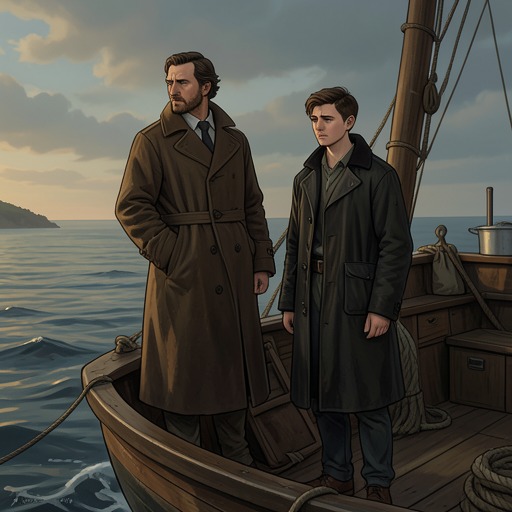
About a month after the death, some observers noticed a change in Rilian. His eyes seemed to hold the look of someone who had seen visions. Although he was out all day, his horse showed no signs of hard riding. Lord Drinian, his chief friend among the older courtiers and once his father’s captain on a voyage east, questioned him about the apparent contradiction between his continued rides and his claim that he had almost forgotten the serpent. Rilian explained that he had seen something beautiful in the northern woods and agreed to let Drinian ride with him the next day.
Narrative significance
The Queen’s death is at once a closed loss and an open mystery. Rilian witnesses the attack, pursues the serpent, and returns too late to save her; the message she cannot finish offers no explanation or resolution. His first response is vengeance, but the account then turns toward the unexplained change in his attention, from the serpent to the beautiful sight in the woods. That transition connects the family tragedy to the events surrounding Rilian’s later disappearance without claiming that the evidence here identifies the sight or explains what happened to him.