Thorn
The Silver ChairThorn is the sharp object Aslan instructs Eustace to use in the stream where the dead King Caspian lies. Its decisive role is to make Aslan’s blood flow into the water over Caspian: at that moment the doleful music stops and the king is restored to life, making the thorn the instrument at the center of the book’s final transformation.
Identification and appearance
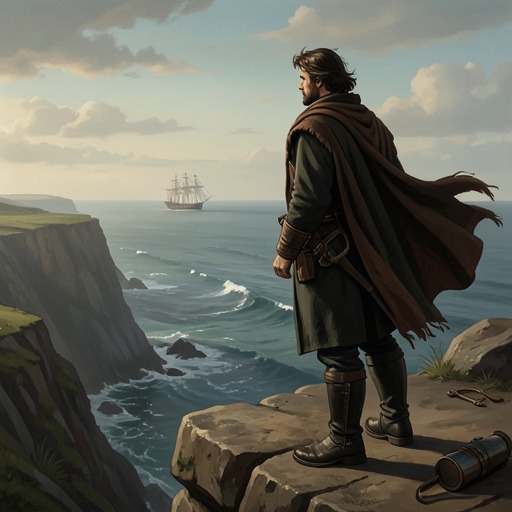
Aslan sends Eustace into a thicket to pluck the thorn and bring it back. The object is a foot long and sharp as a rapier, a concrete measure of the task Eustace is being asked to perform. It is not introduced as a weapon against an enemy; its purpose emerges from Aslan’s command and the scene beside the stream.
The command and Eustace’s response
Aslan presents his right fore-paw, opens its pad, and tells Eustace to drive the thorn into it. Eustace hesitates and asks whether he must do so. Aslan answers yes. Eustace obeys, setting his teeth as he carries out the instruction. The brief exchange gives the act its weight: Eustace does not act on his own initiative, but responds to a direct command whose consequence is not yet stated.
The blood in the stream
A drop of Aslan’s blood falls into the stream over Caspian’s dead body. The action links the thorn, Aslan, and the king through one precise sequence: Eustace uses the thorn, blood enters the water, and the music stops. Thorn therefore marks the turning point between the stillness of Caspian’s death and the change that follows, rather than simply accompanying a restoration already in progress.
Caspian’s restoration and the scene’s significance
After the blood falls, Caspian’s appearance changes: his long white beard turns grey, then yellow, shortens, and vanishes; his sunken cheeks become fresh, his wrinkles smooth away, and his eyes open. He rises as a young man, or a boy, and embraces Aslan. The passage makes Thorn’s role inseparable from this reversal: the object that causes pain to Aslan is used in the act after which the dead king lives again. Its narrative force lies in that exchange and consequence, not in any further use; the evidence identifies it only in this final scene.