
The Contract Against Slavery
The Social ContractThis flow tracks Rousseau’s rejection of claims that individuals, conquered peoples, or later generations can legitimately surrender their freedom.
increasing Bearing strength in each event
 decreasing
Bearing strength in each eventdecreasingNatural Authority Challenged

Natural Authority Challenged
Family as a Limited Model
Parental authority lasts while children need protection, then gives way to independence. Continued family association becomes voluntary rather than natural.
Political Difference
The State cannot claim permanent paternal authority over adults. Political obedience therefore requires a different basis from the temporary dependence of childhood.
The Strongest Has No Right

The Strongest Has No Right
Compulsion Is Not Duty
The strongest may force submission, but the defeated person obeys from necessity or prudence, not moral obligation.
Power’s Instability
If strength alone makes right, every stronger successor acquires the same supposed title. Rousseau finds no durable moral authority in that cycle.
Voluntary Slavery Rejected

Voluntary Slavery Rejected
No Fair Exchange
A people cannot plausibly sell itself to a king who takes its resources rather than providing for it. Total surrender yields no reciprocal protection.
Freedom Is Not Property
Rousseau argues that renouncing liberty means renouncing the moral agency that makes obligations meaningful. An unlimited command paired with unlimited obedience is contradictory.
Conquest Cannot Enslave

Conquest Cannot Enslave
War Between States
Rousseau defines war as a relation between political bodies, not a natural hostility between individuals. Soldiers become enemies through their role, not through their humanity.
Captivity Has No Title
If victory supplies no right to kill every defeated person, it cannot supply a right to enslave them. Forced submission remains force, not a peaceful contract.
Posterity Remains Free
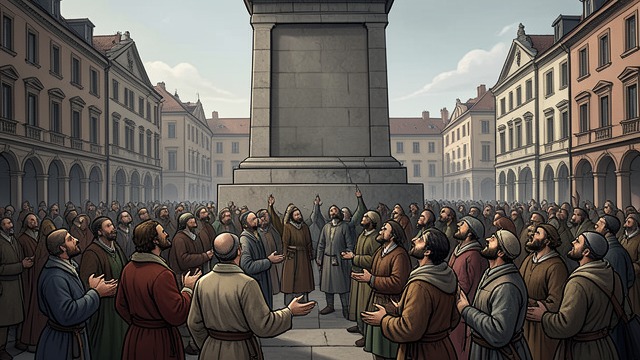
Posterity Remains Free
No Inherited Alienation
Even if an individual could surrender himself, he could not dispose of his children’s liberty. Each generation is born free and must retain the power to consent.
Arbitrary Rule Undermined
A government accepted afresh by each generation would no longer be absolute. Rousseau’s argument makes continuing consent incompatible with hereditary enslavement.
Book I, Chapter II, on family and political rule
Book I, Chapter III
Book I, Chapter IV, against Grotius’s argument
Book I, Chapter IV, during the discussion of war
Book I, Chapter IV, on children born after a surrender
