
Liberty Through Mutual Dependence
The Social ContractThis flow develops Rousseau’s paradox that freedom can increase through shared law when citizens are protected from dependence on one another’s arbitrary power.
increasing Bearing strength in each event
 decreasing
Bearing strength in each eventdecreasingNatural Liberty Is Limited

Natural Liberty Is Limited
Strength Sets Its Boundary
In the state of nature, people may pursue what they can obtain, but their effective freedom depends on individual strength. Possession remains precarious.
Independence Is Not Security
Natural liberty does not guarantee protection from others. Rousseau uses this vulnerability to show why association can answer a real human need.
Common Force Created
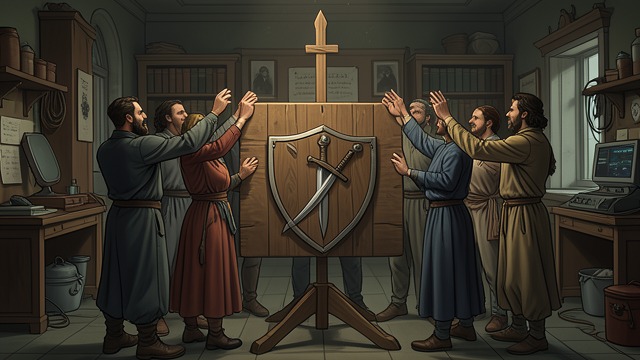
Common Force Created
Strength Combined
People unite their existing powers to overcome threats no individual can meet alone. The common force exists for their preservation.
Dependence Reordered
The compact creates mutual dependence under common rules rather than personal subjection to a stronger individual. Its legitimacy depends on equal terms.
Civil Liberty Substituted

Civil Liberty Substituted
A New Kind of Freedom
Civil liberty is bounded by the General Will, unlike natural liberty’s boundary of individual strength. It offers recognized rights and public protection.
Shared Restriction
Because the rule applies in common, restraint can prevent one person from dominating another. Freedom becomes a political relation, not simply the absence of limits.
Moral Freedom Added

Moral Freedom Added
Self-Mastery
Rousseau adds moral liberty: obedience to a law people prescribe to themselves. Following appetite alone may be a form of dependence rather than freedom.
Ethical Dimension
Political association can transform human agency by making rational self-rule possible. This passage anticipates a broader account of autonomy.
Coercion Paradox Exposed

Coercion Paradox Exposed
Compelled to Comply
Rousseau says the community may compel a citizen who refuses the common terms, calling the result being forced to be free. The claim rests on the idea that public law expresses a will shared by citizens.
A Lasting Difficulty
The paradox asks who can know that a coercive decision truly expresses the General Will. The theory’s defense of liberty therefore carries a serious risk of abuse.
Book I, Chapter VIII, before the account of civil liberty
Book I, Chapter VI, at the formation of association
Book I, Chapter VIII, after the social compact
Book I, Chapter VIII, at the distinction between appetite and law
Book I, Chapter VII, when a citizen resists the General Will
