Anders
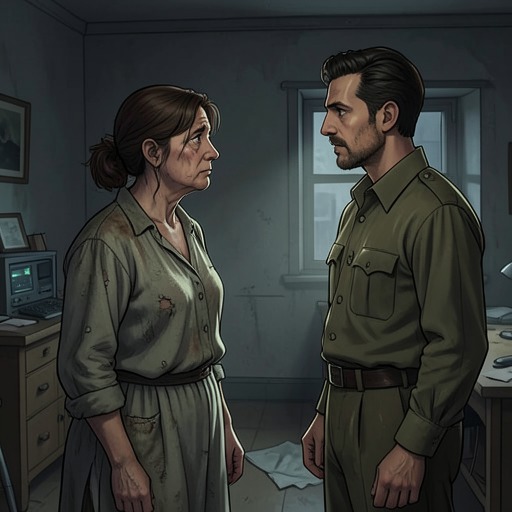
The SonAnders is Martha Lian’s fiancé, but his claim on her time and choices grows increasingly difficult to separate from control. At the Ila Centre, his contempt for the people she serves collides with her insistence that they deserve care; when she tries to leave an argument, he grabs her and orders her not to walk away. His jealousy of Stig then offers a more familiar explanation for his agitation without undoing the threat she has just seen in him.
Identity and Background
Martha has known Anders since they were teenage sweethearts, and the relationship has continued into adulthood as an engagement. The scenes establish a contrast between his composed, suspicious manner and Stig’s openness: Martha thinks Anders is accustomed to withholding trust from people until they have earned his approval. That contrast matters because the argument at the Ila Centre is not an isolated disagreement over work. It reveals how Anders evaluates the people around Martha and how readily he expects her to accept his judgments.
His connection to an art gallery gives him a concrete alternative to Martha’s work. Anders says there is a job for her at his mother’s gallery whenever she wants it, and he presents that option as better for her personal development. He also invokes his mother’s agreement, making the gallery’s social world a proposed replacement for the drug-treatment centre and its residents. The offer is framed as opportunity, but it comes with a clear expectation that Martha should leave her chosen work.
Conflict at the Ila Centre
Anders arrives while Martha is at the Ila Centre and criticizes her decision to spend her time there. He argues that duty should mean family and home rather than work in a place like the centre. Martha asks him not to start the argument, but she already expects him to become worked up quickly. When he calls the residents losers, she objects and reminds him that his mother and her customers do not need her. Anders answers that the residents do not need her either; in his view, the state should stop supporting them.
The disagreement exposes opposed ideas of responsibility. Anders treats family life as Martha’s proper duty and public support for people with addictions as a misplaced expense. Martha’s response is not to accept his characterization of the residents: she tells him not to call them losers and maintains that the gallery is not where she is needed. His language reduces the centre’s residents to a burden, while her refusal to adopt that language marks a boundary between his outlook and her own work.
Control and Threat
When Martha ducks under Anders’s arm and walks into the corridor, he follows, grabs her arm, spins her around, and pulls her close. She recognizes the expensive aftershave his mother gave him for Christmas, a familiar detail that sharpens the unease of the moment. Looking into his eyes, she sees a black emptiness; when he snarls that she must not walk away from him, she automatically raises a hand to shield her face. Anders is shocked by that gesture. The exchange changes the argument’s stakes: what began as a dispute about her job and the centre now includes physical intimidation and Martha’s instinct to protect herself.
That aggression sits in uneasy contrast with the self-control Martha associates with him. She says he did not used to swear, and the scene gives no simple reconciliation between the familiar fiancé and the man who has just seized her. His shocked reaction to her raised hand registers that she has responded to him as a possible danger, even if it does not resolve what prompted the outburst or what he will do next.
Jealousy and Martha’s Response
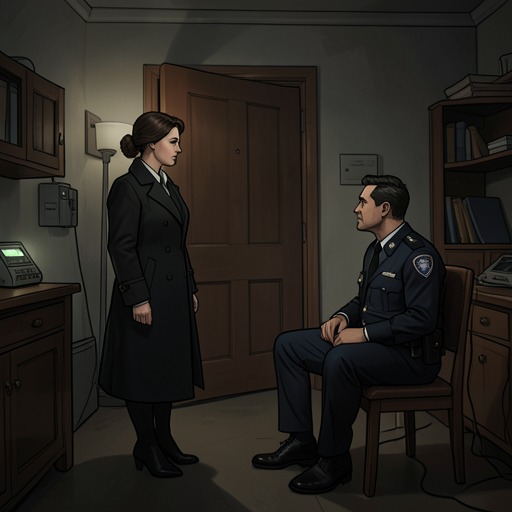
After the confrontation, Anders asks who Stig is, saying it seemed as if Martha and the other man had communicated without words. Martha exhales with relief, nearly, because she recognizes jealousy as familiar territory. It has been part of their relationship since they were teenage sweethearts, and she believes she knows how to handle it. She puts a hand on Anders’s shoulder and redirects him toward retrieving her jacket and going home to cook dinner rather than continuing the argument that night.
That redirection shows Martha attempting to manage a conflict she has handled before, but the familiarity of the jealousy does not erase the seriousness of the corridor scene. Anders’s suspicions about Stig fit the pattern Martha recognizes; the grab and her raised hand have already made the encounter more threatening than an ordinary lovers’ quarrel. The difference between those two moments leaves their relationship under tension: she can name and defuse his jealousy, but the available scenes do not show that the deeper conflict over her work, the centre’s residents, or his use of force has been settled.