Berg's Yellow House
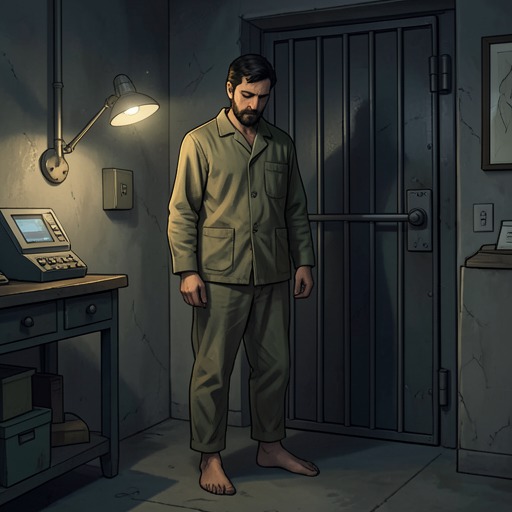
The SonBerg's Yellow House is an empty, long-neglected family home that becomes a place of observation, refuge, and personal recognition. Seen first from outside as a silent house beneath the moon, it later opens onto the history of the people who owned it: its garage and basement preserve the residue of family life, and its kitchen reveals that Stig once called it home. The house matters not because it has been restored to domestic use, but because its abandoned objects and familiar spaces make the past tangible at the moment Martha and Stig enter it.
Setting and First Appearance
From a distance, the house is a fixed point of attention. Markus watches it through binoculars beneath the moon, noting that it has become completely still and wondering whether the son will return. His attention also turns toward an old object in a drawer, gleaming and smelling of oil and metal; he suspects it may be the thing the father used, though the passage leaves the object and its history unresolved. The house is therefore introduced through watchfulness and inference: it looks quiet, but the observer’s unanswered questions make its stillness feel provisional.
That outside gaze gives way to a practical encounter when Stig guides Martha to Berg. He points out the yellow house and says that he knows its owners and that it is empty, then directs her to stop outside the garage so he can open it. In the rain, the garage offers temporary shelter for the car. Its presence makes the property useful in the immediate circumstances, but Stig’s familiarity with the place hints that his connection to it is more intimate than his first explanation suggests.
A House Preserved in Neglect
The garage and basement contain the accumulated particulars of a family’s life rather than the furnishings of an active home. When Martha watches Stig unlock the basement door, she sees rucksacks, tent pegs, worn red boots that suggest some kind of sport, a sledge, and a manual lawnmower left behind after the family acquired a petrol-driven one. Shelves hold cordial bottles and jam jars joined by cobwebs; on a nail hangs a key whose faded tag no longer identifies what it opens. The objects are ordinary, but their suspension between use and abandonment makes them evidence of a household that has ended without being cleared away.
The basement also contains a row of skis, some still coated with mud from an Easter skiing trip. One of them, the longest and broadest, has split lengthways. The detail preserves a specific trace of family activity while registering damage and disuse: the skis remain where the old routine left them, but they are no longer ready for another outing. The house’s private storage spaces thus hold memory in material form, without explaining every person or event to which each object belonged.
Inside, the long vacancy becomes immediately legible to Martha through the smell, dust, and sense of time accumulated in the rooms. The living room confirms her impression: she cannot see a single object made in the last decade. The rooms do not merely look old; their untouched contents make the passage of years visible. The contrast between this apparent stillness and the house’s continuing significance gives neglect an archival quality: time has moved on elsewhere, while the home retains a previous domestic world.
Ownership and Recognition
Stig’s authority in the house changes the meaning of the visit. When Martha asks about the key, he says that it is in the kitchen and that he knows where it is. He then tells her, “This is my house.” The declaration corrects the impression he had given at Berg, where he referred to the owners as other people. The turn is not accompanied by an explanation of the discrepancy; instead, the house itself becomes the evidence of his connection, and Martha accepts his claim.
The kitchen makes that connection visible through practiced familiarity. Stig takes coffee from the cupboard above the sink, measures it into a filter, fills the coffee-maker, and switches it on with quick, familiar movements. He removes his jacket and hangs it on the chair closest to the window, identifying it as his chair. These small acts establish a remembered routine more persuasively than a general claim of belonging could: even after years away, he knows where things are and moves through the room as someone who once lived there.
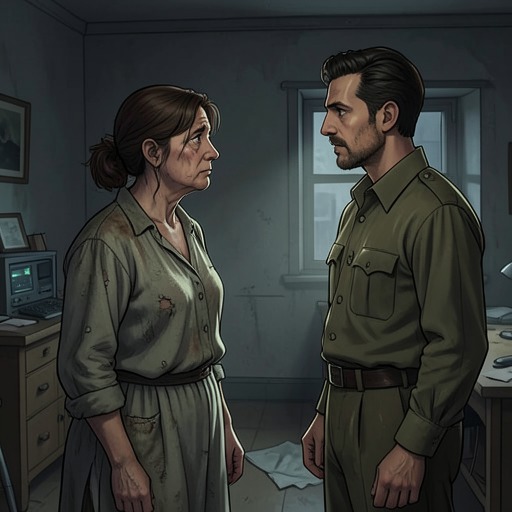
Martha recognizes the history he has not volunteered and tells him that he used to live there. He nods. She then says that he looks a lot like his mother. The exchange joins place and resemblance: the abandoned house preserves the setting of Stig’s childhood, while his face carries a visible connection to the family whose belongings remain inside. The passage leaves the mother’s broader story unstated, but the comparison gives the house’s stored history a human counterpart.
Narrative Significance
The yellow house connects two modes of attention. Markus’s view from outside turns it into a watched, apparently still place around which unanswered questions gather; Martha and Stig’s arrival opens the same property into intimate knowledge, where keys, furniture, and familiar gestures disclose a former home. Neither perspective fully explains the house’s history. Instead, the narrative lets its physical details sharpen what can be known while preserving uncertainty about the old metallic object, the father, and the circumstances of Stig’s departure.
Its emptiness is consequently not an absence of meaning. The split ski, the faded key tag, the obsolete lawnmower, and the chair by the window mark distinct layers of use, aging, and recognition. Berg's Yellow House is at once a refuge from the rain and a storehouse of a life that has not been erased. By making Stig’s past legible through the way he enters and uses the kitchen, the house turns a place identified from the road into a personal history encountered from within.