Drammen
The SonDrammen is the setting of a pivotal alibi investigation and, later, the source of a police call that draws investigators into the discovery of Yngve Morsand’s body. Its role in the novel is less that of a backdrop than of a place whose roads and chance encounters supply evidence: an overlooked lay-by on an old route becomes the site of an encounter that challenges the case against a suspect, while Drammen Police’s later request for assistance connects the city to a new development in the Morsand case.
The alibi on the old road
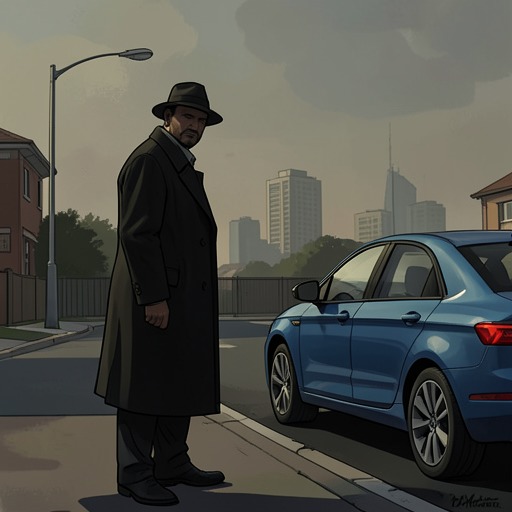
During an interview, the suspect retracts his confession and claims an alibi involving a man named Leif, a blue Volvo, and an “I ♥ Drammen” sticker. Westad investigates the details, checking Volvo dealers in Drammen and the Cardiology Unit at Buskerud Central Hospital. This trail turns a claim that might have seemed incidental into a verifiable account tied to the city and its medical services.
The witness is Leif Krognæss, a fifty-three-year-old resident of Konnerud in Drammen. He recognizes the suspect in a photograph and recalls seeing him at a lay-by on the old main road that runs parallel to Drammensveien. The location is a place to stop among picnic tables and benches, away from the route favored by motorists using the newer road. Krognæss had pulled over because he felt unusually exhausted and remained there for several hours.
Two men sat at another picnic table for hours without speaking. One checked his watch and announced that it was time to leave. As they passed Krognæss, the second man asked his name and urged him to see a doctor because something was wrong with his heart. The first man pulled his companion away. Krognæss assumed the man who had addressed him was a psychiatric patient on an outing, and the two departed. That brief encounter, apparently peripheral to the men’s purpose at the lay-by, gave Krognæss a reason to remember one of them.
The river and the medical evidence
Krognæss did follow the advice. He visited his doctor, who discovered a heart problem and admitted him to hospital immediately. As Kari explains, the diagnosis made him remember a man he had met only briefly beside the River Drammen. The place-name is thus attached to a chain of practical consequences: a chance warning leads to medical attention, and that medical episode helps preserve an eyewitness memory.
Westad identifies the timing of the encounter as the point that matters to the investigation. The medical examiner’s report places Kjersti Morsand’s death at the very time the men were sitting at the lay-by. Krognæss’s recollection therefore supports the suspect’s claimed alibi, and Westad states that the suspect has one. Simon, however, asks whether the strand of hair found at the crime scene has been checked to determine how it could have got there. The account establishes the importance of the alibi without resolving every evidentiary question surrounding the crime scene.
A later call from Drammen
Drammen returns near the novel’s end, after Kari has left Oslo with Åsmund. Only after they have crossed a small bridge and driven up a gravel path does she ask what has happened. Åsmund tells her that Drammen Police have called for assistance and that the victim is a shipowner, Yngve Morsand. Kari recognizes the name as Kjersti’s husband.
The later call gives Drammen a second, distinct connection to the investigation: the city is not only where an alibi witness was found, but also where police involvement in a new death prompts Kari to seek an explanation. The shift from the old-road encounter to the report about Yngve’s death ties the Morsand family’s story to two separate investigative moments. In both, the city enters the narrative through specific, consequential information rather than through a general description of its urban life.