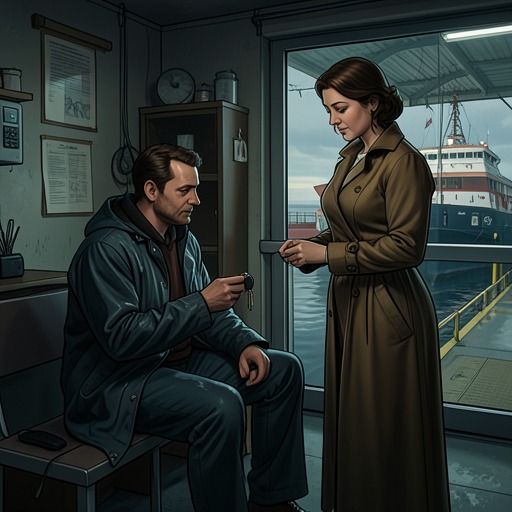
Else’s progressive visual impairment
The SonElse’s progressive visual impairment increasingly affects the ordinary routines of her life with Simon Kefas, while making his love for her inseparable from fear about what will happen when he is gone. The possibility of treatment remains present, but the narrative also shows the condition through the small adjustments and concealments that have entered their home.
Identity and Daily Experience
Else’s sight has deteriorated enough that, at home, she sometimes pretends she can see Simon from a distance when he believes she cannot. Simon notices the pretense but does not confront her about it. Her impairment also appears in the domestic details he observes: when he comes home, she hopes he will not notice the mess, spills, and other signs that her sight has worsened since she began preparing dinner hours earlier.
The account keeps this change within the texture of shared life rather than isolating it as a diagnosis. Simon knows that Else has been cooking for him and imagines her presenting the meal as if it had been thrown together quickly. Her efforts to preserve that appearance and his awareness of what she is managing make the household a place where care and concealment coexist.
Simon’s Response and the Prospect of Treatment
Simon’s response is marked by affection and by the prospect of loss. He tells Else that he is lucky to have her and their life together. In a dream, he gives up his own sight for her; when he wakes unable to see for a moment because of the eye mask he wears against the summer sun, he is briefly happy before realizing what has happened. The episode expresses his wish to share or take on her condition, while the mask makes that imagined sacrifice temporary and safe.
Treatment becomes a concrete possibility when Simon tells his nephew Mats that a brilliant American doctor specializing in eye operations is in Oslo for only that day and the next. Before Simon leaves, he calls up to Else and asks her to telephone him with the doctor’s opinion. The scene establishes the couple’s attention to medical help, but the evidence does not state what the doctor concludes or whether an operation takes place.
Love, Dependence, and an Anticipated Future
Else’s impairment sharpens Simon’s awareness of their difference in age and of his own mortality. When he sees her at the top of the stairs, he thinks that her freckles will probably remain after he is gone and wonders who will look after her then. His concern reaches beyond the immediate difficulty of seeing: it is directed toward a future in which she may need support and he will no longer be there to provide it.
That concern sits beside the couple’s established intimacy. Simon recalls having loved Else every day of their more than three and a half thousand days together, and he believes neither of them needs a symbolic padlock to affirm their bond. Her worsening sight therefore registers not only as a change in what she can see, but as a condition that tests Simon’s assumptions about protection, time, and what their shared life can promise.