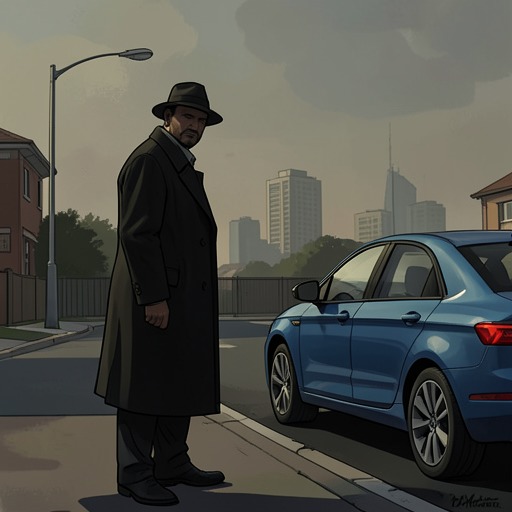
Henrik Westad
The SonHenrik Westad is a Buskerud Police inspector whose investigation into Kjersti Morsand’s murder exposes the weakness of the case against Sonny Lofthus. Rather than treat a confession and a strand of hair as a complete answer, Westad tests the account against an independently verifiable alibi; when that points away from Sonny, he also reveals that superiors have instructed his department to suppress the matter.
Identity and Investigation
Westad leads the investigation into Kjersti Morsand’s death. When he meets Simon Kefas and Kari Adel, he identifies himself as an inspector with Buskerud Police and explains that Kari has asked him to come for a conversation. He is therefore not a peripheral observer of the case but the investigator responsible for assessing its evidence and deciding what can responsibly be made public.
The physical evidence seems at first to support Sonny’s guilt: a convicted killer’s hair was found at the scene, and Sonny confessed in Westad’s first interview with him. Westad acknowledges both facts, but explains that he held back from announcing a solution because something in the suspect’s attitude did not fit. That hesitation distinguishes his investigation from a simple confirmation of the most convenient theory. The confession is a fact to be tested, not a substitute for testing.
Testing Sonny’s Alibi
In a later interview Sonny retracts the confession and claims to have an alibi involving a man called Leif, who drove a blue Volvo bearing an “I ♥ Drammen” sticker. Sonny also associated Leif with a heart problem. Westad pursues those unusually specific details, checking with Volvo dealers in Drammen and the Cardiology Unit at Buskerud Central Hospital. His account shows how the investigation moves from suspicion to corroboration: Sonny’s statement gives Westad leads that can be checked outside the interview room.
The man is Leif Krognæss, a fifty-three-year-old resident of Konnerud in Drammen. He recognizes Sonny from a photograph and remembers seeing him at a lay-by on the old main road. Krognæss had stopped there after feeling strangely exhausted and remained for several hours; two men were at another picnic table, sitting silently for a long time before one said it was time to leave. One of them spoke briefly with Krognæss as they passed. Krognæss later sought medical attention, and his doctor found a heart problem serious enough to require immediate hospital admission. The diagnosis explains why he remembered an encounter with someone he had met only briefly.
Westad connects that recollection to the medical examiner’s report: Kjersti was killed at the very time the men were at the lay-by. Krognæss’s testimony therefore supplies a time-specific alibi, not merely a witness who recognizes Sonny. In Westad’s account, Krognæss even says that the man he encountered saved his life; the crucial investigative point, however, is the timing that places Sonny away from the murder.
Suppressed Evidence and Institutional Pressure
Once the alibi is established, the strand of Sonny’s hair becomes an unresolved problem rather than proof that settles the case. Simon raises the possibility that the hair was planted and that Sonny’s day release from Staten was arranged to make him appear responsible. He also suggests that such a scheme would require the involvement of a prison officer. These are Simon’s suspicions, not conclusions Westad independently confirms in the scene; what Westad does confirm is that he has been told to hush up the matter.
Westad says the instruction came from above his own level: someone higher up had made it clear to his boss that the issue should be left alone until it had been examined again. The order places his case within a larger institutional conflict. A potentially exculpatory witness exists, yet the investigator is discouraged from disclosing the development. Kari proposes that officials may simply want to double-check the facts before a scandal becomes public, while Simon hopes that is all the delay means. The exchange leaves Westad’s evidence significant and the reason for its suppression unsettled.
Character and Narrative Role
Westad’s role is defined by the tension between the authority of official evidence and the need to question how that evidence came into being. The confession and hair initially make Sonny appear guilty; Westad’s attention to the mismatch in Sonny’s manner leads him to withhold a premature announcement, investigate the alibi’s details, and find a witness whose account aligns with the medical timeline. His work gives the reader a concrete counterweight to the case being built against Sonny.
His disclosure to Simon and Kari also turns the inquiry into a test of institutional candour. Westad has been ordered to remain quiet, yet he travels from Drammen to speak with them and explains both the corroborating witness and the pressure to delay disclosure. The evidence does not establish who planted the hair or who issued the instruction. It does establish that Westad’s investigation has uncovered a substantial reason to doubt Sonny’s apparent guilt, while the handling of that discovery remains under constraint.