Kjersti Morsand
The SonKjersti Morsand is the murdered wife of shipowner Yngve Morsand. Her death is first presented as a case against Sonny Lofthus, whose day release placed him near the scene and who confessed to the killing. Later evidence overturns that apparent solution: Sonny was at a roadside lay-by when Kjersti died, while Yngve had insisted on carrying out the murder himself and paying for another person to be blamed. Her case exposes the deliberate construction of a false confession and the connections between a jealous husband, corrupt prison officials, and the criminal network associated with the Twin.
Marriage and Motive
A friend of Kjersti reported that Yngve had accused her of having an affair and threatened to kill her. Kjersti was frightened, and the suspicion had a basis: she had met someone else and was considering leaving her husband. To investigators, this offered a familiar motive for murder. Yet the apparent simplicity of that explanation concealed a second deception: Yngve was not merely a jealous husband whom police might naturally suspect, but a man who planned to exploit that suspicion by arranging for someone else to bear responsibility.
The circumstances at the Morsand home complicated the first account of the crime. The house was large and well furnished, but its alarm was switched off and its front door had not been locked. The medicine cupboard in the bathroom had been forced, and Yngve claimed sleeping tablets were missing. That detail did not sit comfortably with the accusation against Sonny: investigators noted that, given the needle marks indicating access to hard drugs, the small quantity of sleeping pills made an unlikely target. The discrepancy was one sign that a signed confession did not answer every question about what had happened.
A Confession Built Around Her Murder
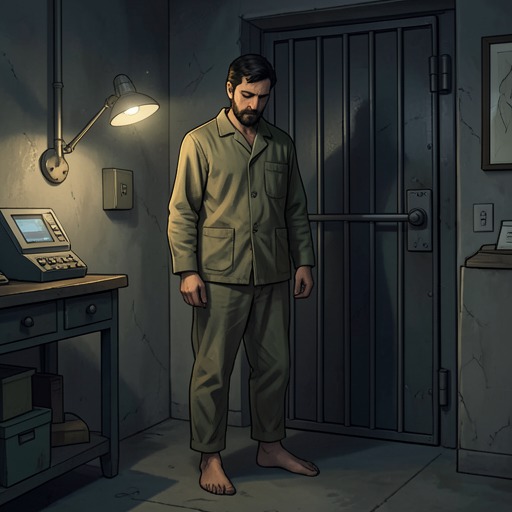
Per Vollan prepared Sonny to maintain a story that supported the case against him. He told the boy that the prison officer had reported that Sonny ran away during his day release by the sea, returned to the road about an hour later, and refused to explain where he had been. Vollan warned him not to contradict that report. He also pointed him to a Bible containing a description of the Morsand home and the details of the killing, instructing him to learn how the crime was supposedly carried out.
Sonny initially said little, but then accepted the accusation directly, saying that he had killed Kjersti and would read about how he had done it. Vollan treated this response as useful compliance and told him to memorize the particulars. The exchange makes the confession especially revealing: Sonny was being coached to repeat a prepared account, rather than supplying an independently established explanation of his movements or motive. The murder thus served not only as a charge but as a means of extending his detention after his earlier sentences had run their course.
The Alibi and the Case’s Reversal
The investigation did not end with Sonny’s first confession. Arild Westad later explained that he had hesitated to publicize the apparent solution because something about the suspect’s attitude did not add up. At a later interview, Sonny withdrew his confession and named Leif Krognæss as an alibi witness. Sonny remembered the man’s blue Volvo, its “I ♥ Drammen” sticker, and his heart trouble—details that enabled Westad to identify and locate him.
Krognæss recalled seeing Sonny and another man sitting for hours at separate picnic tables in a lay-by on the old main road. The men were quiet and appeared to be waiting. Before they left, one of them told Krognæss to see a doctor because something was wrong with his heart; the other then pulled him away. Krognæss sought medical help, was found to have a heart condition, and was admitted to hospital. That encounter fixed the meeting in his memory. Crucially, the medical examiner’s report placed Kjersti’s death at the same time Sonny and the other man were at the lay-by. The alibi therefore contradicted the confession, despite the discovery of one of Sonny’s hairs at the crime scene.
Who Arranged the Frame
The later account identifies Yngve as the person who wanted Kjersti killed and as the person who insisted on committing the murder himself. He did not want to hire a killer to do the act; instead, he paid to have someone else take the blame, reasoning that a cuckolded husband would otherwise be the police’s obvious suspect. The price was three million kroner. Once Yngve described the killing he intended to carry out, the men arranging the scheme connected it to Arild Franck and the prison system.
Franck and his associates arranged Sonny’s day release and his location, and sent him out with a trusted, corrupt prison officer. Those preparations explain how the false case acquired convincing-looking elements: Sonny was near the area, a strand of his hair was found at the scene, and the prison officer’s report gave authorities an account of his movements that Sonny was ordered not to challenge. The arrangement made the planted suspicion appear to confirm the confession, while concealing Yngve’s own role.
Narrative and Significance
Kjersti’s murder is disclosed in stages: first as a killing Sonny claims to have committed, then as an investigation with an unexplained confession, a suspiciously convenient prison report, and a possible alibi, and finally as a planned frame that Yngve and corrupt intermediaries engineered. That progression turns the case from an apparent question of whether Sonny is guilty into a question of how a guilty husband could exploit institutions and evidence to make an innocent man appear responsible.
Her story also intersects with the larger investigation into the Twin’s criminal organization. Simon describes old rumors that a police mole leaked information to the person controlling much of Oslo’s drugs and sex trafficking; later, he accuses Iver Iversen of helping the Twin launder money through Iversen Property. In a separate diary, Ab Lofthus describes two corrupt police officers working together, allowing one to serve as an alibi for the other and helping the Twin remain beyond suspicion. These disclosures establish the wider pattern around Kjersti’s case: the false accusation against Sonny was not an isolated mistake, but part of a system in which criminal arrangements, compromised officials, and manipulated appearances could reinforce one another.
Kjersti is consequently present in the story through the struggle over the meaning of her death: Yngve’s motive, Sonny’s coerced and withdrawn confession, the roadside alibi, and the concealed arrangement that sent him to prison. The changing account of the case makes her murder a measure of the difference between evidence that appears to settle a question and evidence that reveals how the appearance was manufactured.