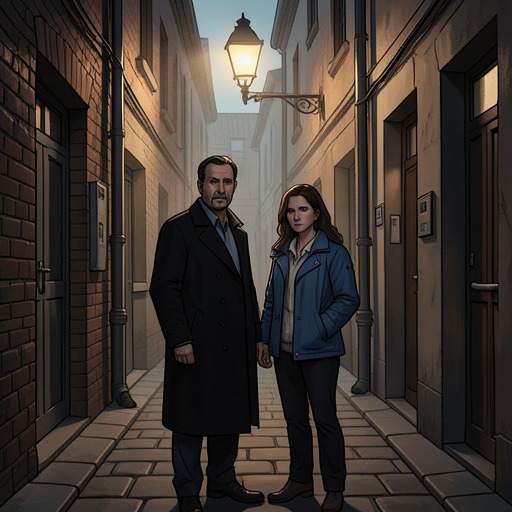
Lars Gilberg
The SonLars Gilberg is a homeless man living around Oslo’s river and a witness to the killing of Per Vollan. His knowledge of the city’s drug-market geography and his account of what happened at Sannerbrua give Simon Kefas and Kari Adel a lead in a case whose witnesses have reason to fear Hugo Nestor’s men. Gilberg’s role is brief but consequential: a man at the margins of the city sees what the killers assume no one will report, then weighs the danger of speaking against the chance of being paid to survive another night.
Identity and Circumstances
Gilberg is introduced beneath Grünerbrua, where Simon and Kari find him after three hours of searching. They have followed a trail through the Ila Centre, Bymisjonen’s cafe in Skippergata, Plata near Oslo Central Station, and the Salvation Army’s hostel in Urtegata. The route reflects how precarious and dispersed his life is: information about him must be pieced together from places where people seek shelter or drugs, before it leads the officers toward the river.
The search also places Gilberg within a city organized by the changing control of its drug trade. Kari tells Simon that Albanians and North Africans are then selling amphetamine and methamphetamine along the river south of Elgen and down toward Vaterland Bridge. The officers pass men who direct them north toward the heroin area. Gilberg is found in this landscape of informal markets and vulnerable residents, not in a stable home or an official setting.
A later scene reveals how he makes room for himself beneath the bridge. Gilberg has been there long enough to know the habits of the area, and he charges a boy fifty kroner as rent for sleeping in his spot. The boy says he saw police passing the previous day and asks whether they come often; Gilberg replies that they come now and then, but lately the area has been overrun with them. His exchange with the boy establishes both his local familiarity and the small, improvised arrangements by which he occupies a place otherwise defined by exposure and uncertainty.
Witness to Per Vollan’s Death
Gilberg tells Simon and Kari that he was sitting on a bench beneath the trees, close to the path down to Sannerbrua. From a concealed position among the leaves, about ten metres away, he saw two men on the bridge with the chaplain. One held Per Vollan while the other stood behind him. Gilberg emphasizes that he was near enough to observe Vollan’s eyes and that the chaplain made no sound. He then describes the attackers leaving the bridge area and throwing the body over the brick wall where the railing ends.
Kari recognizes that the account fits the place where rocks jut out below. That detail connects Gilberg’s observation to the physical setting in which the body was found, giving the officers a checkable point rather than an unsupported identification. Gilberg does not claim to know the men by name; instead, his description of their matching black two-piece suits leads him to associate them with Nestor’s organization. The clothing is his basis for the inference, not proof that he knew the attackers personally.
Fear, Disclosure, and the Investigation
At first, Gilberg resists giving a full account. He says the men were Nestor’s, then trails off because he knows what Nestor does to people who talk. Simon acknowledges the danger but points out that Gilberg’s name in the interview logs at Police Headquarters would make the disclosure visible to Nestor’s network. He presses Gilberg to speak immediately and says he will decide whether they can leave the matter there. Gilberg shakes his head before Simon insists again.
The threat behind Gilberg’s hesitation is concrete: cooperating with the police could expose him to the same criminal group he believes was responsible for the killing. Yet he does provide the account, including where he sat, how close he was, what he saw on the bridge, and where the body went. His testimony turns his vulnerability into investigative knowledge, even as the exchange makes clear that the police process itself may create a record that puts him at risk.
On the drive back to Police Headquarters, Simon tells Kari that they are prioritizing the case and directs her to review Vollan’s movements during the forty-eight hours before he was killed, listing everyone the chaplain encountered. The order marks a shift from collecting a witness’s immediate account to reconstructing the victim’s final contacts. Gilberg’s statement is therefore not the investigation’s conclusion; it helps trigger a more systematic inquiry into who had access to Vollan before his death.
Narrative Significance
Gilberg occupies a narrow but important position between street-level knowledge and formal investigation. The police spend hours tracing him through shelters and drug-market locations, while he has been able to observe a killing because he was sitting quietly near the path. His knowledge is partial: he identifies the men through their suits and their apparent connection to Nestor, not through a confirmed identity. The distinction preserves both the value and the limits of what he can offer.
His encounter with the boy under the bridge provides a parallel view of his circumstances. Gilberg can charge for a place to sleep and answer questions about police presence, but his own earlier rejection by the army and uncertainty about what he is suited for accompany his life at the margins. The narrative does not turn him into an investigator or a secure ally. Instead, it gives him a consequential moment of testimony, shaped by fear and by the precarious conditions in which he lives.