Per Vollan
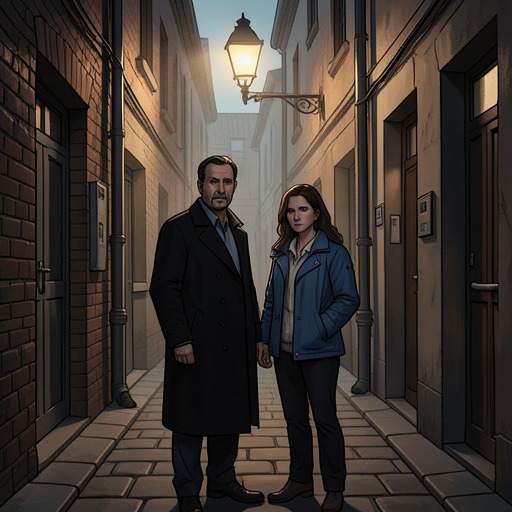
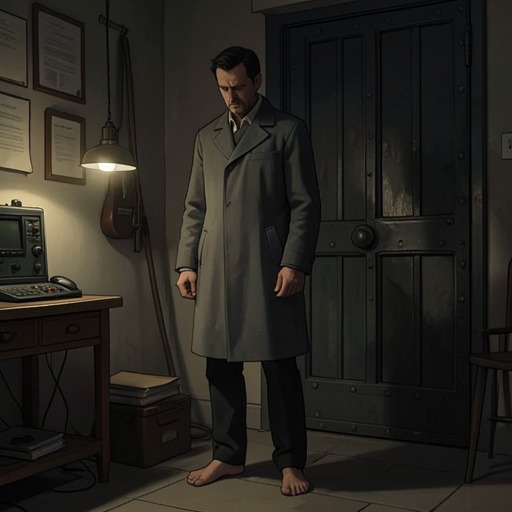
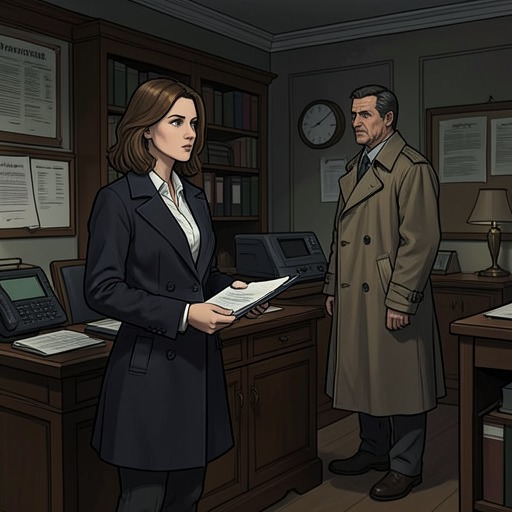
The SonPer Vollan is the chaplain at Staten Prison, a minor institutional figure whose pastoral visits bring him close to Sonny Lofthus and to the concealed history behind Sonny’s imprisonment. He is more than a visitor offering religious comfort: he carries the memory of the boy’s father, Ab Lofthus, and eventually breaks a promise of silence to correct the false account of Ab’s death. Through Vollan, the novel connects spiritual care with witness, shame, and the responsibility to speak when a vulnerable person is being made to suffer for a crime he did not commit.
Identity and role
Vollan serves as a prison chaplain, entering a setting where his formal religious role does not grant him power over the institution or its decisions. His work is rendered through small, habitual actions: he straightens his ill-fitting dog collar, enters a cell, and tries to acknowledge an inmate whose face and tattoos have blurred into the many he has encountered over the years. He is conscious of the distance between the chaplain’s public appearance and his private reaction to the prison officer he meets; instead of voicing his anger, he nods and continues to the cell.
His visit to Sonny makes the limits and value of that role especially clear. Vollan cannot undo the circumstances that have brought Sonny to prison, but he can offer a human presence and, later, knowledge that Sonny has been denied. His pastoral work thus moves from routine visitation toward testimony: what matters is not only that he enters the cell, but that he eventually gives the truth to the person most directly harmed by its concealment.
Visiting Sonny
During one visit, Vollan enters Sonny’s cell and greets him. Sonny does not look up, but nods, and Vollan accepts this as recognition. He sits in a chair, places a Bible on the bed beside Sonny, and tells him that he has put flowers on his parents’ grave. The gesture is offered without expectation that Sonny requested it; it is a way of remembering Sonny’s family for him while the boy remains in prison.
Vollan’s attention to Sonny is informed by what was said about him in court. A teacher who testified for the defence described a once-promising pupil: Sonny had been a talented wrestler, popular, helpful, and interested in becoming a police officer like his father. After Ab was found dead beside a note confessing to police corruption, Sonny stopped attending school. Vollan tries to imagine the shame the fifteen-year-old might have felt, and considers how his own sons would feel if confronted with their father’s wrongdoing. The comparison makes Sonny’s isolation legible to him, even though Vollan cannot fully know what the boy experienced.
That concern becomes an explicit moral objection. Walking down a prison corridor with Arild Franck, Vollan says he cannot continue with what they are doing to Sonny: making him take the fall for something he did not do and serve time on behalf of a husband whose story is bound up with the case. The remark shows that he understands Sonny’s imprisonment not as an ordinary consequence of guilt, but as an injustice being maintained by people with power inside the prison system.
The truth about Ab Lofthus
Vollan’s knowledge of Ab’s death reaches Sonny through Johannes Halden, who tells Sonny that he knew his father and had been Ab’s confidential informant. Halden explains that Ab did not shoot himself. According to his account, Nestor had spoken of getting rid of a police officer called Lofthus before he could disrupt the criminal operation. Halden passed that warning to Ab, who believed that other police officers were compromised and that he could not safely involve them. Ab therefore asked Halden to keep the information secret, and Halden honoured the promise until he finally disclosed it to Sonny.
Halden’s account also supplies the circumstances surrounding Ab’s final weekend: Sonny and his mother were away at a wrestling competition, Ab was alone, and he knew that people were coming for him. He barricaded himself inside the family’s yellow house in Berg. These details directly overturn the story Sonny had inherited from the apparent suicide note, which described his father as the police mole who had aided drug dealers and traffickers by revealing raids, evidence, and suspects. The truth is not simply that Ab’s death was misrepresented; the false confession had concealed that Ab was trying to expose the mole and had been killed because he threatened the criminal network.
The available account does not establish that Vollan himself was the source who revealed these facts to Sonny. His importance lies in the surrounding moral and narrative context: he recognizes the injustice being done to Sonny, remembers the boy before the family catastrophe, and voices his refusal to accept the arrangement that keeps Sonny in prison. Halden, not Vollan, delivers the specific disclosure about Ab’s death. Keeping those roles distinct preserves the difference between Vollan’s protest and Halden’s belated testimony.
Moral conflict and narrative significance
Vollan’s discomfort with Sonny’s treatment contrasts with the prison’s routine management of inmates. His visit begins with the gestures of chaplaincy—a greeting, a Bible, flowers remembered for absent family—and turns toward the question of what care requires when the person receiving it has been wronged. He objects to Sonny being used to carry responsibility for another person’s actions, but the evidence does not show him able to stop that injustice. His conflict is therefore defined by the gap between seeing the wrong and possessing the authority to correct it.
The novel sets Vollan’s concern beside the institution’s capacity to normalize harm. In a later exchange, Franck invokes the death of a prisoner who had worked for Nestor and suggests that fear of possible disclosure was enough to put the man at risk. Franck frames the danger of an unlocked cell as a warning to Sonny, while Vollan’s earlier protest identifies the larger moral atmosphere in which prisoners can be treated as expendable and an innocent boy can be made to serve for another person. These episodes support a contrast between prison authority used to intimidate and the chaplain’s attention to the human consequences of imprisonment; they do not establish that Vollan witnessed or intervened in Franck’s later confrontation with Johannes.
Vollan’s significance rests on the ethical weight of his role rather than on a dramatic resolution of his own. He sees in Sonny not merely an inmate but a boy whose promise, family life, and sense of himself as a prospective police officer were disrupted by Ab’s apparent suicide and the confession attached to it. His flowers and Bible cannot repair that history. His protest, however, refuses to treat Sonny’s suffering as an acceptable administrative outcome, and the later disclosure by Halden gives the reader the truth that Vollan’s moral unease had already made urgent: Sonny has been made to bear the consequences of a lie about his father.