Police-mole infiltration
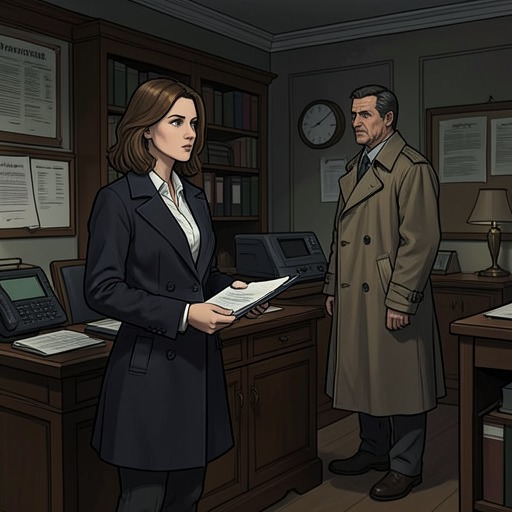
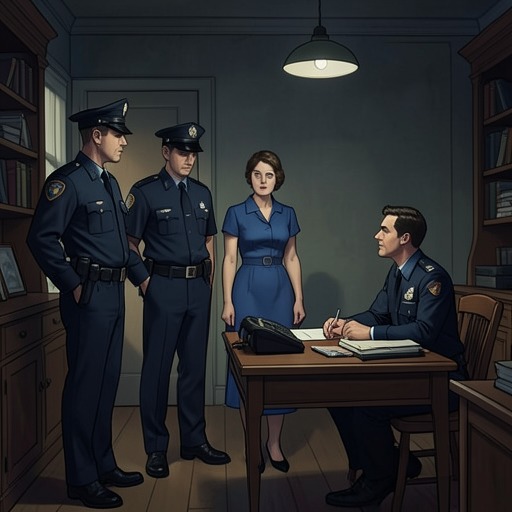
The SonPolice-mole infiltration is the concealed channel through which corrupt officers undermine investigations and serve the criminal enterprise run by the Twin. For years, the suspected leak is discussed but never publicly proved. The belief that Ab Lofthus was responsible gives the police an apparent explanation for their failures, but the diary he left behind overturns that assumption: the infiltration involved two officers, whose partnership helped keep each beyond suspicion.
Rumours and Failed Investigations
Simon describes longstanding rumours of a mole inside the police who passed information to the person controlling much of Oslo’s drug and sex-trafficking activity. Despite extensive talk, no evidence had established either the mole’s existence or the identity of the person being served. Simon names that criminal figure as the Twin, but at this stage the account remains an unproved history rather than a resolved case.
The suspected infiltration is linked to repeated operational failures. Simon recalls raids that went wrong and evidence, witnesses, and suspects that seemed to disappear suddenly. The pattern gave the rumours weight, yet the absence of proof allowed uncertainty to persist. The leak’s defining effect was therefore not only the loss of individual cases: it also made the police unable to distinguish ordinary failure from deliberate betrayal within their own ranks.
Ab Lofthus and the Unresolved Question
After Ab Lofthus died, the mole’s activities appeared to stop. There were no more strangely failed raids or sudden disappearances of evidence, witnesses, and suspects. Many in the police treated this timing as proof that Ab had been the informant.
Simon rejects that conclusion. He describes Ab as proud of his work and of the police force, uninterested in getting rich, and devoted to his family. While Simon does not claim that these qualities alone prove Ab’s innocence, he maintains that a mole unquestionably existed and that someone still has to discover who it was. Ab’s death thus closes the visible pattern of disruptions without resolving their cause; for Simon, the apparent solution is a reason to continue investigating, not a final answer.
The Criminal Network and Its Methods
The infiltration operates within a wider system connecting police information to trafficking, drugs, money, and violence. In a confrontation with Fidel Lae, Simon challenges the idea that punishing undesirable behaviour is simply his job, asking whether it is acceptable to let a dog attack a young girl trying to escape slavery. The exchange situates the criminal network’s power in the exploitation of people and the protection that allows such crimes to continue; it also shows Simon framing punishment as a question of responsibility rather than routine enforcement.
The network reaches into prison operations as well. Hugo Nestor’s account of the plan to have Yngve Morsand’s wife killed describes arrangements made with Arild Franck: the boy’s day release, his location, and the assistance of a corrupt prison officer were organized so that someone else could take the blame. In the same account, Nestor weighs the danger that Sonny might expose the real killers, or that Morsand might reveal what happened if arrested. The scheme demonstrates how criminal interests rely on access to official decisions and personnel, not merely on a single source of leaked information.
Financial cooperation extends the network into business. Simon accuses Iver Iversen of using Iversen Property to do business with the Twin, laundering money from drugs and trafficking in return for fictitious losses said to total hundreds of millions of kroner. Iversen denies knowing anything about the Twin, but Simon says he has evidence that they worked together. The accusation connects the hidden police channel to a broader infrastructure in which criminal money can be concealed through commercial dealings.
The Diary Reveals Two Officers
The decisive account appears in Ab Lofthus’s diary, read by Markus Engseth. In an entry dated 4 August, Ab records that officers at the station were again talking about the mole and assuming that the Twin had planted one person inside the force. Ab writes that the officers missed the possibility that there were two: while one was active, the other could provide an alibi, allowing both to be eliminated as suspects. The diary transforms the mystery from a search for one traitor into evidence of a paired operation.
Ab’s entry identifies the two officers as thoroughly corrupt and says they had turned a blind eye to drug dealing, human trafficking, and murder. It also records his uncertainty about confession, repentance, and forgiveness, and his decision that he had to get out. His words make the infiltration more than an information leak: it is sustained participation in crimes and a breach of the beliefs the officers were supposed to uphold.
A later diary entry describes an anonymous communication system. The officers used Hotmail addresses from separate computers taken from the evidence room and left physical drops, including an envelope taped beneath a bench at Broker’s Restaurant on Bogstadveien. Ab acknowledges that the arrangement was not failsafe and worries that the Twin might discover their identities. In the envelope, the Twin urged him to rise to a senior police position where he could provide sensitive information and earn more money, apparently unaware that there were two officers involved. Ab showed the letter to Z, whose response differed from Ab’s laughter. Together, the entries expose both the mole network’s practical methods and the danger of its members being drawn further into the Twin’s service.
Significance
The revelation of two officers explains why the police could repeatedly suspect a single mole and still fail to identify the source of compromised operations. The pair’s mutual alibis made the familiar model of one insider and one outside criminal inadequate: each officer’s apparent absence from an operation could help protect the other. The concealed structure is therefore built not only on secrecy but on a deliberate exploitation of the investigators’ expectations.
The diary also sharpens the contrast between Ab’s public reputation and his private knowledge of corruption. The police’s inference from the cessation of failures after his death seems persuasive until his own record reveals that the institution had mistaken a visible pattern for proof. Simon’s insistence that the identity of the mole still needs to be established anticipates this reversal: the apparent answer is incomplete, and the true scale of the betrayal emerges only through Ab’s written account.