Progressive visual impairment
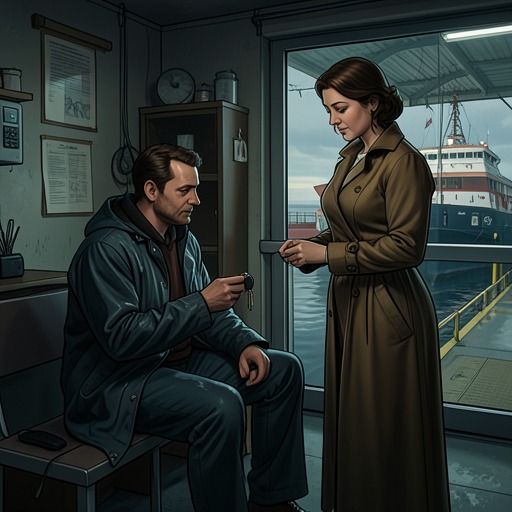
The SonElse’s progressive visual impairment shapes the couple’s hopes and daily life: a promising operation exists in the United States, but its cost and complexity make treatment difficult to reach, while the effects of the condition enter even an ordinary moment at home. The narrative places medical possibility beside immediate limitation, showing Simon’s eagerness to help and the pain of recognizing that care cannot simply restore control.
Medical Prospects and Limits
Else tells Simon that a doctor has described a new kind of surgery in the United States. Its potential extends beyond her: once the operation and its equipment become standard procedure, it could help people who come after her. The promise, however, is deferred. Standardization could take years, and in the present the surgery remains complicated and costs a fortune.
The distinction between future availability and present access gives the medical news its double edge. It is hopeful as a development in treatment, but it does not offer Else an affordable or immediate solution. The condition is therefore framed not only through what medicine may eventually make possible, but through the gap between that promise and the couple’s current means.
Simon’s Response
When Else explains the expense, Simon turns quickly toward the practical question of how much the operation costs. He argues that they have no children, own their house, and live frugally, and begins to consider their resources in light of the treatment. His response makes clear that the prospect of surgery immediately becomes a shared problem rather than information he can leave with her alone.
The limits emerge in Else’s answer: the procedure costs more than a woman on disability benefit and a man on a police salary can afford. Simon’s impulse to find a way forward meets the economic reality of their circumstances. The scene makes their care for one another visible through this mismatch between his readiness to act and the means available to them.
Effects in Daily Life
Later, as Else brings Simon coffee, he is looking out of the window when hot coffee spills onto him. He reacts angrily and, in the moment, blurts out a question about whether she is blind. He immediately recognizes the harm in what he has said and apologizes. The episode connects her visual impairment to a practical mishap in the home, but it also shows how fear and strain can surface as a hurtful reaction between people trying to manage the condition together.
Simon moves to embrace Else, but she is already taking care of him: she turns on the cold tap and reaches for a towel. He holds her from behind and asks her to forgive him, saying that he does not know what to do and cannot help her as he believes he should. The reversal is important. Although her eyesight is the concern he feels unable to address, Else remains capable of responding to his immediate need; the scene presents mutual care rather than reducing her to the condition.
Significance
The two moments set medical hope against the pressures of the present. A new operation offers a possible future for people with the same impairment, yet its cost delays that future for Else and Simon. At home, the consequences become intimate and immediate: Simon’s alarm comes out as anger, followed by apology and an admission of helplessness, while Else attends to him despite the tension between them.
The narrative thus treats visual impairment as both a material condition—with treatment, cost, and practical effects—and a source of pressure on a relationship. It does not make the operation a simple resolution: the prospect of eventual standard treatment cannot erase the years and financial barriers between Else and care now. Simon’s wish to help and Else’s response to him establish the emotional stakes without suggesting that affection alone can remove those limits.