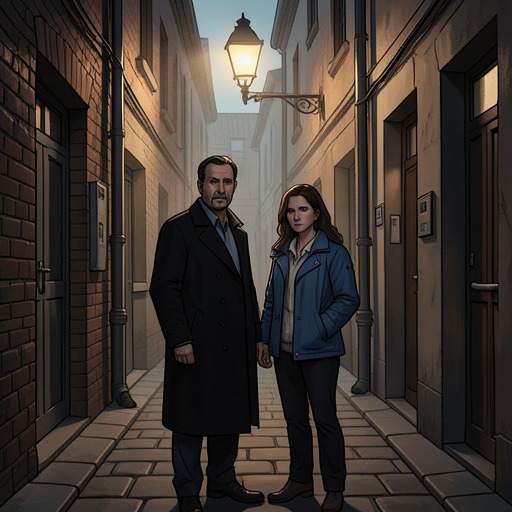
Sannerbrua
The SonSannerbrua is both a crime scene and a point of convergence in Simon and Kari’s investigation: the bridge’s height and the shallow Aker River beneath it help explain the chaplain’s fatal fall, while a witness’s account establishes that he was killed and thrown from the bridge. The location also prompts Simon to tell Kari about the suspected police mole and the Twin, connecting the local investigation to a wider criminal network.
Setting and Investigation
At six o’clock one evening, Simon stands on Sannerbrua with Kari, who has just asked about overtime rules in the Homicide Squad. Their conversation turns to the water below. Simon notes that they have walked along the Aker River and that this is the only bridge high enough for a person to strike the rocks in the shallow water with fatal force. It is also the bridge nearest the residential centre from which the chaplain had come. Kari corrects Simon when he calls the place a hostel, keeping the institution’s identity precise as they consider whether the death could have been suicide.
The physical features of the site give the investigation a concrete basis. The river is no more than a metre and a half deep in places, with rocks protruding from it; the post-mortem findings describe injuries consistent with a fall from height, while the broken neck is identified as the cause of death. The bridge’s height, the rocks, and its proximity to the residential centre together make Sannerbrua a plausible place for the body to have entered the water, but not proof that the chaplain jumped.
A Witness to the Killing
Lars Gilberg later describes watching the bridge from a bench beneath the trees, about ten metres away and partly hidden by leaves. He says two men were with the chaplain: one held him while the other put an arm around his forehead and snapped his head backward. Gilberg recalls that the chaplain made no sound. The killers then looked around and threw the body over the brick wall where the railing ends.
Gilberg’s account explains the evidence Simon and Kari had been trying to interpret. The body lay on the rocks briefly before the current carried it away, matching the location where rocks protrude from the water. He says he did not move, afraid of what the men might do if they realised he had witnessed the killing. Sannerbrua is therefore not merely a place where a body could have fallen: the witness testimony establishes that the chaplain was killed there and that his death was made to resemble a fall into the river.
From the Bridge to the Twin
As Simon and Kari leave the investigation site, their conversation shifts from the chaplain’s death to an older suspicion: for years, police had rumoured that a mole was leaking information to the person who controlled much of Oslo’s drug and sex-trafficking activity. Simon says the rumours had never been supported by evidence and identifies that person as the Twin. The disclosure broadens the meaning of the bridge scene: a local homicide investigation opens onto the question of how criminal power may be protected from within the police.
Later revelations connect that suspected network to specific acts beyond Sannerbrua. Simon tells Iver Iversen that Iversen Property did business with the Twin, laundering proceeds from drug dealing and trafficking in exchange for fictitious tax losses amounting to hundreds of millions of kroner. Ab Lofthus’s diary reveals a further structural twist: the police corruption involved two officers, not one, who used their partnership to give each other alibis and evade suspicion. The diary also describes their communication through stolen computers and Hotmail accounts, and their concealed message drops. These disclosures make Simon’s early reference to the mole an entry point into a wider system of criminal protection, rather than an isolated rumour.
Narrative Significance
Sannerbrua concentrates the difference between appearance and cause. The shallow river, rocks, and fall-related injuries could initially support an accidental or self-inflicted death; Gilberg’s testimony instead identifies a deliberate killing and the disposal of the body. The bridge’s visible geography becomes evidence, but only when read alongside testimony and the investigation’s wider context.
The location also links separate strands of the plot. The chaplain’s death brings Simon and Kari together at the water’s edge; their investigation leads into Simon’s account of the Twin and a suspected police leak; later evidence exposes the criminal relationships behind that suspicion. Sannerbrua thus functions as both a specific crime scene and the threshold through which the inquiry moves from a single death toward systemic corruption.