Sonny Lofthus—Martha Lian
The SonSonny Lofthus and Martha Lian’s relationship joins a story of intense, difficult love to the novel’s mystery about Sonny’s identity and his father’s death. Martha falls for a man she knows as Stig Berger, while the reader eventually learns that Stig is Sonny, the son of Ab Lofthus. Their intimacy brings Martha close to the truth but does not make it easy to accept: love leads her to defend the man she believes she knows, even as evidence begins to challenge that belief.
Identity and Background
Martha encounters Sonny under the name Stig Berger. Their relationship therefore develops within an identity concealed from her, and the difference between the name she uses and the man the story reveals becomes central to its tension. The reader’s knowledge of Sonny’s identity eventually outruns Martha’s: she sees Stig as a person she loves, while the police identify him as Sonny Lofthus, Ab’s son and a suspected killer.
The hidden identity connects their private relationship to Ab’s history. Ab had been portrayed as a police mole who helped drug dealers and traffickers, but Johannes Halden later tells Sonny that this account was false. Ab had suspected the real mole, learned that Nestor’s side intended to get rid of a policeman called Lofthus, and chose to act alone because he believed other officers were compromised. His secret left Sonny’s family with a false explanation of the father’s death and gives the relationship between Sonny and Martha a larger inheritance of concealment and mistrust.
Attraction and Restraint
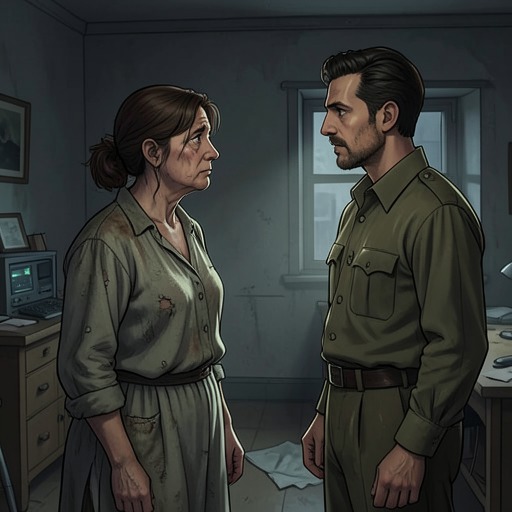
Martha’s feelings for Stig become physical and emotionally difficult to contain. When she asks whether he has served his sentence, he answers that he has; she approaches him and touches his neck before they embrace. Their closeness is mutual, but Martha’s response is divided. She wants to draw him nearer and recognizes that they have imagined kissing many times, yet when they finally kiss she also understands that the dream has become consequential. She tells him she has to leave and that they cannot meet in that way again.
The separation does not end her attachment. Alone in the attic, Martha recognizes that she is in love, an experience she describes to herself as an illness that has taken control of her thoughts and actions. She wonders whether the woman who hanged herself there had also loved someone she knew was wrong for her, and whether love had made that woman revise her sense of right and wrong. Martha’s question gives the room a pointed relation to her own predicament: she fears the moral blindness that can accompany desire, but cannot simply will the desire away.
Love Against Evidence
Martha’s professional responsibilities sharpen the conflict. She has checked the trainers in room 323 and noticed that their soles smell of detergent, an unusual detail that makes her suspect they have been washed to hide something. Despite that suspicion, she refuses to report Stig. She tells herself there must be an explanation and insists that he is not a cold-blooded killer. Her certainty is rooted not in new proof but in her love for him, a fact she recognizes even as she clings to it.
This loyalty is not presented as uncomplicated knowledge. Martha has heard enough lies and competing versions of events in her work to doubt that people are necessarily what they claim to be. Yet in Stig’s case she allows feeling to settle the question that evidence has left open. Her inner conflict is therefore not simply between a woman and the man she loves, but between the obligations of her role and the account of him that love makes emotionally possible. The relationship exposes how attachment can sustain hope while also encouraging self-deception.
Exposure and Arrest
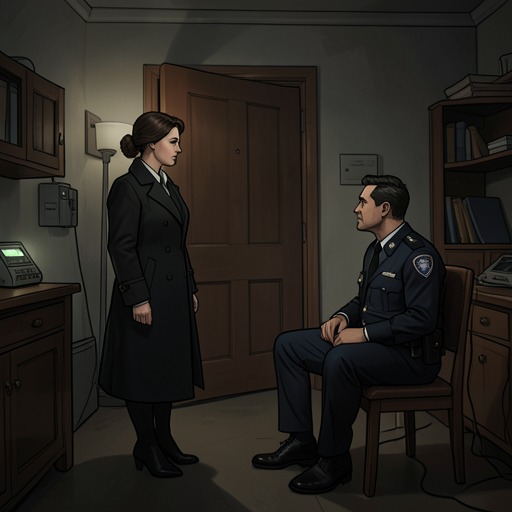
The conflict becomes public when Martha hears over the walkie-talkie that armed officers are raiding the centre. She goes downstairs and challenges the officer in charge, saying she has not seen a search warrant. Her attempt to defend the people in the centre is met by the sight of Stig being led out of room 323 in handcuffs. He is exposed and vulnerable, and he meets her eyes as the officers take him away. The brief look offers no explanation and cannot settle what Martha believes about him.
Simon Kefas identifies the arrested man as Sonny Lofthus. In the wardrobe he finds blue trainers in size eight and a half, then sees the photograph of Ab Lofthus fixed to the wall. The photograph dissolves the remaining uncertainty about Stig’s identity: he is Sonny, Ab’s son. Simon also tells Martha that Sonny has killed six people, framing the raid as justified. The discovery makes the concealed identity a matter of police record, while Martha’s emotional attachment remains tied to the man she knew by another name.
Secrecy, Guilt, and the Relationship’s Significance
Sonny and Martha’s relationship belongs to a wider pattern of secrecy and betrayal surrounding Sonny’s family. Simon’s later account reveals that he recruited Ab as the Twin’s mole after the banking crisis left Ab and Helene heavily in debt. Simon used Ab’s concern for Sonny to pressure him into accepting, then killed Ab when he feared Ab would take his place. The false story that Ab had been the corrupt mole thus concealed Simon’s role and the coercion that drew Ab into the criminal arrangement. Johannes’s disclosure to Sonny corrects that history, but it cannot restore the father or undo the years in which Sonny’s identity and family story were defined by a lie.
Martha’s relationship with Stig consequently carries two kinds of uncertainty: she does not know who he is, and, even when her feelings are strongest, she cannot know whether those feelings are a reliable guide to his actions. The attraction is reciprocal, but it does not resolve the divide between intimacy and responsibility. Instead, the story places their closeness beside the arrest, the evidence, and the revelation of Sonny’s name, leaving love entangled with concealment rather than offering it as a simple remedy.