The moles’ anonymous communication protocol
The SonThe moles’ anonymous communication protocol is the covert method by which two police officers conceal their identities and communicate while serving the Twin’s criminal interests. Built around separate stolen computers, Hotmail addresses, and hidden physical drops, it is intended to protect the partners from discovery; its limits become apparent as surveillance and mutual distrust undermine the secrecy it was meant to provide.
Purpose and Structure
The two officers’ arrangement exploits the fact that the force expects a single informant. In his diary, one mole reflects that the Twin’s presumed plant cannot be one person if there are two: when one is active, the other can provide an alibi. This division of responsibility is meant to keep both men above suspicion and frustrate the police’s search for an individual traitor.
The arrangement is not simply a way to pass information. The diary describes the partners as corrupt officers who have betrayed their duties by turning a blind eye to drugs, human trafficking, and murder. Their anonymous channel connects them to the Twin, who seeks to use one mole’s position in the force to gain access to sensitive information and advance his influence. Simon later identifies the Twin’s business relationship with Iversen Property, describing money laundering for proceeds from drugs and trafficking in exchange for fictitious tax losses worth hundreds of millions of kroner. The anonymous police channel thus sits within a wider network of criminal cooperation, not apart from it.
Channels and Vulnerabilities
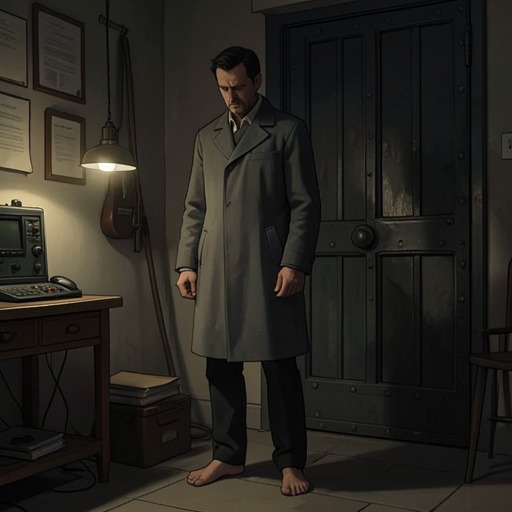
The moles communicate through Hotmail addresses accessed on separate computers taken from the evidence room. They also exchange physical messages: an envelope is taped beneath a bench at Broker’s Restaurant in Bogstadveien, where one officer goes to retrieve it. The use of distinct devices and concealed drops is intended to prevent the partners’ communication from being traced directly to them.
The diary makes clear that these precautions are not failsafe. The writer worries that the Twin could arrange surveillance of the places where messages are left or collected. At the restaurant, a man appears to notice him; the encounter initially raises the possibility that the secret exchange has been exposed. Instead, the man turns out to be someone the officer arrested years earlier for handling stolen property. He says that the arrest helped him leave bad company and build a fish farm with his brother. The episode briefly brings the mole face to face with a consequence of his former police work that contrasts with the criminal life he now leads, while leaving the practical vulnerability of the drop system unresolved.
The Twin’s letter, delivered in the envelope, asks the officer to rise through the police ranks so he can be more useful and promises help with his advancement. The writer recognizes the danger in this offer: the Twin’s ambition appears limitless, and cooperation has become a path toward deeper exposure rather than a stable arrangement. The communication system carries not only instructions and intelligence but also pressure, drawing the mole further into the Twin’s plans.
Breakdown and Consequences
The protocol cannot guarantee loyalty between the people using it. When the Twin stops replying to one mole’s email, the silence becomes a sign of changing trust. The partners have shown one another their true faces, and each now suspects the other. The diary records the writer’s conclusion that the Twin needs only one of them; the other risks becoming a resentful witness who must be eliminated. Their shared anonymity has not protected them from betrayal within their own partnership.
That breakdown leads the diarist to arrange a meeting with his fellow mole at the medieval ruins in Maridalen, at midnight, saying they have matters to discuss. He has loaded a pistol and questions whether his corruption came from a desire to help his family, personal ambition, or weakness. The secret communications arrangement therefore culminates not in exposure through a failed email or a watched drop, but in the partners’ decision to treat each other as threats. The diary’s account places the protocol at the intersection of concealment and confession: the same record that documents their methods also preserves the writer’s awareness that there may be no way back.
Significance
Simon recalls that rumours of a police mole serving the person who controlled much of Oslo’s drug and sex trafficking persisted for years, but that no evidence was produced at the time to establish that either the mole or the criminal actually existed. The diary changes the meaning of those rumours by disclosing a partnership rather than a lone informant. The protocol’s central concealment is structural: two collaborators can protect each other with alibis, while the expectation of one culprit directs suspicion away from the arrangement itself.
Its failures also expose the limits of secrecy as a substitute for trust. Stolen devices and hidden envelopes can obscure a connection from outsiders, but they cannot prevent the Twin from exerting pressure or the partners from turning against each other. The protocol helps sustain the criminal network for a time; its collapse reveals how precarious that network is when its members no longer believe they can safely cooperate.