
Karl Riemeck’s Fate
The Spy Who Came in from the ColdThis thread traces Karl Riemeck from valuable source to exposed agent, showing how trust, access, and an attempted escape lead to his death.
increasing Bearing strength in each event
 decreasing
Bearing strength in each eventdecreasingA Source Discovered
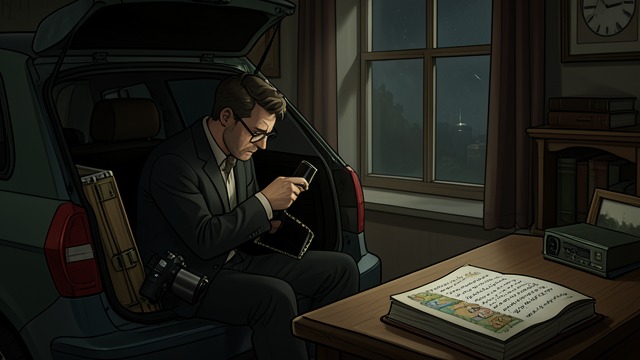
The Photograph in the Car
An unexpected contact
A camera film containing sensitive party material appears in de Jong’s car. Leamas studies the documents and works backward to identify a source with access to the Secretariat.
A risky approach
He leaves a coded message in a children’s book, inviting a response. The method leads him to Karl Riemeck, whose position gives the British a source of exceptional value.
A Trusted Agent

Access Expands
High-level intelligence
Karl supplies material about the party, its security apparatus, and its internal proceedings. Leamas regards him as the best agent he has ever handled.
Success breeds exposure
London’s appetite for more intelligence pushes the operation toward additional sources and greater pressure on Karl. The expanding network makes a once-productive relationship increasingly dangerous.
Elvira Knows Too Much

A Private Confidence
A secret revealed
Karl tells Elvira about his work and the wider network. Leamas recognizes that the disclosure has compromised more than one agent and tries too late to change procedures.
Trust turns into exposure
The intimate relationship becomes a security weakness. Leamas resents Karl’s confidence in her, but the deeper failure belongs to an operation that has allowed personal lives to intersect with dangerous secrets.
The Failed Crossing
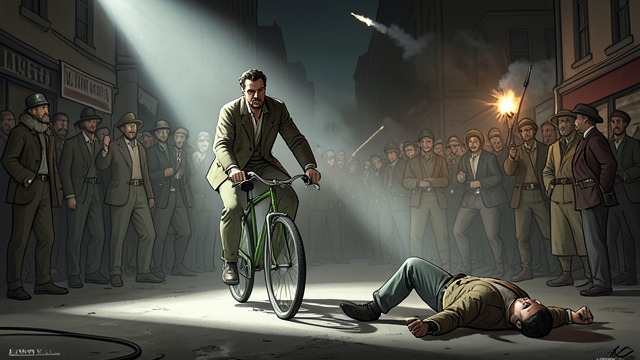
Escape Under Searchlights
A narrow chance
Karl reaches the western approach on a bicycle after the other agents have been caught. He passes several checks before the alarm exposes him.
Death at the boundary
East German guards shoot him before he reaches safety. His death ends the network’s remaining hope and leaves Leamas to return to London as a defeated handler.
A Death Reused

Karl’s Story Reinterpreted
Evidence of access
Fiedler argues that Karl’s extraordinary reach required help from a senior figure. He presents Hans-Dieter Mundt as the person able to protect and advance him.
A contested explanation
The theory makes Karl’s career and death part of a larger betrayal. Yet the same facts have been shaped to support an operation, leaving Karl’s real choices entangled with competing interpretations.
In Berlin, in 1959
The years after Karl’s recruitment
Before Karl’s final escape attempt
October night at Checkpoint Charlie
During Fiedler’s case against Mundt
