
A Story Changed by Its Audience
The Tales of Beedle the BardThis flow traces how fear and censorship alter the reception of the Hopping Pot tale without erasing its original challenge.
increasing Bearing strength in each event
 decreasing
Bearing strength in each eventdecreasingA Dangerous Original
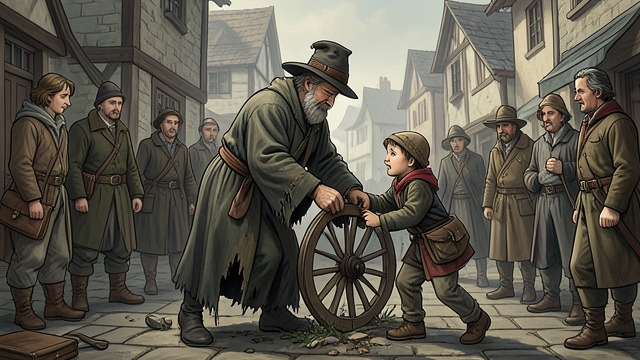
A Dangerous Original
Compassion across a boundary
The original tale depicts a wizard who must help his non-magical neighbors.
Unwelcome implications
Its message challenges a community increasingly afraid of contact with outsiders.
That moral makes the story politically provocative as well as domestic.
Witch Hunts Intensify
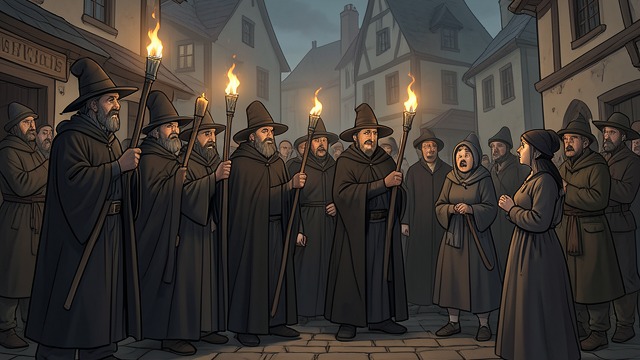
Witch Hunts Intensify
Real danger
European wizarding witch-hunts make helping a Muggle neighbor seem perilous to many magical families.
Defensive separation
Fear encourages the cry to leave Muggles to themselves.
A story of voluntary service therefore contests a powerful survival instinct.
A Revised Moral
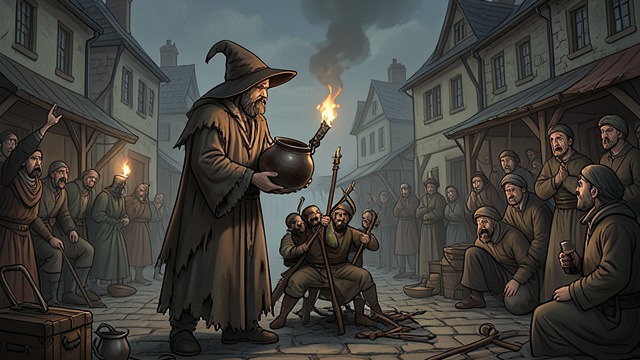
A Revised Moral
Fear rewrites the plot
A popular retelling turns the pot into a defender against torch-bearing neighbors.
Violence replaces aid
The pot swallows attackers, and the wizard secures a promise to be left alone.
The frightening image survives while the original generosity is discarded.
Secrecy Hardens
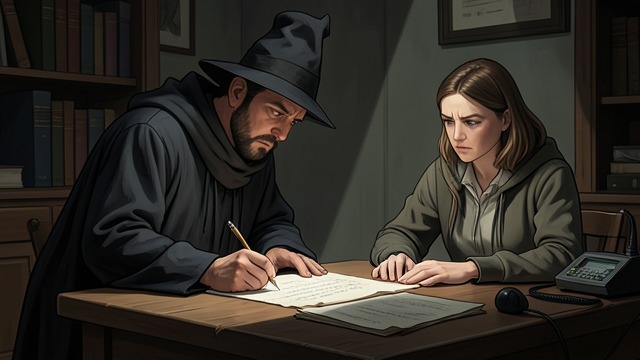
Secrecy Hardens
Social suspicion
Witches and wizards who associate with Muggles may become outcasts within their own communities.
A weaponized insult
Brutus Malfoy’s anti-Muggle writing presents affection for Muggles as proof of weak magic.
The prejudice turns neighborly kindness into a contested political identity.
The Original Survives
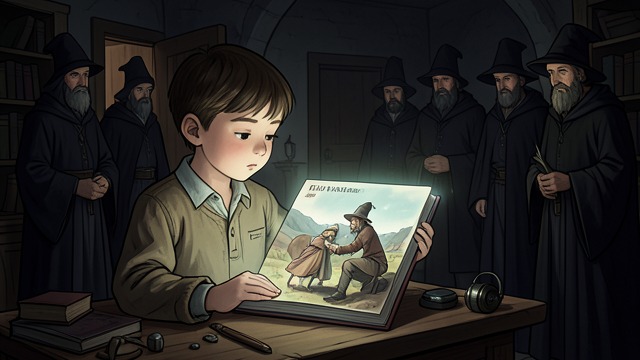
The Original Survives
Separation formalized
Wizardkind goes underground under the International Statute of Wizarding Secrecy.
Moral recovered
Some children still encounter the original tale and are surprised by its Muggle-friendly ending.
Its persistence keeps an alternative to fear alive.
In the fifteenth century
During the early fifteenth-century persecution
By the middle of the sixteenth century
By the seventeenth century
After the International Statute of Wizarding Secrecy in 1689
