
Beedle’s Challenged Reputation
The Tales of Beedle the BardThis flow traces the criticism, adaptation, and persistence of Beedle’s stories across changing audiences.
increasing Bearing strength in each event
 decreasing
Bearing strength in each eventdecreasingA Writer Out of Step

A Writer Out of Step
An unfashionable sympathy
Beedle’s stories treat Muggles as ignorant rather than inherently malicious and often favor tolerance.
A risky position
The introduction places this outlook against growing persecution.
His stories challenge both magical cruelty and indifference.
The Hopping Pot Condemned
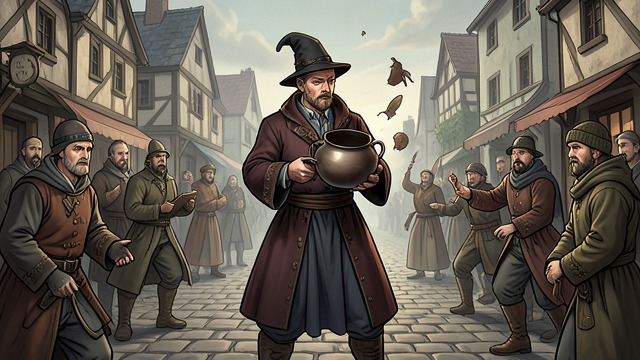
The Hopping Pot Condemned
A moral taken as provocation
The tale asks a wizard to help non-magical neighbors, angering those who see contact as dangerous.
Copies destroyed
Dumbledore notes that versions of the original were often consigned to flames.
Its survival reflects a struggle over what children should learn about Muggles.
A Safer Retelling
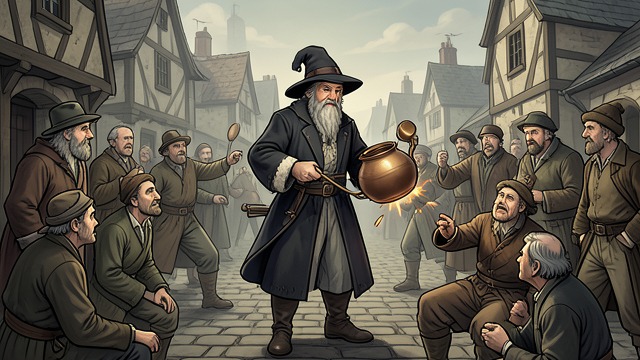
A Safer Retelling
The cauldron retained
Families preserve the grotesque pot while changing its role.
The message reversed
In the revised version, it protects a wizard by attacking his Muggle neighbors.
The adaptation preserves entertainment while removing the original call to generosity.
Bloxam’s Sanitizing Rewrite
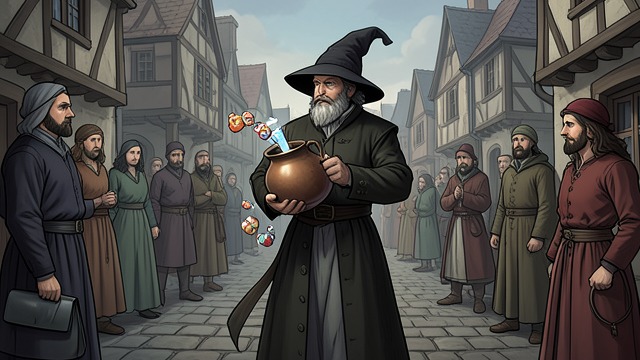
Bloxam’s Sanitizing Rewrite
Discomfort condemned
Beatrix Bloxam objects to Beedle’s bodily grotesquerie and frightening subject matter.
Innocence imposed
Her rewritten ending turns the pot into a cheerful source of sweets and tooth-brushing advice.
The contrast shows how attempts to protect children can erase a story’s moral substance.
The Children’s Verdict
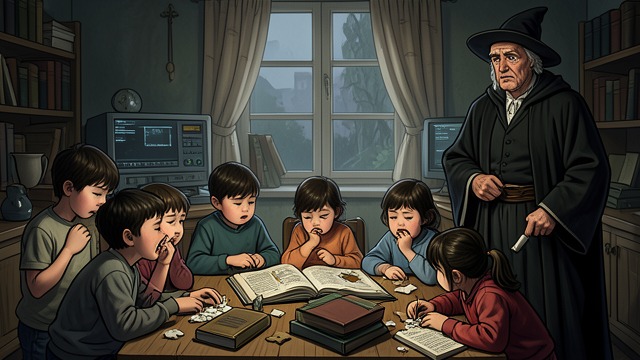
The Children’s Verdict
A rewrite rejected
Dumbledore reports that children respond to Bloxam’s version with retching and demands to destroy the book.
Original complexity endures
The comic response preserves the appeal of stories that do not hide unpleasant consequences.
Beedle’s tales remain influential precisely because they allow danger and moral difficulty to matter.
In the fifteenth century
As the tale circulated amid witch hunts
By the middle of the sixteenth century
In the nineteenth and early twentieth centuries
Across generations of wizarding readers
