Elder Wand
The Tales of Beedle the BardThe Elder Wand is the supposedly unbeatable weapon given by Death to the eldest of the Three Brothers in “The Tale of the Three Brothers.” Made from an elder-tree branch and coveted as a guarantee of victory, it embodies the story’s central irony: a gift sought to conquer Death does not protect its owner from violence, and the later legend of the wand as a real path to mastery of Death reverses the tale’s warning rather than confirming it.
Origin and the bargain with Death
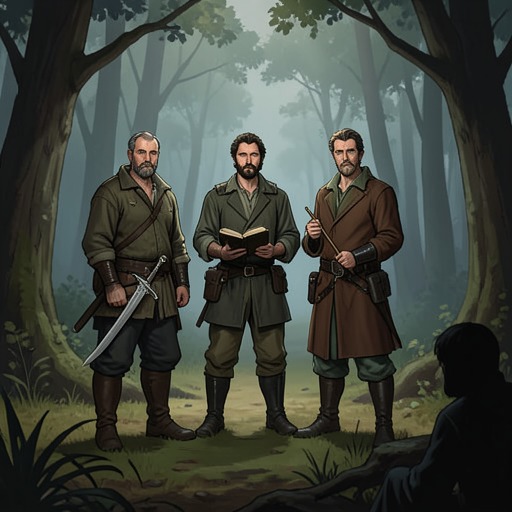
The Three Brothers encounter Death after using magic to make a bridge across a river too deep to wade and too dangerous to swim. Angry that they have escaped the river’s usual victims, Death disguises his hostility as congratulations and offers each brother a prize. The combative eldest asks for a wand more powerful than any in existence, one that will always win duels and suit a wizard who has conquered Death. Death crosses to an elder tree on the riverbank, fashions a wand from a hanging branch, and gives it to him.
The gift is tailored to the eldest brother’s appetite for combat: it is not simply a tool of magic but a promise of victory over other wizards. The other brothers choose different gifts, but the eldest’s request makes the danger of the wand plain from the start. Its imagined power rests on domination, and the story places that desire inside a bargain with Death, the one adversary the brothers have only temporarily evaded.
The wand’s first owner and its failure
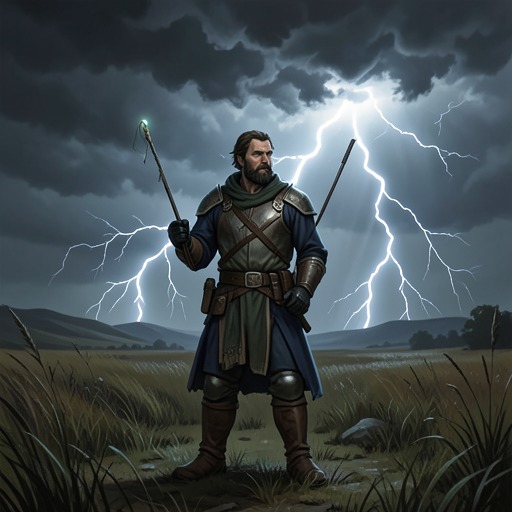
After the brothers part, the eldest travels for a week or more before reaching a distant village. There he seeks out a fellow wizard with whom he has quarrelled. Armed with the Elder Wand, he wins the duel and leaves his enemy dead on the floor. The victory appears to fulfil the wand’s promise, but the scene also shows the violence built into that promise: the wand’s first recorded triumph is a killing.
The eldest then goes to an inn and boasts loudly that he has taken the powerful wand from Death himself and that it makes him invincible. That night, while he lies wine-sodden on his bed, another wizard creeps upon him, steals the wand, and slits his throat. Death takes the first brother. The reversal is decisive: the wand can make its owner formidable in a duel, but it cannot prevent a sleeping owner from being murdered, and the boast that he is invincible advertises the prize to someone willing to take it.
From folktale gift to living legend
The commentary distinguishes the moral of Beedle the Bard’s tale from the later legend attached to it. In the story, Death gives the brothers an unbeatable wand, a stone capable of recalling the dead, and an Invisibility Cloak that endures for ever. A minority of the wizarding community treats these gifts as real objects and claims that whoever becomes the rightful owner of all three will become “master of Death,” usually taken to mean invulnerable or immortal. This belief turns a cautionary story into a supposed map to power, directly reversing its lesson that attempts to evade or overcome death end in disappointment.
The legend has little firm evidence behind it, but the Elder Wand has more historical support than the other two gifts. Across generations, wizards have claimed to possess a wand more powerful than ordinary wands, sometimes calling it “unbeatable” and sometimes claiming it is made of elder, like Death’s fictional wand. It has been known by several names, including “the Wand of Destiny” and “the Deathstick.” These claims can indicate self-glorification or an effort to frighten attackers; the commentary also allows that some claimants may genuinely have believed in the wand’s exceptional power.
The elder wood and the history of claimed owners
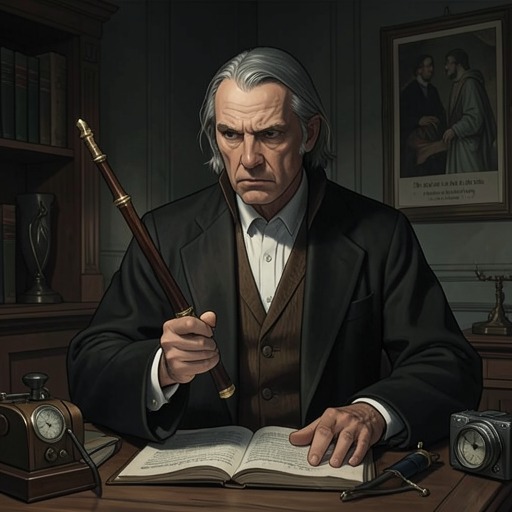
Elder itself carries an uneasy reputation among wandmakers. The commentary links that disfavor both to Death’s choice of an elder branch in Beedle’s story and to the repeated association of elder wands with power-hungry or violent wizards. The first well-documented owner of a particularly powerful and dangerous elder wand was Emeric the Evil, a short-lived but exceptionally aggressive wizard who terrorised the South of England in the early Middle Ages. He died in a ferocious duel with Egbert; what became of Egbert is unknown. In the period before the Ministry of Magic regulated Dark Magic, duels were usually fatal, and medieval duelists generally had short lives.
A century later, Godelot wrote a collection of dangerous spells with the help of a wand he described in his notebook as “my moste wicked and subtle friend, with bodie of Ellhorn,24 who knowes ways of magick moste evile”. His book became known as Magick Moste Evile. The description presents the wand almost as a collaborator or instructor, rather than a passive instrument. Wandlore offers a possible explanation for that impression: wands can absorb some of their users’ expertise, although the process is unpredictable and imperfect, and how well a wand performs depends in part on its relationship with a particular user. A wand passed through the hands of many Dark wizards might therefore develop a marked affinity for dangerous magic.
Most witches and wizards prefer a wand that has chosen them over a second-hand wand, which may have acquired habits poorly suited to its new owner. The custom of burying or burning a wand with its dead owner also limits how many masters any one wand can serve. Believers in the Elder Wand tell a different history: because its allegiance passes to whoever overcomes its current master, usually by killing him, they hold that it was never buried or destroyed and accumulated wisdom, strength, and power across successive owners. Their account makes repeated violence both the means by which the wand changes hands and the supposed source of its growing power.
Godelot died in his own cellar, locked inside by his mad son, Hereward. The commentary assumes Hereward took his father’s wand, since Godelot would otherwise have been able to escape, but cannot establish what Hereward later did with it. A wand called the Eldrun Wand appeared in the early eighteenth century in the possession of Barnabas Deverill, who used it to build a reputation as a fearsome warlock. His reign of terror ended when the equally notorious Loxias took the wand, renamed it the Deathstick, and used it to lay waste to anyone who displeased him. The wand’s later history is difficult to trace: many people claimed to have killed Loxias, including his own mother.
Power, violence, and the tale’s warning
The supposed history of the Elder Wand undercuts the claim that it is unbeatable. Every man who claimed to own it insisted on its invincibility, yet the known succession of owners shows that it was repeatedly beaten. Its reputation also attracts the very danger its owners claim to command. The pursuit of the wand therefore repeats the pattern of the eldest brother’s story: the promise of security and superiority leads into contests that expose the owner to attack.
The wand’s meaning also depends on its contrast with the other gifts. The second brother’s stone offers the temptation to recall a dead beloved, while the youngest brother asks only for a means to leave without Death following him. The commentary argues that the youngest understands the limits of escape: violence and necromancy pit people against an adversary who cannot ultimately lose. Against that moral, the Elder Wand becomes a concentrated emblem of the desire to turn temporary advantage into permanent mastery. Its repeated names and stories of successive owners keep that desire alive, even as the history attributed to it demonstrates the cost of pursuing it.