European wizarding witch-hunts
The Tales of Beedle the BardEuropean wizarding witch-hunts were a period of escalating persecution that pushed witches and wizards toward concealment and separation from Muggles. Their effects reached beyond immediate danger: they helped shape wizarding secrecy, made association with Muggles socially suspect, and sharpened disputes over whether magical people should help or distance themselves from their non-magical neighbors.
Escalation and the turn toward secrecy
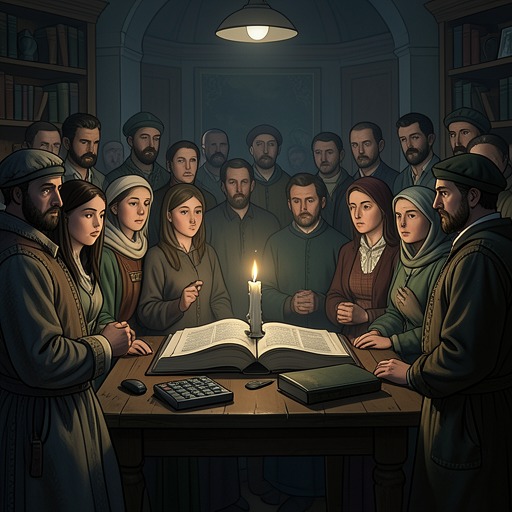
In the early fifteenth century, persecution was gathering pace across Europe. For many witches and wizards, offering a spell to help a Muggle could mean exposing themselves to serious danger; the prospect of assisting a neighbor’s sick pig was likened to volunteering for one’s own funeral pyre. This fear made separation seem like self-preservation, even as it set wizarding communities further apart from the people around them.
Some witches and wizards did escape execution, but the danger was real. Sir Nicholas de Mimsy-Porpington, a wizard at the royal court in life and later the ghost of Gryffindor Tower, had his wand taken before he was confined and executed, leaving him unable to use magic to escape. Younger members of wizarding families were also particularly vulnerable: their uncontrolled magic could make them noticeable to Muggle witch-hunters. These examples show that magical ability did not guarantee safety when a person was exposed and unable to use it.
The resulting separation developed into a lasting institutional arrangement. By 1689, wizardkind had voluntarily gone underground under the International Statute of Wizarding Secrecy. The statute marked a culmination of growing distance between magical and non-magical communities, rather than an isolated response detached from the preceding climate of persecution.
Social consequences within wizarding society
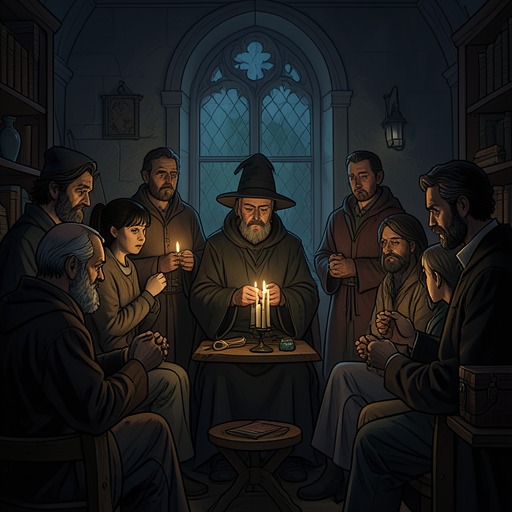
The threat of persecution changed more than public behavior. As witch-hunts intensified, wizarding families increasingly led double lives, using concealment charms to protect themselves and their families. By the seventeenth century, a witch or wizard who chose to fraternize with Muggles could be treated as suspect or even become an outcast in their own community. A strategy of safety thus carried a social cost: closeness to Muggles could itself invite exclusion among wizards.
That suspicion also enabled prejudice to masquerade as a judgment about magical ability. Pro-Muggle witches and wizards were insulted with terms such as “Mudwallower,” “Dunglicker” and “Scumsucker,” and accused of possessing weak or inferior magic. The idea was promoted by influential figures including Brutus Malfoy, editor of the anti-Muggle periodical Warlock at War. In 1675, he claimed that wizards who enjoyed Muggle company were unintelligent and magically feeble. The prejudice eventually met evidence that some of the world’s most brilliant wizards were “Muggle-lovers,” but its persistence illustrates how fear of exposure could be converted into a hierarchy of belonging.
Disputes over Muggle contact
The persecution era forms the historical backdrop to the dispute over “The Wizard and the Hopping Pot.” Beedle the Bard’s original tale urged brotherly love for Muggles, a message out of step with a period in which helping them could endanger the helper. Its moral was later stripped from a version that instead portrayed the Pot as protecting a wizard from hostile, torch-bearing neighbors. Some parents continued to tell children only that revision, so the original story could come as a surprise when they encountered it.
The conflict over contact with Muggles endured well beyond the early danger of the hunts. Lucius Malfoy later demanded that the story be removed from the Hogwarts library, arguing that fiction depicting wizard–Muggle marriage should be banned to protect blood purity. Albus Dumbledore rejected the demand with the support of a majority of the Hogwarts Board of Governors, calling the alleged purity of so-called pure-blood families hypocritical and the removal of such works illogical and immoral. The dispute demonstrates how a history of enforced separation could persist in later blood-purity politics, even when expressed through censorship rather than immediate physical threat.
Historical and literary significance
The witch-hunts help explain why wizarding secrecy became both a protective policy and a source of social distance. They also clarify the risks behind Beedle’s pro-Muggle fable: its call to help neighbors challenged a prevailing logic of concealment, while later alterations turned the same story toward hostility and self-protection. In the book’s commentary, the contrast makes persecution consequential not only as a danger imposed from outside, but as a pressure that could reshape stories, communal norms, and attitudes toward Muggles across generations.