Persecution of witches and wizards
The Tales of Beedle the BardPersecution of witches and wizards was a growing threat in Europe from the early fifteenth century, shaping magical communities’ relations with Muggles and helping propel wizardkind toward secrecy. In Beedle the Bard’s commentary, it is both a historical danger and the pressure behind a widening social divide: some witches and wizards responded by hiding, while others condemned any effort to remain friendly with non-magical neighbours.
Historical Pressure and Secrecy
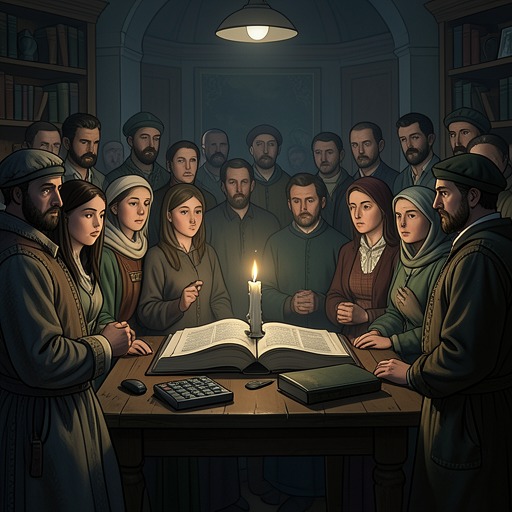
In the early fifteenth century, persecution was gathering pace across Europe. The risk of helping a Muggle, even by casting a spell on a sickly pig, could seem like an invitation to one’s own execution. Many in the magical community therefore regarded contact with Muggles as dangerous, and the cry to let Muggles manage without magical help accompanied a growing separation between the communities.
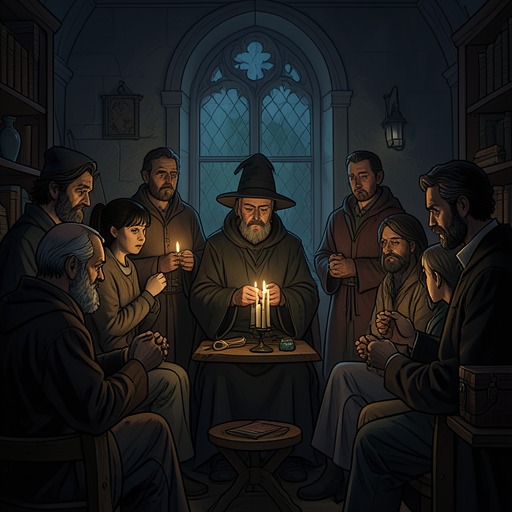
That separation eventually acquired a formal framework. In 1689, wizardkind instituted the International Statute of Wizarding Secrecy and voluntarily went underground. The Statute marked a decisive development in the response to persecution: concealment became not merely a family precaution but a collective policy of remaining hidden from Muggles.
Concealment and Social Exclusion
As witch-hunts grew fiercer, wizarding families used concealment charms to protect themselves and their families. By the seventeenth century, witches and wizards who fraternised with Muggles could be treated as suspect or even as outcasts within their own communities. Persecution thus sharpened an internal boundary as well as the danger posed by outsiders: association with Muggles could carry a social cost among magical peers.
Anti-Muggle prejudice gave that boundary its own language. Pro-Muggle witches and wizards were insulted and accused of possessing weak or inferior magic. Brutus Malfoy, editor of the anti-Muggle periodical Warlock at War, helped perpetuate the claim that a Muggle-lover was scarcely more magical than a Squib. The prejudice eventually faded in the face of evidence that some of the most brilliant wizards were also known as Muggle-lovers, but its earlier force made sympathy for Muggles a source of suspicion.
Literary Resistance and Rewriting
Beedle the Bard’s stories offered a contrasting lesson to young magical readers. In his tales, witches and wizards can perform magic yet find their problems no easier to solve; the stories teach that magic causes as much trouble as it cures. Beedle’s sympathy for Muggles and his opposition to cruelty, apathy, and the arrogant misuse of magical talent ran against a climate in which helping a non-magical neighbour could appear perilous.
That conflict is visible in the history of “The Wizard and the Hopping Pot.” Its original moral, in which a wizard’s son is moved by Muggles’ misery and agrees to help his non-magical neighbours, was opposed to the growing separation between the communities. By the middle of the sixteenth century, a different version was widely circulated: the pot protected a wizard from hostile neighbours, swallowed villagers, and secured a promise that the wizard would be left alone to practise magic. Some anti-Muggle parents continued to tell children only this revision, so that readers who later encountered the original could be surprised by its pro-Muggle message.
Beatrix Bloxam’s later rewriting of Beedle’s tales shows another kind of resistance to their contents. She considered their subjects harmful to children and recast stories according to her ideal of innocent, cheerful reading. Her softened version of “The Wizard and the Hopping Pot” replaced the original tale’s difficult moral conflict with a gentle story of a pot and a child curing dolls. The contrast illustrates how a story’s treatment of danger and suffering could itself become contested.
Laws, Records, and Historical Memory
The wider history also includes persecution, resistance, and changing magical rules. Sir Nicholas de Mimsy-Porpington was stripped of his wand, locked in a dungeon, and unable to use magic to escape execution. Younger members of wizarding families were especially vulnerable to Muggle witch-hunters because they could not yet control the magic that made them noticeable. Such examples qualify the claim that witches and wizards were generally adept at escaping execution: some did die, and children’s uncontrolled abilities could expose them to danger.
The treatment of suspected magic also appears in later legal and administrative practices. The Ministry of Magic requires Animagi to register, because their ability to assume animal form is particularly useful for disguise, concealment, or covert activity. In another legal development, the Cruciatus, Imperius, and Avada Kedavra Curses were classified as Unforgivable in 1717, with the strictest penalties attached to their use. These measures do not erase the earlier history of persecution, but they show magical authorities regulating powers and risks within their own society as well as responding to the danger of exposure.
The subject therefore extends beyond the threat of execution. Persecution encouraged concealment and official secrecy, while fear of Muggles could harden into prejudice within wizarding society. Against both responses, Beedle’s stories preserve the possibility of kindness across the divide—and show how readily that lesson could be altered when fear shaped what families chose to tell.