
Faith, Repentance, and Salvation
The Tenant of Wildfell HallChristian faith shapes Helen’s refusal of revenge, her work of care, and her hope that divine mercy may reach even a man who dies afraid.
increasing Bearing strength in each event
 decreasing
Bearing strength in each eventdecreasingFaith Before Marriage

Faith Before Marriage
Love ordered by belief
Helen tells Arthur that her love for God cannot be displaced by marital possessiveness. She believes that true love between spouses should deepen, not compete with, devotion to God.
An irreconcilable difference
Arthur treats faith as an obstacle to his comfort and jokes about religious duty. Their disagreement reveals a difference in the foundations of their lives, not merely a difference in taste.
A Hope for Universal Mercy
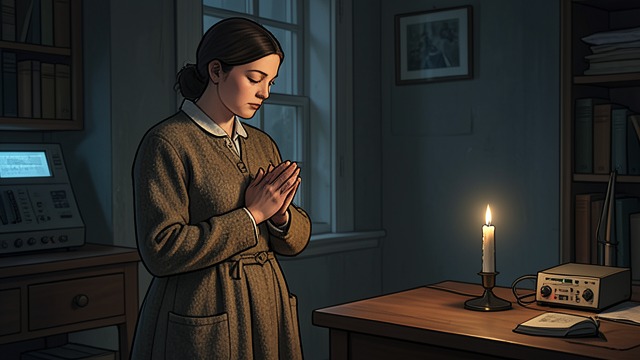
A Hope for Universal Mercy
Helen’s interpretation
Helen believes scripture permits hope that all souls may ultimately be reconciled to God. She distinguishes this private theological conviction from a public excuse for wrongdoing.
Hope without permission
Her belief does not lead her to excuse Arthur’s conduct or surrender her judgment. Instead, it allows her to hope for his eventual restoration while continuing to name the harm he causes.
Refusing Revenge

Refusing Revenge
A betrayed husband’s choice
Lord Lowborough discovers his wife’s affair with Arthur Huntingdon and is tempted to seek a duel. Hattersley offers to arrange it, turning despair into a chance for violence.
Leaving judgment to God
Lowborough refuses to kill his rival or himself and chooses to leave the matter to God. Helen recognizes the courage in that restraint, even while acknowledging the depth of his pain.
Care at the Deathbed

Care at the Deathbed
Faith offered, not forced
Helen urges Arthur to consider death, repentance, and the possibility of divine mercy. She does not pretend that her own prayers can make the decision for him.
Fear and responsibility
Arthur admits that he fears consequences for himself more than he grieves his offense against God. His response shows the limits of Helen’s influence: she can speak and care, but cannot manufacture repentance.
Hope After His Death

Hope After His Death
Grief without certainty
Helen mourns the possibility that Arthur’s soul may be lost, despite the suffering he caused her. She writes to Frederick that she hopes whatever purification awaits him does not mean he is ultimately abandoned.
Mercy beyond judgment
Her hope reflects her belief that God does not hate what has been made. The ending leaves Arthur’s ultimate fate uncertain while showing Helen’s refusal to turn faith into vengeance.
During Helen’s courtship and early marriage
During the engagement debate at Staningley
Autumn 1826
December 1828
After Arthur’s death
