
Fathers, Sons, and Inherited Habits
The Tenant of Wildfell HallThe contrasts between Arthur Huntingdon, Ralph Hattersley, and their children test whether destructive behaviour is inherited or learned and changed.
increasing Bearing strength in each event
 decreasing
Bearing strength in each eventdecreasingHuntingdon’s Own Inheritance
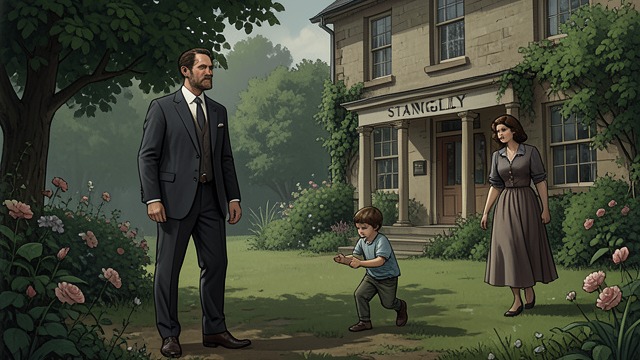
Huntingdon’s Own Inheritance
A permissive childhood recalled
Helen attributes Arthur Huntingdon’s weakness partly to a miserly father who restricted him and a mother who indulged him. The explanation helps her understand him but risks excusing his adult choices.
Influence versus responsibility
The novel shows that upbringing can shape habits without making a person helpless. Arthur’s history explains his resentment of restraint but does not erase his responsibility for betrayal and excess.
A Father’s Example at Grassdale
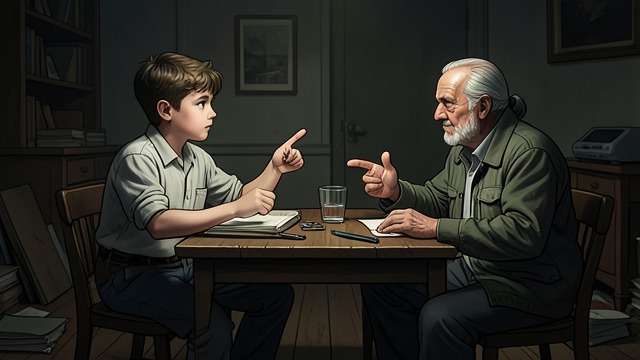
A Father’s Example at Grassdale
Habits transmitted
Arthur Huntingdon lets his son mimic the adults’ drinking and rough language. He enjoys the performance without considering what the child learns from it.
A mother’s counter-example
Helen’s care, instruction, and self-restraint offer a competing model. Their household conflict demonstrates how children absorb values from both what adults say and what they repeatedly do.
Hattersley Sees His Reflection
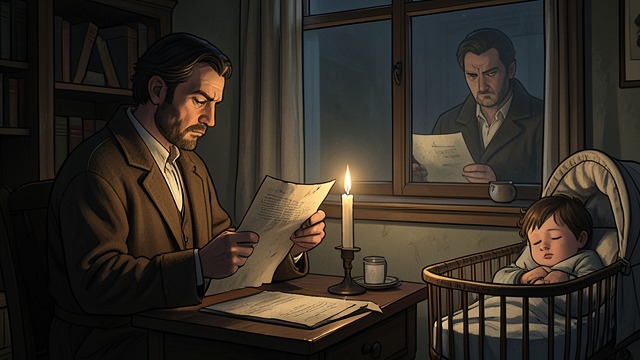
Hattersley Sees His Reflection
A father confronted
Ralph Hattersley reads his wife’s account of the anxiety his behaviour causes. For the first time, he sees that his children are growing up in a home shaped by his drunkenness and intimidation.
Change for the family
He resolves to reform, not only to avoid personal consequences but to become a better husband and father. The decision matters because it recognizes the effect of a man’s conduct on those with less power.
Huntingdon’s Final Example
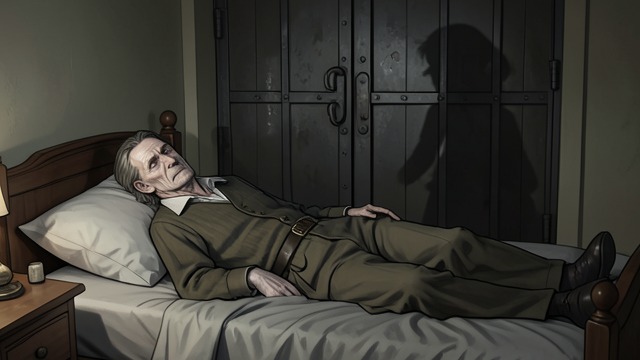
Huntingdon’s Final Example
The cost becomes visible
Arthur Huntingdon’s damaged health and terror of death expose the end point of the habits he once treated as harmless. His son is spared much of the immediate spectacle through Helen’s care.
A legacy to resist
Helen fears that the boy may repeat his father’s behaviour, but she does not treat that future as certain. Her sustained teaching offers a way to break the chain of example.
A Different Household
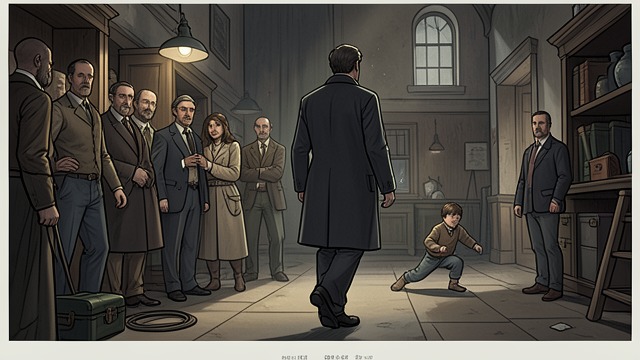
A Different Household
Ralph’s changed life
Ralph Hattersley leaves the company that encouraged his excess and becomes a steadier country gentleman. His children grow up with more reliable care than their parents’ early marriage offered.
Arthur Graham’s future
Arthur Graham, raised apart from his father’s daily influence, becomes a family man in his own right. Their contrasting outcomes suggest that inherited habits can be interrupted through sustained choices and better environments.
Before his marriage to Helen
Arthur Graham’s early childhood
After Helen shows him Milicent’s letters
Arthur Huntingdon’s last illness
The later years
