Gilbert Markham assaults Frederick Lawrence
The Tenant of Wildfell HallGilbert Markham assaults Frederick Lawrence in a sudden outburst after his hopes concerning Helen Graham have been disappointed. The incident turns Gilbert’s jealousy into physical violence, briefly makes him fear that he has killed his friend, and becomes an early measure of the difference between his impulsive conduct and the conscience he claims to hear afterward.
Causes and Context
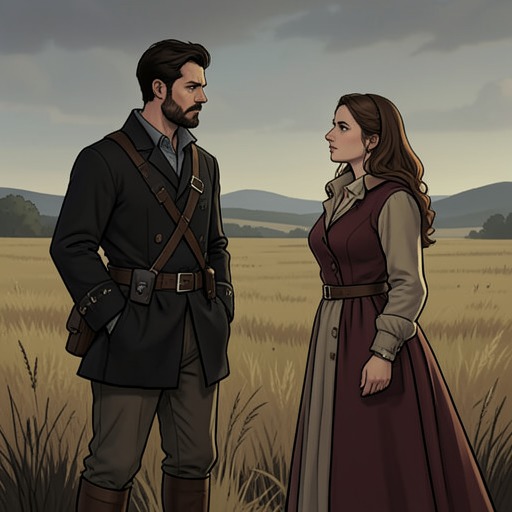
The confrontation follows Gilbert’s mistaken interpretation of the relationship between Helen and Frederick. Frederick addresses him in a quiet, questioning manner, asking why Gilbert blames his friends for his disappointment and reminding him that he had warned him. Gilbert later recalls that he had been holding back his anger before Frederick spoke; the calmness of the reply does not defuse that anger but becomes the immediate prelude to the assault.
The scene belongs to Gilbert’s retrospective account, written as part of his communication to Halford. Its force therefore comes both from the action and from the narrator’s knowledge of what he did: he describes himself as driven by an impulse, while acknowledging the satisfaction he initially took in the result. The episode presents his account as self-incriminating rather than as a simple defense of his conduct.
The Assault
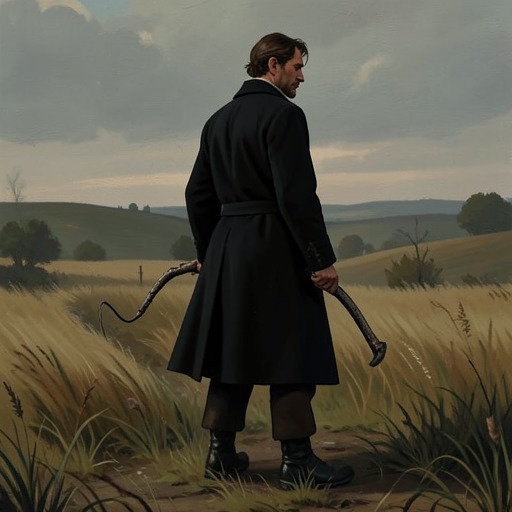
Gilbert seizes his riding whip by its small end and strikes Frederick on the head. Frederick reels in the saddle and falls backward to the ground; his pony, suddenly freed of its rider, moves away and begins grazing by the hedge-bank. Gilbert’s immediate response combines savage satisfaction with alarm: bending over Frederick, he fears that the fall has killed him.
Frederick moves his eyelids and groans, and Gilbert realizes that he has been stunned rather than killed. The violence nevertheless leaves him temporarily shaken by the possibility of what he has done. After his first anger begins to subside, Gilbert turns back to check on Frederick. He insists that this return was not prompted by generous feeling or fear of personal consequences, but by conscience, and says he took credit for obeying it despite the effort involved.
Aftermath and Significance
When Gilbert finds him again, Frederick and the pony have both shifted position. The pony is several yards farther away, while Frederick has managed to move from the middle of the road and is sitting against the bank, still looking unwell. The altered positions mark the interval between the blow and Gilbert’s return: the immediate danger has passed, but the assault has not been undone.
The incident exposes a contradiction in Gilbert’s self-presentation. He recognizes that jealousy has made him unjust to a friend, yet his first reaction is satisfaction at Frederick’s fall; only afterward does he describe conscience as directing him to return. The narrative gives both impulses room, showing remorse as real but delayed rather than allowing it to erase the violence.
The assault also belongs to a layered account of who knows what, and when. Gilbert first relates the episode in his letter to Halford, then later receives Helen’s manuscript and reads the history that changes his understanding of her life. Helen entrusts the manuscript to him after he pleads for something that might restore his opinion of her, and she asks him to keep its contents secret. Because Gilbert’s mistaken assumptions help lead to the assault, the later disclosure makes the scene part of a broader pattern: conclusions reached without knowledge can injure relationships, while the embedded account revises the judgment on which those conclusions rested.
Narrative Role
The event is narrated by Gilbert in the outer, retrospective frame of the novel, not by an impersonal narrator. His description preserves the sequence of anger, attack, fear, and return, but its moral emphasis comes from his later act of telling. By recounting both his satisfaction and his appeal to conscience, he leaves the reader to measure the gap between the friend Frederick had been and the target Gilbert made of him.
The assault is not presented as an isolated resolution. It precedes the manuscript’s fuller account of Helen’s history and consequently acquires added significance as an expression of Gilbert’s incomplete knowledge. Frederick’s restrained words, Gilbert’s violent answer, and the later arrival of Helen’s written testimony establish a chain in which misunderstanding first provokes action and narrative disclosure subsequently changes its meaning.