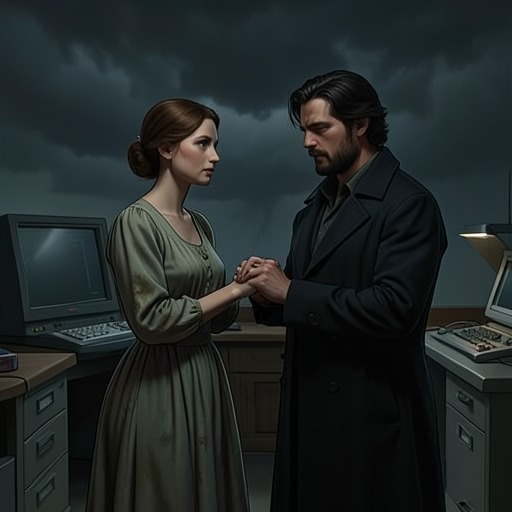
Helen witnesses Huntingdon and Lady Lowborough together
The Tenant of Wildfell HallHelen witnesses Huntingdon and Lady Lowborough together when she goes into the shrubbery to establish the truth for herself rather than accept another man’s accusation. The clandestine conversation confirms their affair; when she later confronts her husband with what she saw and heard, she asks to take their child and what remains of her fortune and go. The episode turns private suspicion into firsthand knowledge and makes departure an explicit demand.
Causes and Background
The discovery follows Helen’s effort to judge the accusation without either falsely suspecting her husband or trusting him unworthily. She goes to the shrubbery determined to know the truth at once. The choice matters: the affair is not revealed to her through gossip or a third party’s account, but through her own observation, which gives Huntingdon no plausible way to dismiss her knowledge as hearsay.
The scene also overturns Huntingdon’s assurances about his past conduct. He had claimed that he never loved the women who preceded Helen as much as he loved her, and that she need not fear being forsaken as they had been. In the shrubbery, his easy intimacy with Lady Lowborough exposes the hollowness of that reassurance: his declarations of attachment coexist with deception and adultery.
What Helen Sees and Hears
As Helen reaches the shrubbery, Lady Lowborough’s voice arrests her. Lady Lowborough says they have lingered too long and Huntingdon will return. Helen withdraws among the bushes, leaning against a tree to let her pass, and then sees the pair together. The concealment that protects their meeting also allows Helen to witness it without being noticed.
Lady Lowborough pauses at the place where Huntingdon had kissed her the previous night and reproaches him for kissing another woman there. Huntingdon answers carelessly that he had to keep straight with that woman, comparing his conduct with Lady Lowborough’s own kisses to her husband. His response treats both spouses as obstacles to manage rather than partners owed fidelity. Lady Lowborough then asks whether he still loves Helen, even a little. Huntingdon denies it emphatically and kisses Lady Lowborough.
The encounter ends with Huntingdon apparently watching the lawn for someone’s return. Helen hears him call the departing figure a fool, urge Annabella to run, and instruct Grimsby to keep the man back. The words make plain that the meeting is being concealed and that Huntingdon is willing to use another person to help preserve the deception. Helen remains hidden; the sound and sight of the scene overwhelm her, but do not leave her uncertain about what has happened.
Confrontation and Consequences
When Huntingdon attempts to deny or explain himself, Helen refuses to rely on a third person’s testimony. She tells him she was in the shrubbery that evening and saw and heard for herself. His suppressed exclamation and immediate dismay show that the evidence has caught him off guard; he then faces her with folded arms and asks what follows.
Helen’s answer is a practical request: she asks whether he will let her take their child and what remains of her fortune and go. The affair thus changes the situation from a private injury into a confrontation over departure, their child, and the limited resources Helen can claim. Her wording does not establish that she has secured permission or that she leaves at once; it marks the point when she openly seeks to separate herself and the child from Huntingdon’s household.
Significance
The discovery is a turning point in Helen’s knowledge and choices. Before it, she is weighing whether to trust the charge against her husband; afterward, she can speak from direct evidence. Huntingdon’s own words, including his calculated dismissal of the woman he has married, make the betrayal more than an isolated kiss: they expose an ongoing arrangement maintained through concealment and contempt for marital fidelity.
The scene also links sexual betrayal to the material limits on Helen’s freedom. Her first response is not merely to accuse Huntingdon but to ask to take their child and the remnant of her fortune. The request registers both her resolve to protect her child and the fact that leaving involves access to money and control over where the child goes. The shrubbery revelation therefore supplies the moral certainty behind a decision whose practical execution remains contested.