Lord Lowborough’s sobriety
The Tenant of Wildfell HallLord Lowborough’s sobriety is a hard-won discipline rather than an effortless trait: after cycles of attempted reform and relapse, he keeps his oath against gambling, confronts a new dependence on drink, and later declares that neither his wife nor other companions will tempt him back into drinking. The novel presents his abstinence as a sign of moral resolve, while questioning how much of his improvement belongs to his own efforts and how much can be credited to his marriage.
Earlier struggles and competing habits
Lowborough’s history shows why abstinence matters. He had been caught in gambling’s repetitive logic: a win seemed to promise another, while a loss demanded one more attempt to recover what had been lost. Though he repeatedly resolved to stop, he repeatedly broke those resolutions. He eventually kept his oath against gambling, even while Grimsby tried to draw him back; but the victory did not end his struggle with excess. He began drinking to relieve his cares, and drink became another habit that proved difficult to escape.
His drinking was not represented as a simple, steady choice. At one point he held a private bottle of laudanum and alternated between abstaining and exceeding, in a pattern compared with his dealings with spirits. That detail places his later abstinence against a record of unstable attempts at self-control. His sobriety therefore carries the weight of a recurring contest between resolution and relapse, not merely a declaration of good intentions.
Sobriety within marriage
By September, more than eight months after Lord Lowborough and Annabella Lowborough married, Helen observes that he is perceptibly changed for the better in his looks, spirits, and temper. The improvement is not presented as complete: he is not always cheerful or contented, and Annabella sometimes complains of his ill humour. Helen nevertheless notes that he does not direct that temper against his wife except when her conduct would provoke it, and that he still adores her.
Annabella credits herself with keeping her husband in good order and says he is safe from both wine and attraction to other women because he worships her. Helen pushes back against this account: Lowborough had already been notable for abstemiousness for some time before the marriage. The exchange distinguishes his own prior discipline from the wife’s claim to have produced it, while leaving room for the marriage to be associated with his broader improvement.
A tested refusal
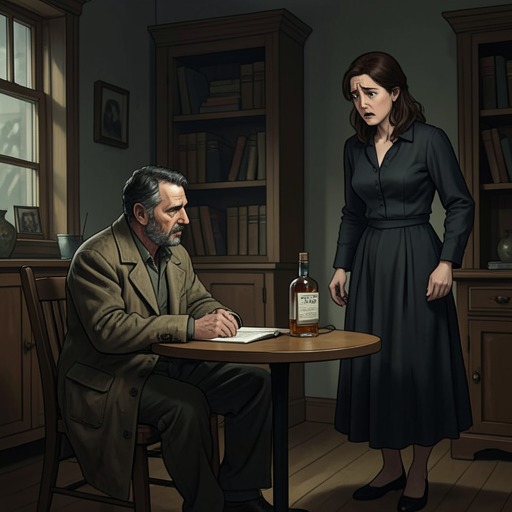
Lowborough’s commitment becomes especially clear when he leaves a gathering rather than remain with companions who are drinking. He tells Annabella that he does not drink; she criticizes him for leaving early and suggests that he might have stayed with the group. Helen supports his decision and points to the folly and misery of intemperance. Lowborough’s reaction is grave: he says he will not return to the gathering and will not stay with those companions longer than he judges right, whether his wife or anyone else tries to tempt him. He then leaves the room and goes out into the park.
The scene makes sobriety an active boundary, maintained against social pressure rather than simply affirmed in private. Annabella treats his withdrawal as an inconvenience, but Lowborough rejects the suggestion that pleasing her should determine whether he drinks. His resolve is directed not only against alcohol but also against the company and occasions he regards as threatening to his discipline.
Significance and limits
The novel connects Lowborough’s abstinence with recovery from earlier destructive patterns, yet does not turn it into a claim that reform is effortless or that marriage alone cures addiction. His gambling oath holds even when Grimsby tries to undermine it; drinking, by contrast, emerges as a further and nearly as difficult struggle. His marriage coincides with visible gains in temper and spirits, but Helen’s recollection that he had practiced abstemiousness before marrying Annabella resists her self-congratulation.
Sobriety thus functions as both a personal achievement and a test of relationships. Lowborough’s refusal to drink for his wife’s approval demonstrates that his discipline depends on judgment he must exercise for himself. The contrast between earlier relapse and his later resolve gives the change its significance: improvement is real, but it remains a practice of resisting temptation, not a permanent transformation guaranteed by another person.