Marriage of Helen Graham and Arthur Huntingdon
The Tenant of Wildfell HallHelen’s marriage to Arthur Huntingdon binds her to a man she later recognizes she had not understood, and turns her belief in marital duty into a painful test of conscience, maternal protection, and personal agency. Because the story reaches the reader through Helen’s manuscript, the marriage is not merely a sequence of events: it is also a history she entrusts to Gilbert Markham, whose reading transforms the meaning of her secluded life.
Courtship, marriage, and retrospective judgment
Helen records that by February 18, 1822, she was married and settled as Mrs. Huntingdon at Grassdale Manor. Writing after eight weeks of marriage, she says she does not regret marrying Arthur, yet admits that he is not the man she had first imagined. She concludes that if she had known his character fully before falling in love, she probably would never have loved him; had she discovered the truth after falling in love but before marriage, she fears she would have believed it her duty not to marry him.
Her account makes the marriage’s early contradiction explicit: she had been wilfully blind, although others were willing to tell her about Arthur and he had not successfully disguised himself. She is relieved, in retrospect, that she did not have to struggle with her conscience before marrying him. Now, she believes, her duty is plainly to love and remain attached to her husband, a duty that at this point coincides with her inclination. The conviction is sincere, but its terms already reveal how strongly she understands marriage through obligation.
Helen also distinguishes affection from companionship. Arthur is very fond of her, almost too fond, and she would prefer less caressing and more rationality: she wants to be treated less as a pet and more as a friend. Her early dissatisfaction is not yet a declaration of estrangement; it is an indication that being adored does not answer her desire for an equal-minded partnership.
Fidelity and the deterioration of the marriage
Arthur’s revelations about his earlier relationships further test Helen’s willingness to trust him. He reassures her that he no longer cares for the woman under discussion and that he never loved any of the others as much as he loves Helen. His assurance asks her not to fear abandonment, but the contrast between his past conduct and his present promise leaves fidelity as a central uncertainty within the marriage.
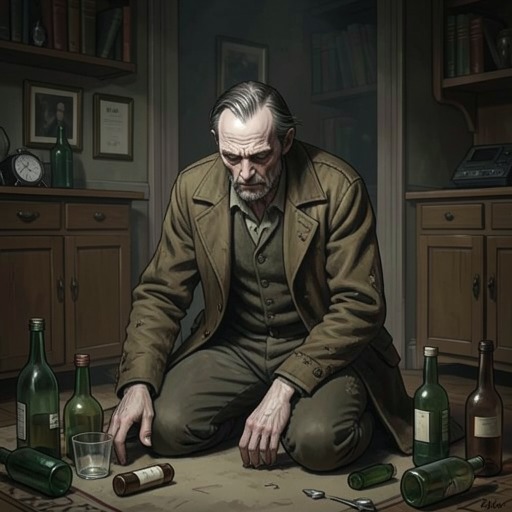
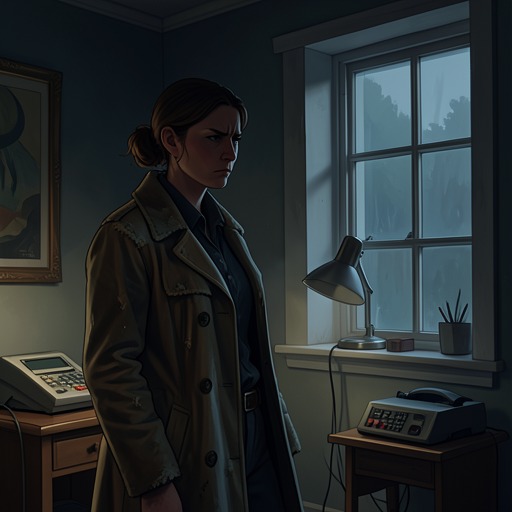
The conflict eventually becomes explicit in Helen’s account of their separation. When she asks Arthur to let her take their child and what remains of her fortune and leave, he refuses. She then asks whether she may take the child without the money; he refuses that as well, insisting that neither she nor the child may go, and invoking the scandal her departure would cause. Helen answers that they will henceforth be husband and wife in name only. The exchange shows that her desire to leave is constrained not simply by attachment or principle but by Arthur’s control over whether she can depart with their son and resources.
Property, motherhood, and the attempt to leave
Helen’s references to her fortune make money part of the marriage’s practical power structure. She explains that she has entrusted the nursing of her child to Rachel, who had cared for her and wished to care for the child, with a young nursery-maid working under Rachel’s direction. The arrangement is trustworthy and economical; Helen has learned to treat economy as important because nearly the whole income from her fortune is committed for years ahead. Her household decisions therefore reflect both maternal reliance on familiar care and limited access to income for immediate needs.
The financial and parental stakes converge when she asks to leave with the child and what remains of her fortune. Arthur’s refusal to let her take either the child alone or herself with the child gives the marriage’s separation a concrete cost: Helen cannot simply exercise her wish to go without confronting his control of their family circumstances. Later, she explains that her duty to her son makes continued submission impossible because he must be delivered from his father’s corrupting influence. She plans to keep her refuge secret even from those who might help her, so they can truthfully deny knowing where she is; messages sent under cover to her brother, however, will reach her.
Manuscript, secrecy, and narrative consequence
The reader learns this history because Helen gives Gilbert a thick album or manuscript volume, after tearing away a few leaves from its end. She tells him he need not read everything at once, asks him to return it when he has finished, and makes him promise not to reveal its contents. Gilbert reads it first in haste, then carefully, and presents its contents to Halford as the first instalment of his account. The marriage narrative is thus mediated through two acts of disclosure: Helen’s guarded manuscript and Gilbert’s retrospective letter.
The surviving text also preserves gaps. In one passage, Helen’s writing breaks off just as it is about to mention a young man of the parish; Gilbert assumes the missing reference concerns himself, but the torn ending leaves the identification unconfirmed. Later, a letter dated Grassdale, November 4, reports that Mr. Huntingdon is very ill but not dying or in immediate danger. That report places the marriage’s aftermath within the continuing correspondence, while the manuscript frame keeps Helen’s experience at the center of the reader’s understanding.
The marriage’s decisive significance lies in the gap between Helen’s early belief that she must love and cleave to Arthur and the later necessity of protecting her child from him. Its movement from hopeful duty to nominal union exposes the limits of affection when fidelity, household authority, money, and maternal responsibility pull in opposing directions. The embedded-document form makes that change legible as Helen’s own testimony, preserved and passed on by Gilbert rather than reduced to the village’s rumors about her.