Repentance and salvation
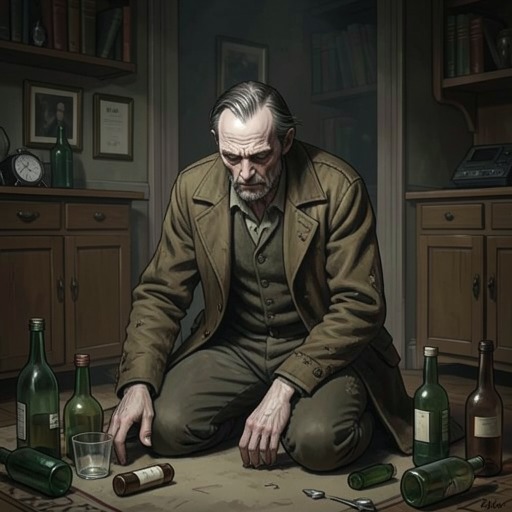
The Tenant of Wildfell HallRepentance and salvation form a conflict between doctrine and lived moral consequence in The Tenant of Wildfell Hall. Helen believes that punishment need not end in eternal damnation and that even a deeply erring soul may ultimately be reconciled to God; Arthur’s deathbed fear, by contrast, exposes the distance between fearing judgment and sincerely repenting. The novel does not confirm his salvation, but ends his story with Helen’s hope that repentance and pardon may yet have reached him.
Helen’s belief in ultimate restoration
Helen’s conviction is first presented in an argument with her aunt about whether she should marry Arthur. Her aunt warns that Arthur is accountable for his actions and invokes the prospect of eternal punishment; even a life of mutual affection, she argues, cannot remove the danger that the two will be separated forever in the afterlife. Helen rejects that finality. She answers that punishment lasts only until the debt is paid, and draws on scriptural passages suggesting that a sinner may suffer loss yet be saved, and that God will ultimately bring all things together in reconciliation.
This is not a conclusion Helen reaches casually or on the authority of a single proof-text. When her aunt asks where she learned the doctrine, Helen says she has searched the Bible and found nearly thirty passages that support it. Her appeal makes interpretation itself part of the disagreement: both women invoke Scripture, but draw sharply different conclusions about the fate of the wicked. Helen’s belief sustains hope beyond the prospect of punishment; it does not make her deny that wrongdoing has consequences or that Arthur is responsible for his choices.
Fear and repentance at Arthur’s deathbed
At the end of Arthur’s life, the question moves from theological debate to intimate crisis. Gravely ill, he dwells on the bodily dissolution awaiting him and on the judgment after death. Helen tries to turn his thoughts toward the possibility of joy and glory beyond the grave, but Arthur asks what such hope could mean for him. He reasons that if people are judged by the deeds done in life, it would be unjust for a sinner to live as he pleased and then receive the reward of a saint merely by saying that he repents.
Helen replies conditionally: sincere repentance matters. Arthur’s answer marks the limit of her power to reassure him. He says he cannot repent and that he feels fear alone. The distinction is essential to the novel’s treatment of salvation: dread of punishment is not presented as equivalent to moral change, and fear for oneself does not establish that genuine contrition has occurred. Arthur’s terror is real, but the scene offers no simple assurance that terror has become repentance.
Care, dependence, and the unresolved ending
Arthur’s fear also shapes the physical circumstances of his last days. He clings to Helen, keeps her beside him night and day, and makes her responsible for his comfort even as she tries to direct his attention toward spiritual concerns. When she gently disengages her hand, intending to leave briefly for air, his convulsive movement and whispered plea that she not leave bring her back to him. She holds his hand until he dies, then faints from exhaustion rather than grief.
Afterward, Helen admits how nearly unbearable it was to imagine that Arthur’s soul had been hurried into everlasting torment. Her conclusion is hope, founded both on the possibility that penitence and pardon might have reached him at the last and on her confidence that the erring spirit may pass through purging fires. The wording preserves uncertainty: the narrative does not show Arthur making a clear confession of repentance, nor does it declare that he is saved. Instead, Helen’s theology allows her to entrust the final outcome to a mercy extending beyond what she could witness at his bedside.
Theological and moral significance
The novel places two questions beside one another without treating them as interchangeable: whether wrongdoing deserves judgment, and whether judgment must be the sinner’s eternal end. Helen’s reading makes room for eventual reconciliation, while Arthur’s deathbed reasoning confronts the moral problem of a last-minute repentance that might seem to erase a lifetime of conduct. His inability to move beyond fear keeps that problem alive rather than resolving it through a convenient conversion.
Salvation also remains connected to the material history of Arthur’s choices. His illness and dependence do not by themselves prove repentance, just as Helen’s sustained care does not give her control over his conscience or his fate. At the end, she has accompanied him through the final hours but cannot know what passed within him. Her hope therefore rests neither on a witnessed transformation nor on certainty; it is the theological possibility that suffering, penitence, and divine pardon may reach further than the evidence available to the living.