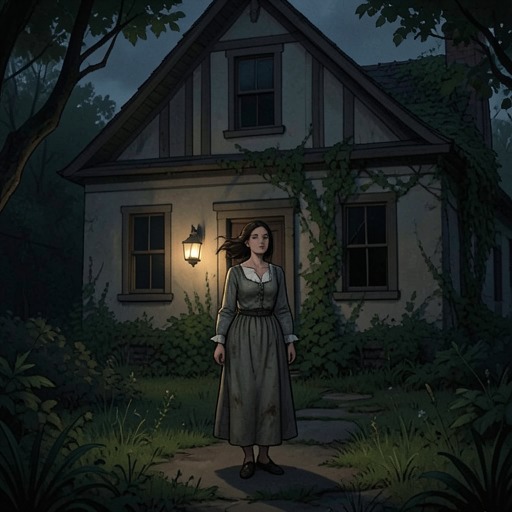
Wildfell Hall's dilapidated condition
The Tenant of Wildfell HallWildfell Hall's dilapidated condition is more than a matter of age: the isolated mansion and its neglected grounds give physical form to the secrecy and constraint associated with Helen Graham's life there. Its decayed exterior contrasts with the purposeful work and consequential decisions that take place within its dark rooms.
Setting and Physical Condition
About two miles from Linden-Car, Wildfell Hall stands near the top of a hill. The Elizabethan mansion is built of dark grey stone, with thick mullions, small latticed panes, and time-worn air-holes. Its lonely, exposed situation leaves it shielded from the weather only by a group of storm-damaged Scotch firs. Behind the house lie desolate fields and a heath-covered summit; a walled garden and iron gate mark the approach in front.
The grounds show the effects of long neglect. Left untilled and untrimmed, they have been overtaken by weeds and grass and exposed to frost, wind, rain, and drought. The privet hedges have largely withered or grown out of bounds; a boxwood swan has lost much of its shape, while the former garden ornaments have grown into unrecognizable forms. The decay is not simply picturesque antiquity: it records a house and garden left without the sustained care that once shaped them.
Rooms and Work
The interior carries the same severity. Visitors are led into a large, lofty room dimly lit by old-fashioned windows, with grim black-oak panels, ceiling, and chimney-piece. The room's gloom is part of the house's first impression, but it is not the whole of its use. On an early visit, Gilbert Markham and Rose find a painter's easel, canvases, oils, varnish, brushes, and paintings at different stages of completion. The working studio makes a striking counterpoint to the neglected exterior: within an old and deteriorating house, Helen has established a space for active artistic labor.
Helen's Life and the House's Function
Wildfell Hall is associated with Helen's secluded life, but the evidence also shows her making practical choices within that privacy. She entrusts care of her child to Rachel, who had nursed her, with a young nursery-maid working under Rachel's direction. Helen explains that she needs little attendance and values Rachel's trustworthiness; she also says that saving money matters, since most of her fortune is committed for years to come. The house's isolation thus sits alongside careful domestic management rather than mere withdrawal from the world.
The hall's significance becomes sharper when Helen asks Arthur Huntingdon to let her leave with their child and what remains of her fortune. He refuses to let her go with the child, or to leave without him, and says that he will not risk becoming the subject of local talk over her departure. Helen concludes that they will henceforth be husband and wife only in name. The deteriorating mansion is therefore the setting for a conflict in which the wish to leave is bound up with her access to money, her marriage, and her child's safety.
Narrative Significance
The house's weathered stone, exposed location, and overgrown garden establish an atmosphere of isolation, while its rooms hold scenes of work, privacy, and difficult negotiation. Its neglect also forms a visual contrast with the order Helen tries to create through painting and the arrangements she makes for her child. Wildfell Hall is not merely a gloomy backdrop: its physical condition helps stage the tension between outward abandonment and the purposeful life Helen sustains within it.