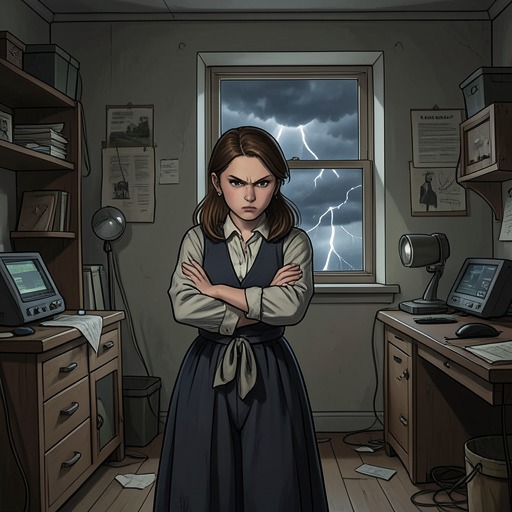
“Ain't nobody going to come and rescue you. You got to rescue yourself.”
The Tiger RisingWillie May’s injunction to Sistine—that no one will come to rescue her and that she must rescue herself—turns a diagnosis of the children’s pain into a demand for self-directed action. Spoken as Willie May is about to leave, it extends advice she has already given Rob while recognizing that Sistine’s anger, unlike Rob’s sorrow, erupts outward.
Context and Delivery
Willie May first describes the pair as joined by contrasting troubles: Rob keeps sorrow low in his legs, while Sistine’s anger snaps out like lightning. She calls them a pair, then stretches, straightens, and steps away from the car. Sistine, staring at her with her mouth open, asks how tall she is; Willie May answers that she is six feet two and says she has advice for Sistine, as she has already given some to Rob.
Meaning and Immediate Effect
Willie May delivers the expression as a two-part instruction: rescue should not be expected from someone else, and Sistine must undertake it herself. She asks whether Sistine understands, but Sistine only stares and says nothing. The advice therefore receives no spoken assent in the scene; its force lies in the direct challenge it places before her.
Relation to Rob and the Scene’s Ending
By explicitly pairing the advice for Sistine with advice already given to Rob, Willie May connects the children without treating their distress as identical. Her words place their next steps in their own hands, even as the scene shows no resolution. She opens the car door, sits behind the wheel, and drives away while Rob and Sistine watch, leaving the counsel with them rather than staying to act as their rescuer.