Rob Horton’s leg rash
The Tiger RisingRob Horton’s leg rash is an ongoing physical discomfort that also shapes his life at school and gives visible form to a grief he has tried not to feel. Its red, itchy blisters are treated by others as a possible medical threat and a mark of difference; Rob, however, recognizes the rash’s practical consequence as a way to remain away from school. Willie May offers a more personal interpretation, connecting the condition to the sadness Rob keeps pressed down after his mother’s death. The rash thus sits between bodily experience and emotional silence, without ceasing to be a real, uncomfortable condition that must be treated.
Identity and Physical Experience
The rash consists of itchy red blisters that extend down Rob’s legs and into his shoes. While he waits for the bus beneath the Kentucky Star neon sign, he deliberately tries not to think about them. His father has told him that they are less likely to itch if he does not dwell on them, so Rob’s first response is to manage the discomfort by suppressing his attention to it. That strategy echoes the way he tries not to think about his mother, but the rash remains physically present even when he turns his thoughts elsewhere.
The condition is also visible to other people in a way Rob’s private grief is not. Billy Threemonger points at Rob’s legs and calls the rash the creeping crud, inviting Norton Threemonger to look and share his disgust. The boys’ taunt turns a symptom into a pretext for humiliation. Their treatment of Rob intensifies an already isolating bus ride: he endures their blows and hair-pulling without crying, and the rash becomes one more feature they use to mark him as an outsider.
Treatment and School Exclusion
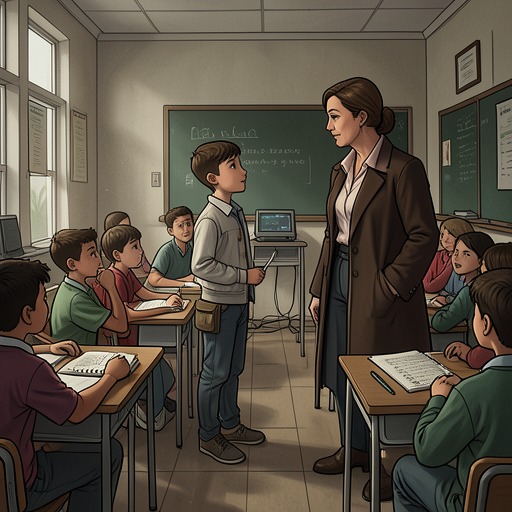
At school, Principal Mr. Phelmer repeatedly raises concerns about Rob’s legs. He asks whether Rob has been applying the medicine prescribed by a doctor in Jacksonville, and Rob confirms that he has. Mr. Phelmer examines the rash and explains that some parents fear it could be contagious, meaning that other students might catch it. The possibility—not a confirmed diagnosis—drives the school’s concern. The episode shows how uncertainty about Rob’s body becomes a matter of institutional anxiety, even as Rob has followed the treatment he was given.
Mr. Phelmer writes a note that Rob carefully folds and puts in his back pocket, beside his drawing of the tiger. The note allows him to leave school temporarily. Rob smiles because he knows his legs will not clear up, and understands that this means he will not have to return. The rash therefore has a consequence that reverses its usual social meaning for him: what others see as a troubling condition becomes his route out of a place where he is bullied and feels isolated. His relief does not mean the rash is cured; it depends precisely on his expectation that it will persist.
When Rob’s father reads the principal’s note, he slowly follows the words with a large finger, as if trying to hold them still, then rubs his eyes and sighs. He objects that the rash cannot be caught by anyone else, and Rob agrees. Their exchange exposes the gap between the father’s understanding and the school’s response, while the rain beating on the motel roof accompanies the weight of the news. Rob’s absence from school is not simply a medical decision: it emerges from a disputed fear of contagion, the school’s action, and Rob’s private wish not to go back.
Willie May’s Interpretation
Willie May tells Rob she can explain how to cure his legs without a doctor. Her answer is not a medical diagnosis: she identifies sadness as what Rob is keeping down in his legs, and says that he must let it rise to his heart, where it belongs. Her account connects the rash to the grief Rob has suppressed since his mother’s funeral, when he and his father both cried and his father slapped him to stop his sobbing. After that day, Rob has tried not to think about his mother or cry. Willie May’s interpretation gives the bodily symptom a place in that larger pattern of silence.
Rob is initially relieved by her words, because he thinks she is wrong and cannot cure him. A cure would threaten the reprieve from school that the persistent rash has brought him. This reaction makes the condition’s double role especially clear: Rob wants relief from its itch, but does not want it to disappear if disappearance means returning to the school where he is targeted. The distinction is not between wanting to be sick and wanting to be well so much as between physical discomfort and the social circumstances the rash temporarily helps him escape.
Change and Significance
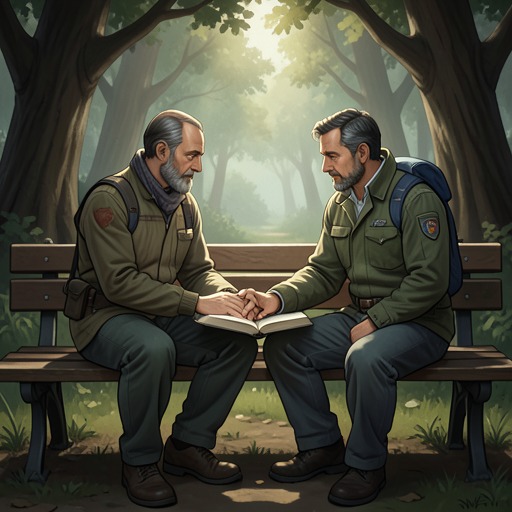
Later, after Rob has begun to let his grief surface, the rash remains part of the evening routine with his father: his father applies the medicine to Rob’s legs and sings the song he used to sing with Rob’s mother. When he finishes, he tells Rob that Caroline loved the song, and Rob says he likes it too. The moment joins practical care for Rob’s body to a newly spoken acknowledgment of his mother. Instead of keeping her memory outside their conversation, father and son can share a small remembrance while the medicine is being applied.
The evidence does not establish that the rash is cured, nor does it give a medical explanation for its cause. Its significance develops through the contrast between the school’s fear that it may spread, Rob’s use of its persistence to stay away, and Willie May’s understanding of it as connected to held-down sadness. At the end of the represented arc, treatment has become a scene of care and remembrance rather than only an attempt to make symptoms disappear. The rash remains a concrete condition, but its role in Rob’s life changes as he and his father begin to make room for Caroline’s memory.