Suitcase of not-thoughts
The Tiger RisingThe Suitcase of not-thoughts is Rob Horton’s image for the emotional confinement he practices after his mother dies. He imagines painful feelings packed into the suitcase he used when he and his father left Jacksonville after the funeral, then held down and locked away. As the story returns to this image, it marks both the effort required to keep grief silent and the moments when that silence begins to break. Eventually, Rob opens the suitcase: first to let his mother’s name escape, and later, after the tiger is killed, to release the words and tears he has long contained.
The Image and Its Origins
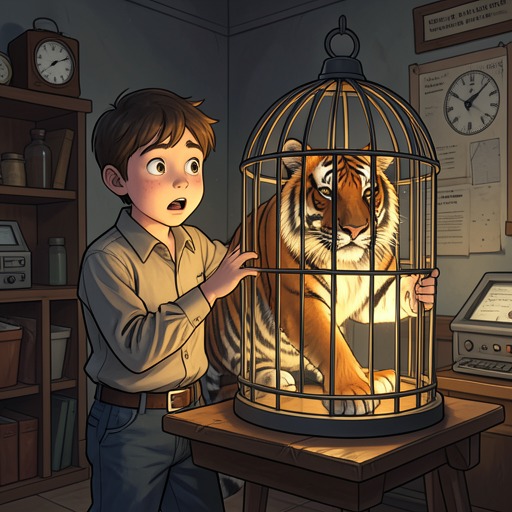
Rob describes not-thinking as an act of packing. He puts his feelings into an overfull suitcase like the one he packed when leaving Jacksonville after the funeral, stuffs them tight, sits on the case, and locks it. Keeping it shut is not effortless; the feelings press against the lid. The tiger becomes something he can place on top, a new and absorbing thought that helps hold the older contents down.
That arrangement appears as Rob waits for the school bus beneath the Kentucky Star sign in the rain. In his imagination, the tiger sits proudly on the suitcase, golden eyes blinking, seemingly unaffected by the thoughts straining inside. The image makes the tiger more than a distraction: for a time, it gives Rob’s attention a strong outward focus and a way to keep grief and fear from surfacing.
What the Suitcase Contains
The contents include Rob’s grief for his mother, but the metaphor also covers the fears and desires he cannot comfortably acknowledge. On the gray ride to school, he thinks about the tiger, God and Adam in the Sistine Chapel, and Sistine, while deliberately not thinking about his leg rash, his mother, or the boys Norton and Billy Threemonger. The list shows how broadly his self-protection operates: it pushes away bodily discomfort, social danger, and bereavement together.
The case also holds wishes. After his father wakes him early for work, Rob watches the Kentucky Star neon sign fall in the dark and imagines it as a personal shooting star. He does not make a wish because he fears he might not be able to stop; he recognizes that the suitcase contains not-wishes as well as not-thoughts. The image therefore encloses not only pain but possibility—the longings that might emerge if he allowed himself to want something.
That possibility becomes especially pointed when Sistine asks him to go see the tiger. In the rain, Rob thinks of a friend as one of his most deeply buried not-wishes. Hope, need, and fear course through him, but he shakes his head and refuses the thought aloud. The suitcase protects him from the risk of wanting connection even as the scene makes that want visible.
The Lid Begins to Open
The metaphor becomes more difficult to maintain when memories return. Rob recalls the Christmas before his mother died, when she covered their Jacksonville house with hundreds of white lights and the three of them were happy together. Entering the dark motel room, he scolds himself for opening the suitcase: thinking about what is gone makes the darkness seem darker. The bright, shared memory has not disappeared, but remembering it intensifies his awareness of loss.
Later, when Sistine asks his mother’s name, Rob first closes his eyes and concentrates on keeping the suitcase shut. He explains that his father says talking about his mother does no good because she is gone and will not return; they moved from Jacksonville because people there kept wanting to talk about her. The family rule against speaking thus gives Rob’s private metaphor an external counterpart: silence is not only his coping method but something his father has prescribed.
When Sistine insists that he say the name, Rob says, “Caroline,” softly. The word cracks the suitcase open. This opening is small and deliberate: Rob does not recount his grief at length, but he lets the name of his mother be spoken. Sistine responds by saying she will return the next day and that they will make plans to let the tiger go. The released word is followed by renewed connection and shared purpose, rather than by the catastrophe Rob’s silence seems designed to prevent.
The Break and Its Aftermath
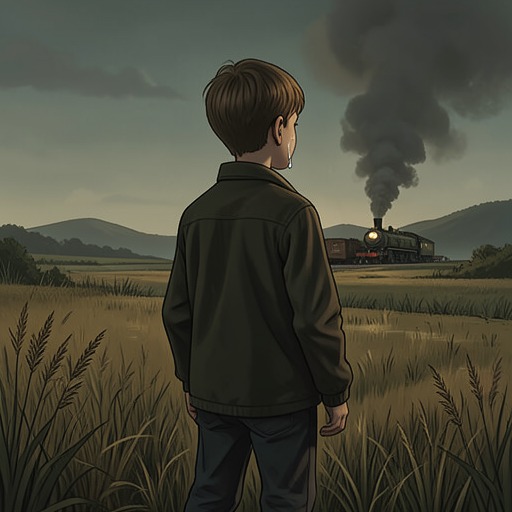
The decisive rupture comes after Rob’s father shoots the escaped tiger. Rob attacks him, but realizes that hitting will not be enough. He opens the suitcase, and the words spring out: he says he wishes his father had died instead, that he hates him, and that he needs his mother. The outburst turns the metaphor’s contained pressure into direct speech. The grief that had been managed through not-thinking now enters the relationship Rob has been trying to protect from it.
His father answers that he needs Caroline too, but that neither of them has her and they have only each other. Rob insists he will not cry, yet tears leak out and then come in a rush. He cries from the place within him associated with his mother and, now, with the tiger he has lost. His father also wipes away tears and holds him. The ending does not restore what has been lost; instead, the open suitcase makes shared mourning possible where enforced silence had kept the loss unspoken.
Narrative Significance
The suitcase gives a concrete shape to the difference between suppressing grief and living through it. Its lid is repeatedly held shut by deliberate avoidance, by the family rule against discussing Caroline, and by Rob’s attempts to redirect attention toward the tiger or away from wishes. Yet the recurring image also records change: the word Caroline slips out when Rob permits a small breach, while the tiger’s death precipitates the larger opening he cannot contain.
The image’s changing contents connect loss with attachment and hope. Rob uses the tiger to keep painful thoughts down, but he also discovers a buried wish for a friend; both the wish and the grief become harder to suppress as his relationship with Sistine develops and his mother’s name is spoken. By the final scene, the metaphor no longer describes a successful lock. It describes the pressure of feelings that have become speakable, and the beginning of a grief Rob can share with his father.