
The Moral Limits of Intervention
The Time Traveler's WifeThis thread examines the choices Henry and Clare make when foreknowledge offers possible intervention but cannot guarantee a better outcome.
increasing Bearing strength in each event
 decreasing
Bearing strength in each eventdecreasingA Shoe Thrown at a Stranger
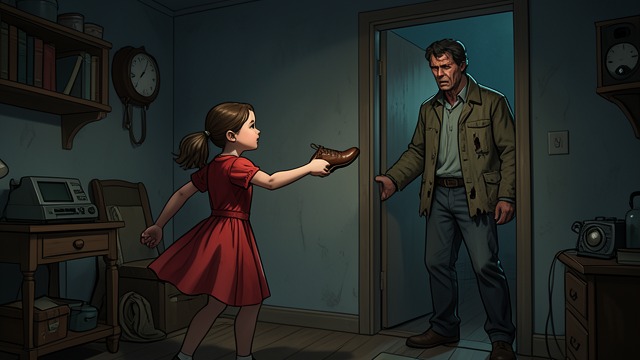
A Shoe Thrown at a Stranger
Clare confronts the impossible
When Henry first approaches six-year-old Clare, she throws a shoe at him before deciding whether to trust him. His strange appearance and knowledge of her life make suspicion reasonable.
The encounter establishes a moral pattern
Henry asks for food and clothing rather than demanding belief. Their first meeting develops through negotiation, showing that even an impossible visitor must respect the other person’s boundaries.
The Accident Cannot Be Prevented

The Accident Cannot Be Prevented
Henry watches the fatal event recur
Henry repeatedly returns to the crash that killed his mother. He is sometimes a witness, sometimes a participant in the aftermath, but never able to undo the death.
Knowledge increases responsibility’s ache
His inability to change the event does not make him indifferent. Instead, repeated witnessing produces guilt and the conviction that he should have died too.
A Violent Attempt to Protect Clare

A Violent Attempt to Protect Clare
Clare asks Henry to retaliate
After Jason assaults Clare, she asks Henry to help frighten and hurt him. Henry uses a gun and intimidation, and Clare watches as he punishes Jason.
Protection creates another moral wound
The revenge gives Clare a sense of control, but it also leaves her questioning whether Henry’s pleasure in violence resembles Jason’s cruelty. The event protects her in the moment without making the harm disappear.
The Mouse Mothers’ Deaths
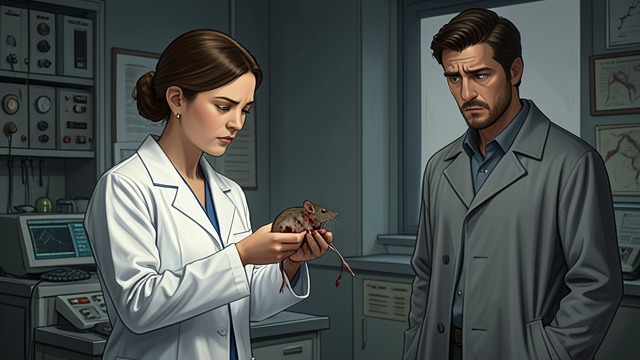
The Mouse Mothers’ Deaths
Research reveals a hidden cost
Kendrick explains that experimental mouse embryos travel out of and back into their mothers, causing hemorrhage or abortion. The first successful research required confronting repeated animal deaths.
Hope becomes ethically complicated
Kendrick suppresses the mothers’ immune systems and the project succeeds. Clare and Henry recognize the relevance to their own reproductive losses, but the experiment does not make the risks morally simple.
The Choice to Leave a Safety Net
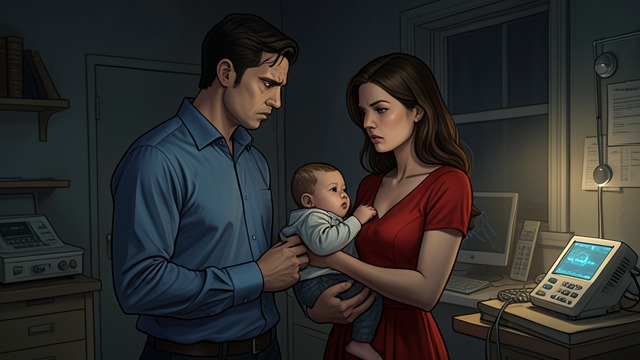
The Choice to Leave a Safety Net
Henry acts for Alba’s future
Knowing he cannot be cured, Henry permits Kendrick to begin research using Alba’s DNA. He hopes the work will offer his daughter an option rather than impose a treatment.
Clare weighs protection against consent
Clare fears the medical risks and objects to making Alba a subject before she can choose. The parents reach a strained compromise in which future autonomy, rather than certainty, is the goal.
September 23, 1977
December 24, 1969
September 27, 1987
January 14, 2000
July 14, 2006
