Chrono-Displacement Disorder
The Time Traveler's WifeChrono-Displacement Disorder is the novel’s name for the involuntary condition that repeatedly dislodges Henry DeTamble from his present and sends him into other times. Described as genetic and associated with a resetting internal clock, it makes chronology an unstable bodily experience: Henry can appear in his own past or future without warning, while those around him must live with his sudden absence and return. Its effects are at once extraordinary and practical, reaching from the danger of appearing in public without clothing to the ordinary longing for a quiet life with Clare Abshire.
Definition and Proposed Cause
The condition is introduced as one of the first diagnoses of its kind. Henry’s genetic clock periodically resets, pulling him toward moments of emotional gravity in his life and placing him in a time other than the one he has just left. The episodes are spontaneous, and what he encounters can be harrowing or amusing; the condition does not give him a reliable ability to choose either destination or duration.
The language used for the disorder shifts. Clare calls it Chrono-Impairment when she explains to Henry that his future physician, David Kendrick, is a molecular geneticist who will discover why people experience the condition. She says Kendrick works out its genetic basis in 2006, and that more chrono-impaired people will be known about roughly ten years later. Henry, who has not heard of anyone else with the impairment, is therefore told about an explanation and a medical future he cannot yet verify in his own present.
Triggers and the Experience of Episodes
Henry can identify possible patterns, but not a dependable rule or a way to remain in the present. Exhaustion, loud noises, stress, standing up suddenly, and flashing light may trigger an episode. The uncertainty is fundamental: even while reading the Sunday Times with Clare dozing beside him, he can be displaced into 1976 and find himself watching his thirteen-year-old self mow his grandparents’ lawn. Some episodes last only moments; he compares their unstable quality to a car radio struggling to hold a station.
His destinations vary widely. He may arrive among crowds or alone in a field, house, car, or on a beach; he fears the possibility of materializing in especially dangerous or confining places, including a prison cell, an elevator full of people, or the middle of a highway. He describes the displaced version of himself as desperate and reduced to hiding, running, and finding necessities. The condition makes him conspicuous even when he is trying to stay unnoticed, turning ordinary surroundings into settings in which he must improvise.
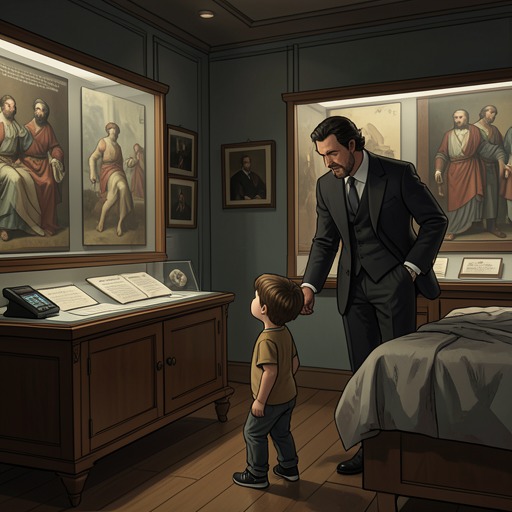
A childhood episode establishes that the disorder begins early. On January 2, 1988, Henry, aged twenty-four, returns exhausted after dancing and suddenly finds himself at the Field Museum on June 16, 1968, when he is five. The scene places his adult consciousness in the circumstances of his own childhood and makes clear that the condition can move him across both time and age, not merely transport him to unfamiliar historical periods.
Material and Social Consequences
Henry arrives without clothing and cannot bring money, identification, or other belongings with him. A substantial part of his time away from the present is spent finding clothes and avoiding notice. His condition thus produces more than chronological confusion: it repeatedly leaves him without the basic resources that make independent movement through public life possible.
The consequences follow him into encounters with authority. Henry says that Chicago police dislike him because he keeps disappearing while in custody and that they cannot establish who he is or where he lives. He has been arrested seven times, in connection with offenses including breaking and entering, shoplifting, resisting arrest, trespassing, and indecent exposure; he says he has vanished before police could fingerprint or photograph him. The episodes interrupt the normal process of detention, while his inability to appear inconspicuously helps generate further legal trouble. The disorder is not a chosen criminal method: it repeatedly destabilizes his attempts to move through the world safely and anonymously.
At work, the condition also becomes a source of exposure. Henry’s fear of the Cage at the Newberry Library is connected to the possibility of being trapped or revealed in a place he knows intimately. On June 28, 2006, he comes to inside the Cage after hours, with a head injury, and understands that his coworkers are about to discover his condition. He waits there for hours, anticipating their arrival and rehearsing what he might say. The incident makes visible the tension between a private bodily experience he has managed on his own terms and a workplace community that may now witness it.
Relationships, Memory, and Domestic Longing
The condition continually separates Henry from the ordinary scenes he most wants to inhabit. His stated pleasures are domestic: reading in bed, coffee, grocery bags waiting to be unpacked, and the familiar rhythms of the library after patrons have left. Above all, he longs for Clare and recalls her in the daily details of reading, papermaking, and caring for her hands. These attachments give his episodes an emotional cost beyond their immediate danger: displacement means being pulled away from a life whose value lies in its routines and proximity.
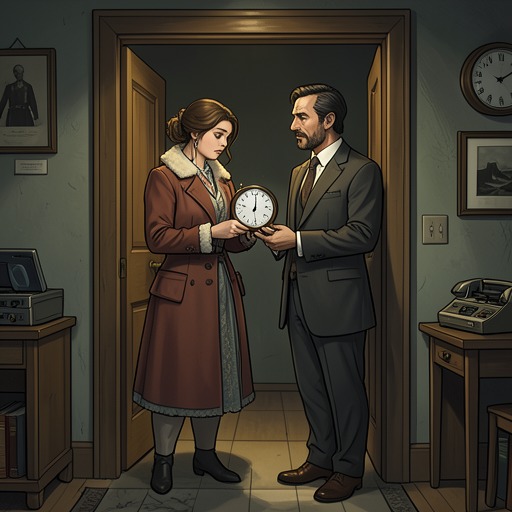
That separation is not always a long absence. On February 9, 2000, Clare wakes to Henry materializing beside her after he has been elsewhere; their sudden reunion startles them both, and she notices that his mouth is bleeding. Elsewhere, the two timelines meet in a bed at 3:14 a.m., when Clare makes room for Henry as he returns. Such scenes make the condition a shared circumstance of marriage: Henry undergoes the displacement, but Clare also lives through the interruptions, uncertainty, and repeated adjustments that follow.
The disorder also complicates how the couple encounter medical knowledge. On their first date, October 26, 1991, Clare can explain a future account of Henry’s condition that Henry himself does not yet know. Her information comes from a later point in their shared history, including the identity and eventual work of Kendrick. The novel’s alternating perspectives and dated episodes therefore make diagnosis part of the story’s temporal structure: information may be familiar to one character and new to the other, just as an event may belong to one person’s future and another’s past.
Recurrence, Limits, and Significance
The disorder remains beyond Henry’s control even as its patterns become more legible. Episodes recur across the dated narrative, and the possibility of recognizing triggers does not amount to mastery. Henry’s experience is defined by the gap between knowing that a displacement may happen and being unable to decide when, where, or for how long. The condition is consequently neither a dependable means of travel nor a simple escape from the present; it is an imposed interruption with practical and emotional consequences.
Its reach extends across the couple’s long life together. On October 27, 1984, Henry is shown in a scene dated alongside January 1, 2007, demonstrating how the narrative sets distinct temporal positions beside one another. In 2053, when Henry is forty-three and Clare is eighty-two, he again finds himself elsewhere and encounters Clare as an old woman. The disorder thus persists across radically different stages of their lives, while the reader’s understanding of their relationship is assembled from moments that do not arrive in chronological order.
Chrono-Displacement Disorder is therefore both a fictional genetic condition and the organizing pressure of the novel’s time scheme. It repeatedly converts time from a stable sequence into an involuntary experience that Henry cannot govern and Clare cannot prevent. Its defining contradiction is that Henry is carried across his life while longing for the small, settled present: the home, work, and shared routines that the condition keeps making precarious.