Crossing Time's Love
The Time Traveler's WifeThe novel’s cross-temporal love is a form of connection repeatedly interrupted by time and made more palpable by absence. For Henry and Clare, intimacy is not secured by continuous presence: it takes shape in bodily longing, in the art and family life built across their shared years, and in the promise that they will meet again after death. Its final movement holds two seemingly opposed truths together: Henry urges Clare to stop waiting and live freely, while the last encounter fulfills the expectation that their bond will return.
Love in the Body
In the October and November 2006 scene, Henry’s longing for physical freedom gathers around the wings Clare has made for him. They hover in candlelight, ragged-edged and silent, at once threatening and suggestive of release. The sight brings back his dreams of standing firmly on his own feet, running as if running were flight, and hovering beyond gravity’s reach. These are not abstract images of escape: the wings call up the bodily capacity Henry has lost and the freedom he can only imagine.
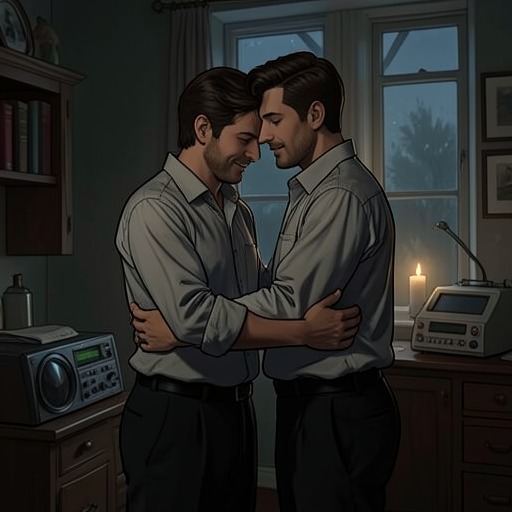
Clare’s presence turns that image of incapacity into a scene of intimacy. She sits beside Henry and looks at him; he cannot speak. When she asks him to kiss her, he turns toward her, and the scene moves from the dark wings to physical closeness. Henry describes the result as submersion, flight, and release, with being welling up in his heart. Love does not restore his feet or erase his limits. Instead, the encounter makes release possible as an experience shared with Clare, even while his body remains constrained.
The contrast gives this moment its force: the wings promise motion through space, but the decisive movement is Henry turning to Clare. Flight is at once an unrealized physical dream and a figure for intimacy that momentarily loosens the hold of earthly limitation. The scene’s stillness—the silent wings and Henry’s inability to speak—does not cancel the intensity. It makes a kiss, and the change it brings, carry what words cannot.
A Bond Tested by Absence
Henry’s letter to Clare, written as he faces death, gives the relationship its clearest retrospective account. He calls their love the thread through a labyrinth and the net beneath a high-wire walker: an orienting line and a protection against falling in a life he describes as strange and difficult to trust. The images present love not as control over his condition but as the reliable structure within it. Henry’s own presence is uncertain; the bond, he hopes, has greater weight and endurance than he does.
That hope is sharpened by the particular burden Henry believes he has placed on Clare. He recalls that she has waited for him throughout her life without knowing whether an absence would last ten minutes, ten days, or a month. He compares himself to a sailor buffeted by waves, sometimes resourceful and sometimes at the mercy of forces beyond his control. The comparison makes their love inseparable from repeated uncertainty: Clare’s commitment persists, but time keeps turning togetherness into an interval whose duration she cannot know.
Henry asks Clare, after his death, to stop waiting and be free of him. The request is not a claim that her life has been empty. He recognizes that she has made beauty and meaning in her art and points to Alba as part of what she has created; he also tells Clare that she has been everything to him. The letter thus holds gratitude and self-reproach beside one another. Their relationship has given Henry a dependable center, yet he fears that its recurring absences have left Clare living in a state of suspension.
What Remains After Henry
Henry’s understanding of absence is shaped by watching the effect of his mother’s death on his father. He writes that his mother’s absence marked every minute of his father’s life, diminishing the dimension of each action because she was no longer there against which to measure it. As a child, Henry did not understand this; facing his own death, he recognizes absence as something active and persistent, like a damaged nerve or a dark bird. The comparison makes grief neither a simple memory nor a clean separation. The absent person continues to register in the life that goes on.
This recognition explains the double edge of Henry’s request that Clare move on. He wants her to live fully in the world rather than remain bound to waiting, and he imagines his love lingering after him to surround and hold her. Yet he cannot promise that his departure will leave her untouched. The letter’s image of love surviving him answers the image of absence as a wound: what remains may bring comfort, but it also keeps the lost person present in the shape of everyday life.
Henry’s last words to Clare in the letter return to the scale of their relationship. He asks her to live fully and to move through the world as though it offered no resistance, then ends by affirming his enduring love and declaring that time is nothing. The declaration does not make his death unreal or restore their shared days. It voices the measure by which he understands their attachment: clock-bound separations have defined their life together, but they do not exhaust what that life means to him.
The Reunion and Its Return
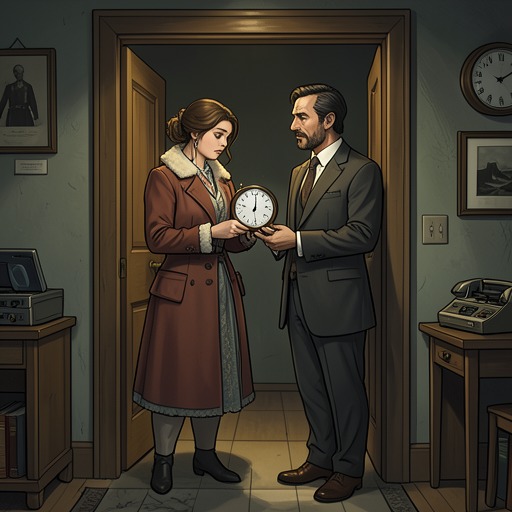
Before the final meeting occurs in the narrative, Henry tells Clare about a visit to her future. In a dark hallway crowded with galoshes, he reaches a bright room and sees an old woman with long white hair, a coral-colored cardigan, and a cup of tea. He recognizes her as Clare in old age. Recalling that vision in his letter, he withholds more of the encounter so she can experience it unrehearsed when the time comes. His description makes the future reunion both a disclosed certainty and an unplayed scene: Clare knows it awaits her but does not yet possess its details.
The novel later presents the encounter in a dated sequence in July 2053. Henry, still forty-three, finds himself in the dark hallway, follows the light, and looks into a room filled with morning sun. Clare, eighty-two, sits by a window beside a wooden table and teacup, with the lake visible outside. The waves rush up the shore and recede until their repetition seems like stillness. Henry recognizes the woman by her familiar bearing, white hair, and coral sweater; when the floor creaks, she turns, sees him, and her face becomes joyful. She comes to him slowly, and he takes her into his arms.
The meeting answers Henry’s earlier glimpse without undoing the years that separate it from his letter. The hallway, door, and room link his remembered future vision to the completed encounter, while Clare’s long wait gives that arrival its human cost. On the preceding dated entry, Clare sits with tea, listens to the water, and waits. The reunion therefore does not make waiting disappear from the story; it brings Henry back into the scene in which waiting has become her present.
The Meaning of Love Across Time
The movement from wings to an embrace gives the novel’s treatment of cross-temporal love a distinctive shape. Henry dreams of running and flying, but his most consequential release comes in a quiet room beside Clare. In the final reunion, the same pattern returns: a hallway and a carefully approached doorway lead not to an abstract victory over time but to the familiar person waiting beyond it. Love makes connection possible within the limits the story preserves; it does not erase bodily vulnerability, death, or the intervals that have marked the relationship.
Nor does the ending settle into a simple promise of uninterrupted happiness. Henry’s letter asks Clare to claim a life beyond him, and the later reunion gives the relationship a continuation that does not cancel that request. His return is brief in the terms of the evidence: it is an encounter across years, not proof that Clare’s long life has been free from loss. The novel lets release and longing coexist. Clare’s waiting can be both the consequence of loving Henry and the condition of their final meeting.
Cross-temporal love here is therefore defined by recurrence rather than possession. Henry is absent, remembered, and then present again; Clare waits, lives, and finally sees him. The thread he names in his letter is not a path that prevents separation, but the connection by which separation remains legible as part of a shared life. The last embrace gives that idea a concrete form: after the years, the hallway, the light, and recognition, the relationship returns to the simple act of holding one another.