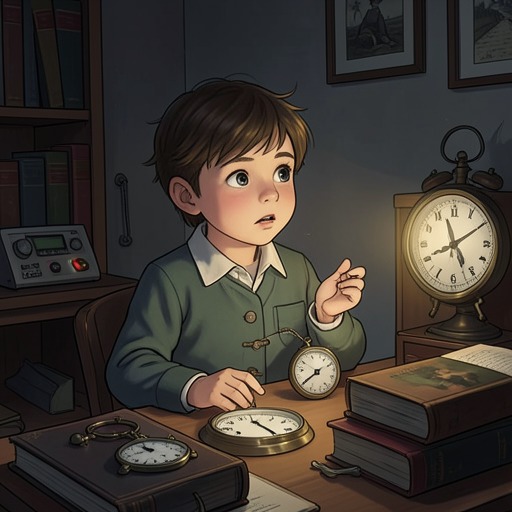
Henry authorizes research using Alba’s DNA
The Time Traveler's WifeHenry’s authorization for research using Alba’s DNA is a consequential parental decision made after the hoped-for treatment for his own time-travel condition proves unworkable. By asking Dr. David Kendrick to pursue research that might one day help Alba, Henry turns a failed prospect for himself into a possible resource for his daughter; the choice also brings him into conflict with Clare over her consent and fears about genetic intervention.
Background: A hoped-for intervention fails
By July 7, 2006, Henry and Kendrick have spent years investigating Henry’s condition. Kendrick explains that the contemplated approach will not work for Henry: his immune system, his age, and the number of genes involved are obstacles. Henry recalls the earlier optimism they shared, when both believed molecular genetics might let science confound nature, and remembers the time-traveling mouse as a small source of hope. The conversation marks the end of that expectation for Henry, but not of his concern about what the research could mean for his family.
Henry immediately shifts the question from himself to Alba. He asks whether the research might work for her, and Kendrick says they cannot know unless Clare changes her mind about allowing him to work with Alba’s DNA. Henry proposes making mice using her DNA and pursuing research that Alba, once she turns eighteen, could choose to try. Kendrick agrees that this is possible in principle. Henry accepts that he may be beyond help if the research cannot work for him, but sees a chance that his daughter could benefit in the future.
The decision and its limits
Henry agrees to proceed with the proposed research. His decision is framed not as certainty about a cure but as a way to preserve an option for Alba: she might never need or want treatment, and the research might not succeed. The benefit he imagines is conditional and belongs to her future choice, not to an outcome he can promise in the present.
That distinction matters in the family’s next discussion. In the studio, Clare discovers that Henry has allowed Kendrick to begin work connected to Alba’s DNA. She objects and tells him to ask Kendrick to stop. Henry explains that he had not told Alba what the research was for and that Clare can tell her when the time comes. Clare’s response shows that Henry’s act, though motivated by concern for their daughter, has proceeded without her agreement; the decision therefore raises a question of parental authority as well as medical possibility.
Clare’s consent and the safety-net argument
Henry tells Clare that Kendrick has said he can do no more for Henry, but argues that the research could still matter for Alba. He does not know what her future will bring. She may enjoy time travel, or she may find it burdensome; he imagines that she could face being lost, hungry, or exposed to danger, but presents these as possibilities rather than certainties. The uncertainty is the reason he gives for wanting to act before they know what her experience will be.
Clare weeps as Henry asks her to let him leave Alba a safety net. He emphasizes that the work may not succeed and Alba may never use it. Clare ultimately nods and allows the proposal to proceed. Her assent follows a direct appeal to their responsibility toward their daughter, but it does not erase her earlier resistance or fear of genetic intervention. The agreement is therefore limited and emotionally difficult: it authorizes a possibility for Alba, not a guaranteed treatment or a settled view that her condition must be corrected.
Significance
The authorization carries Henry’s scientific hopes past the boundary of his own life. Kendrick’s research cannot offer Henry the result he wanted, yet Henry redirects the effort toward a daughter who may someday decide whether to use it. The decision holds together two different ideas of protection: Clare’s concern about intervention and Henry’s wish to make future help available without knowing whether Alba will want it.
The episode also makes consent central to the meaning of the proposed research. Henry’s initial authorization is not the same as an agreed family decision; Clare’s objection forces him to explain the stakes, and her eventual assent follows that exchange. What they secure is not control over Alba’s future, but the possibility that she will have an option when she is old enough to choose. That modest, uncertain prospect gives the research its meaning as a safety net rather than a promised cure.