Henry’s final New Year’s Eve and death
The Time Traveler's WifeHenry’s final New Year’s Eve and death unite a family celebration, a private farewell, and the fatal consequence of a rifle shot across two different points in Henry’s life. On December 31, 2006, he gathers with Clare and the people who matter to them, knowing that his time is nearly over. He tells Gomez that the end is near, then confides in Clare that it has already happened. As midnight approaches, Henry vanishes from her embrace. The next day, the novel reveals the earlier moment of the same death: in 1984, a rifle shot strikes Henry, and Clare and Alba are there as he dies. The intercut chronology makes his death at once an intimate loss in the present of the gathering and an event whose cause belongs to a different time.
A Celebration Shaped by Farewell
On December 31, 2006, when Clare is thirty-five and Henry forty-three, the couple host a New Year’s Eve party. Henry had initially been reluctant, but Clare draws him in by raising the idea in front of Alba, whose excitement makes it difficult for him to refuse. At the kitchen table, he shows their daughter how to cut flowers from carrots and radishes. The small domestic lesson places him among his family not as a figure already absent, but as a father participating in the ordinary preparations of a holiday.
The guests arrive as a cross-section of the couple’s shared lives. Henry’s father and Kimy come, as do Alicia, Gomez and Charisse, Philip, Mark and Sharon with their children, Clare’s grandmother, Ben, Helen, Ruth, Kendrick and his family, and friends from Clare’s art world, Henry’s library-school years, and Alba’s life. Clare has also insisted on inviting Celia Attley. Henry recognizes the gathering as a chance to see everyone who matters to them. His mother and Lucille cannot be there, and Ingrid is absent as well; their absence sharpens the contrast between the crowded house and the losses that cannot be repaired by bringing everyone else together.
The party’s warmth does not cancel Henry’s knowledge of what is coming. When his father greets him, Henry suddenly understands that his life is about to pass before his eyes. The gathering therefore carries two meanings at once: it is a celebration of the relationships that have formed his life, and it is his last opportunity to be among the people he loves. The festive occasion becomes a farewell without ceasing to be a party.
A Private Goodbye
During the evening, Henry speaks privately to Gomez. He thanks him for everything and calls him the best, then says that his time is up and that the end is near. Gomez asks when; Henry can offer only that it will be soon. Their exchange gives the impending death a human scale: Henry does not explain it through a medical account or a theory, but shares the knowledge with a friend whose response makes the approaching separation real.
Henry also knows that Clare has arranged the party without knowing it will become a final gathering. He tells her that he did not want her to be alone afterward and wanted to say goodbye to everyone. When he tells her that it is time, Clare begs him to stay. Henry answers that it has already happened. He moves from his chair to the divan so they can lie together while the guests laugh and dance inside. The physical closeness does not change the outcome, but it lets their last conversation take place in the middle of the life they have made together.
Clare asks why he did not tell her before she invited everyone. Henry explains that he wanted the others there for her after his death, and that he wanted to say goodbye to them himself. He describes the party as a good last hurrah. His decision transforms an apparently ordinary social event into a deliberate act of leave-taking, though Clare’s anger and grief show that understanding his reason cannot make the knowledge easier to bear.
Midnight and the Disappearance
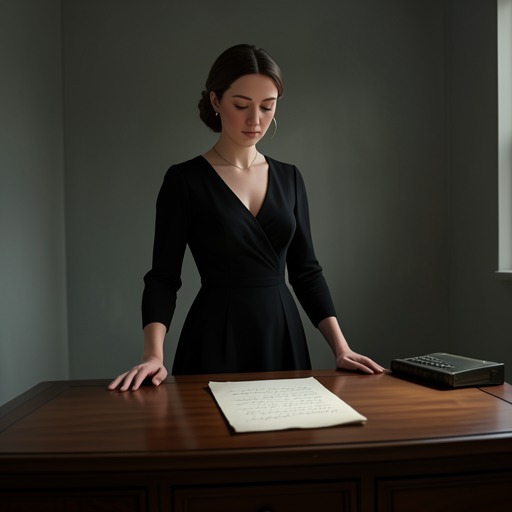
As midnight nears, Clare tries to refuse what Henry has told her. Henry comforts her, strokes her hair, and then becomes feverish. Clare holds him tightly, still struggling to believe that the body in her arms can disappear. She asks him to kiss her. In the next moment she is alone on the porch, under a blanket on the divan, while the party continues inside.
The transition is stark: Henry’s absence arrives at the precise threshold when the gathered guests welcome the new year. The record stops, Gomez begins the countdown, and everyone joins in the final numbers. After the greeting and the pop of a champagne cork, someone asks where Henry and Clare are. Firecrackers sound in the street as Clare sits alone and waits. The celebration goes on around her, but the event’s central relation has been broken: the person for whom she was waiting is gone.
The scene does not present disappearance as a metaphor that cancels death. Clare’s waiting follows from the fact of Henry’s departure, and the surrounding celebration makes that absence more visible. The new year begins publicly in company; Clare meets it privately in grief.
The Earlier Moment of Death
The narrative then shifts to October 27, 1984, although this portion is presented as occurring on January 1, 2007 in the interwoven chronology. Henry falls into tall grass beneath a blank sky. A rifle cracks in the distance; at first he thinks the sound has nothing to do with him, but he is struck and falls. He recognizes the seriousness of what has happened and wants only to see Clare before he dies.
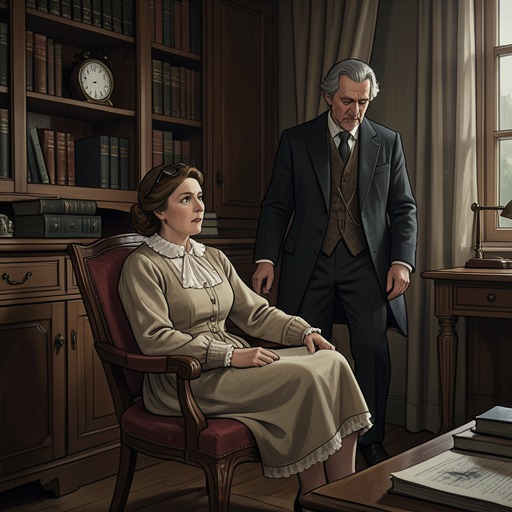
Clare leans over him, crying, while Alba whispers to her father. Henry manages to tell them that he loves them. The scene joins the two strands of the ending: the family from the New Year’s gathering is present again, but now in the earlier moment when the wound that will kill him is inflicted. In the living room after his death, Clare holds Henry while Alba crouches over him and whispers to him. The other guests stand still; someone turns off the music, and Gomez suggests calling the police. The party’s ordinary sounds give way to silence and immediate practical response.
The split chronology changes how the ending is understood. Henry’s announcement that his death has already happened is not only foreknowledge: the reader sees that his fatal shooting belongs to an earlier date in his own life, while its final consequences reach Clare and the assembled family on New Year’s Eve in 2006. The farewell is therefore not a last-minute escape from the event but a moment of recognition and closeness within a loss the narrative has already made inevitable.
Loss, Family, and Time
Henry’s final evening gathers the novel’s central relations around his absence. Clare is his partner and the person who holds him at the threshold of midnight; Alba is present both as the child he teaches to prepare vegetables for the party and as the daughter who whispers to him after the shooting. Gomez receives Henry’s private thanks and is also among those who respond when the death becomes visible to the others. The gathering makes the community around Henry concrete, while the absent figures named in his thoughts register the limits of even a lovingly assembled family.
The ending also places domestic continuity beside irreversible loss. Henry participates in preparing food, welcomes the people who arrive, and shares a quiet farewell with Clare. Yet those acts cannot keep him in the present. The midnight countdown continues after his disappearance, and the next day’s sequence makes clear that his death is linked to a shot fired in 1984. The novel’s divided dates preserve both sides of the event: the earlier cause and the later experience of bereavement.
The farewell does not restore Henry to the celebration or offer Clare a way to alter what has happened. Instead, it lets the final hours hold their competing truths: the household is full, the relationships are real, and Henry is leaving. The countdown marks a new year for everyone inside; for Clare, it also marks the moment when waiting begins.