Henry’s mother’s fatal car crash
The Time Traveler's WifeHenry’s mother’s fatal car crash is both a defining childhood loss and the recurring center of Henry’s experience of time travel. On Christmas Eve, when he is six, he survives a collision that kills Annette because he disappears from the car through time displacement. The accident does not remain a single past event: Henry says he returns to it repeatedly, from different positions and moments, making his mother’s death the fixed point around which memory, grief, and the novel’s nonlinear chronology revolve.
Background and Circumstances
The crash took place on a snowy Christmas Eve morning, when Henry’s father, Richard, was in Vienna arranging an apartment ahead of the family’s planned move. Annette and Henry were driving to the airport to meet him, with the intention of continuing together to a grandmother’s home for the holidays. The family had been happy, and Henry recalls both parents as deeply in love and absorbed in their work; his account of the accident begins as a story of ordinary family plans interrupted by a fatal journey.
The weather made the drive hazardous. The roads were covered in unsalted ice, visibility was poor, and Annette, who was nervous about driving, had agreed to take the route because it made practical sense. They traveled in a white 1962 Ford Fairlane, a car Henry later describes as sturdy and cherished by his parents. Annette stayed in the right-hand lane on the expressway, moving slowly through holiday traffic and leaving space behind a truck.
The Collision and Henry’s Survival
A red Corvette entered the expressway behind the Fairlane. Its driver, a dentist who was slightly intoxicated, could not slow down on the icy road and struck the car. The impact pushed the Fairlane forward as traffic slowed. Annette tried to brake, but the car continued into an open pickup truck carrying scrap metal. A sheet of steel came through the windshield, killing her.
Henry was in the front passenger seat, wearing a seat belt. The sheet of steel lodged in his seat where his forehead should have been, and his hat was caught in the wreckage. He later shows Clare a scar on his forehead. The police could not explain why his clothes were still in the car while Henry himself was found naked by the roadside: during the collision, he had time-traveled. It was only the second time the displacement had happened to him. He remembers watching the crash and then finding himself in a hospital, physically almost unharmed but in shock.
Henry understands the displacement as a response to extreme stress and fear, his body’s means of escape from a situation it could not otherwise survive. That escape makes his survival inseparable from the loss: Annette dies in the collision while her young son disappears from the scene and returns elsewhere in time. The account supplies no suggestion that he chose to leave or could control the event.
The Accident Retold to Clare
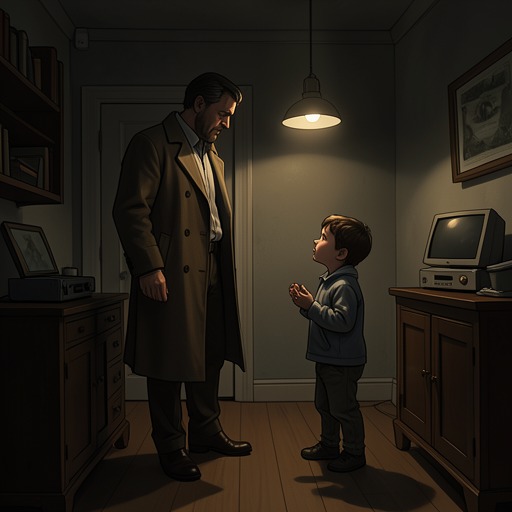
Henry tells Clare about the crash on Christmas Eve, 1988, in the basement Reading Room at Meadowlark House. He is then forty, visiting a point in time when his younger self is due to become dangerously drunk in Chicago. The date is the nineteenth anniversary of Annette’s death. Clare has left him food and the South Haven Daily, and the two sit together as he begins to speak about his mother—personal history he has rarely shared with her.
The scene also makes clear how little time Clare has to learn about Henry through ordinary conversation. As the dates on her List of his visits grow fewer and their approaching separation weighs on her, she hopes that personal details might help her find him in her own present. Henry recognizes that she wants these fragments of autobiography, and tells the story of his family and the drive in response to her interest. Clare listens closely, asking what kind of car they were in, then recoils from the account and asks how Henry survived. Her recognition that he time-traveled connects the family tragedy to the condition that shapes their relationship.
Earlier, at fifteen, Clare had already sensed a concealed truth when Henry accidentally spoke of her mother in the past tense. He lies that Lucille is fine, but recognizes that Clare is acutely sensitive to even small lies and that telling her the truth would alter how she understands her mother. He cannot bring himself to explain. The contrast between that guarded silence and his later account of Annette’s death shows how the accident becomes a story Henry can eventually entrust to Clare, even as the losses in their families remain difficult to disclose.
Repetition, Memory, and Aftermath
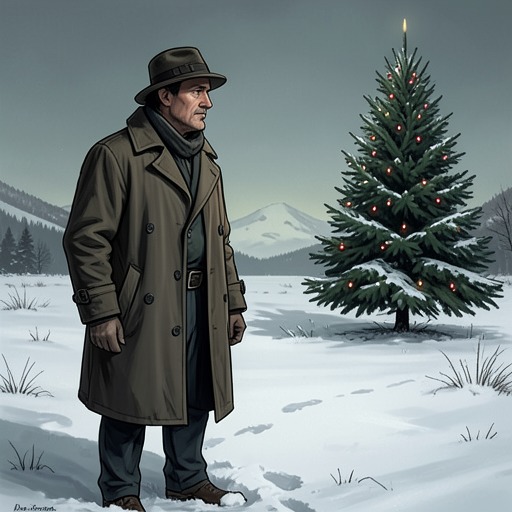
Henry describes his mother’s death as the pivotal event of his life, a mass whose gravity draws everything else into orbit. He dreams about the accident and returns to it through time travel, again and again. The returns place him at many points around the scene: in cars, behind bushes, on a bridge, and in a tree. He also experiences the aftermath, including calling the airport from a nearby gas station to have Richard summoned to the hospital, watching his father arrive, and waiting by the road for his younger self so he can put a blanket around the child’s shoulders. The account turns a seemingly singular catastrophe into a scene Henry repeatedly inhabits, both as witness and as a participant in events already fixed in his past.
This recurrence gives the accident a distinctive place in the novel’s structure. The story is narrated long after the crash, but Henry’s time travel makes the past available to him as an ongoing series of encounters rather than a closed memory. His description of moving through the scene from different angles does not undo the death or deliver him from grief; it underscores that his survival cannot separate him from the event. The scene’s emotional consequence surfaces in the present of the telling as Henry weeps and Clare holds him.
The accident also places family loss alongside the inherited uncertainties Henry and Clare later face as parents. After years of trying to conceive and suffering repeated miscarriages, they learn that Clare is pregnant, despite Henry’s earlier decision to have a vasectomy. During the birth, Henry stays beside Clare and holds her hand as medical staff respond to concern about the baby’s rapid heartbeat. This later family history does not repeat the crash itself, but keeps questions of survival, parenthood, and what can be known about a child’s future in view. When Henry meets Alba in a future visit, she tells him that she was five when he died; he finds the knowledge overwhelming. In a later encounter involving the younger and older Alba, Henry asks the older child not to tell Clare that he died. The family’s losses thus pass between generations as knowledge, withheld truths, and grief—not as an identical recurrence of Annette’s accident.
Narrative Significance
The crash gives Henry’s time-travel condition its most intimate and traumatic point of reference. His repeated returns are not merely journeys to an important date: he sees the same event from multiple positions and encounters the people left in its aftermath, including his grieving father and his younger self. The narration frames this repetition through Henry’s own account to Clare, so that the reader learns both what happened and how the event continues to structure the life of the child who survived it.
The accident’s central irony is that Henry escapes the collision by disappearing, but cannot escape its return. His displacement saves his life in the moment while binding his memory to the scene; the more he travels through time, the more the loss becomes a recurring center rather than a finished past. In naming the accident the pivotal event around which everything else goes around, Henry gives the novel’s interwoven chronology a personal gravity: time may carry him elsewhere, but Annette’s death remains the wound to which he circles back.