January 2, 1994
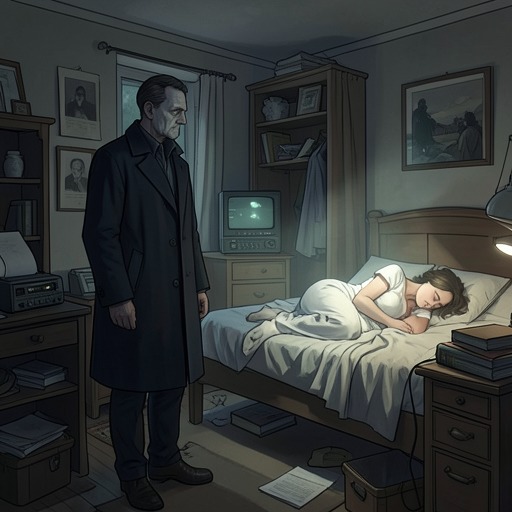
The Time Traveler's WifeJanuary 2, 1994 is the date Ingrid Carmichel dies by suicide, but the novel presents it to Henry DeTamble as an unexpected destination in time rather than as a settled past. Arriving from December 2006, he encounters Ingrid alive on the day of her death. He knows what is coming, tries to reach her, and fails. The date thus joins the novel’s divided timelines to one painful limit: Henry may arrive at an event, but he cannot necessarily change it.
The date in the novel’s chronology
The date is identified through two competing temporal positions. Henry arrives from December 18, 2006, a point when Ingrid has been dead for years, and asks Ingrid what day it is. She tells him that it is now January 2, 1994. For Ingrid, the date is the present; for Henry, it belongs to a past he has not yet reached in the order of his own life. The contrast makes chronology a matter not only of dates but of unequal knowledge: Henry recognizes the significance of the day before Ingrid does.
This disjunction is characteristic of the book’s structure. Other dated scenes place Henry and Clare at different ages and moments in their personal timelines, including their first date in 1991 and later episodes in which the same night or encounter belongs to one character’s past and the other’s future. January 2, 1994 gives that formal pattern a devastating consequence. Henry’s arrival does not restore a shared present with Ingrid; it makes him witness to a death he knows is approaching.
Henry’s encounter with Ingrid
Henry appears in Ingrid’s life while in pain and disoriented by the jump from 2006. Once he learns the date, he understands that Ingrid will die that day. He considers whether he can stop her and tries to speak without alarming her, telling her to be kind to herself and acknowledging that she is unhappy. His effort is limited by what he knows and by the fact that he has no way to make his warning into a clear, effective intervention.
Ingrid asks whether Henry loved her. He answers that he did, and she calls him a liar before taking her own life. The encounter ends without reconciliation or rescue. It leaves Henry with the knowledge that he was present and tried, but could not prevent the outcome.
Aftermath and the limits of intervention
On December 18, 2006, Henry returns to Clare in distress and tells her that Ingrid is dead. Clare points out that Ingrid has been dead for a long time; Henry replies that years and minutes feel the same. His response captures the dislocation of the encounter: the suicide is distant in calendar time, yet newly present in his experience. The past has not changed for Clare, but Henry has just lived through it.
Henry tells Clare that he blames himself for being there, then admits that he tried and could not have stopped Ingrid. Clare’s question brings the scene’s central uncertainty into focus without turning his presence into proof that he could have altered the outcome. The date exposes a painful boundary of Henry’s condition: time travel places him inside other people’s decisive moments, but it does not grant him control over them.
Narrative significance
The scene makes the novel’s non-linear form carry emotional as well as chronological weight. A date that is retrospectively known to Clare becomes immediate for Henry, so the reader must hold two truths together: Ingrid is already dead in the 2006 frame, and she is still alive in the 1994 scene. The resulting tension depends on the gap between what Henry knows and what he can do.
January 2, 1994 also complicates the idea that returning to the past offers a second chance. Henry can meet Ingrid again and speak to her, but knowledge of her fate does not give him a means to avert it. The date remains fixed even as Henry experiences it out of sequence, linking the novel’s temporal disorder to grief, helplessness, and the painful persistence of events that cannot be undone.