Lucille Abshire
The Time Traveler's WifeLucille Abshire, known to her family as Mama or Lucy, is Clare Abshire’s mother and a central, complicated presence in the Abshire household. A gardener who can be affectionate, gracious, and vividly engaged with the natural world, she also lives with manic depression, whose shifts shape her relationships with her family. Her death from cancer leaves Clare bereft; a poem Lucille wrote to her daughter becomes a small but decisive record of love amid years of uncertainty.
Identity and Family
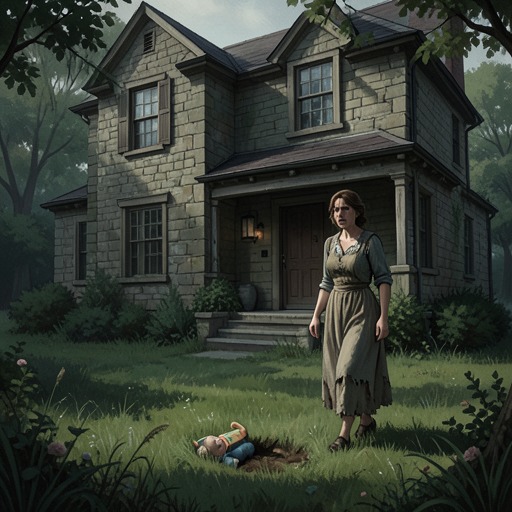
Lucille is the only child of Grandma Meagram, and the Abshire family home near South Haven originally belonged to her parents. Her father was a lawyer; Philip Abshire met Lucille when he came to work for him, and the house became part of the story of their marriage as well as their family inheritance. Clare describes the home as notable enough to appear in books about the Arts and Crafts movement.
Lucille is the mother of Clare, Mark, and Alicia, and Philip is her husband. The household also includes Etta, who is a steady caretaker and a near-maternal presence for Clare, as well as Nell and Peter, the cook and gardener. Clare’s description of Etta as consistently present, in contrast to her own mother being “off in the clouds,” conveys how illness can unsettle a family’s ordinary roles without erasing its attachments.
When Henry first meets Lucille at the family table, she welcomes him to call her by her first name. He sees her as warm despite her exhaustion, while Philip and Mark appear wary of Henry for reasons he does not yet understand. Lucille’s place in the family is therefore introduced not through a simple portrait of domestic ease, but through a gathering where affection, tension, and things left unexplained coexist.
Illness and Family Life
Clare identifies Lucille as manic-depressive. In 1979, when Clare was seven, the family lost a baby, and Lucille attempted suicide; Clare remembers discovering what had happened and having to seek help while the rest of the family was absent. The loss and the attempt mark a painful rupture in Clare’s childhood. The evidence establishes the sequence and its impact on Clare, without resolving every aspect of Lucille’s illness or the family’s experience of it.
Years later, Lucille’s mood continues to shape family gatherings. At one family celebration, Alicia discreetly warns Clare that their mother is not well. Lucille initially appears composed on the couch in pearls and a peach velvet dress, while Philip watches her closely. The family’s attention is divided between what Lucille presents in the room and what they suspect may have happened just before they arrived.
At dinner, Lucille moves sharply among sadness, elation, and despair. Her family repeatedly steers conversation toward safer ground, trying to buffer her moods. During dessert she begins to cry, and the table falls silent. Philip and Clare approach her; Lucille speaks in fragments about being disregarded and about having ruined someone’s chances. Great Aunt Dulcie’s response suggests that the outburst touches on a shared family history, but the scene does not provide a full account of the grievance. Its focus is the family’s practiced, fragile effort to meet Lucille’s distress together.
The Garden and Its Seasons
Gardening gives Lucille a distinctive life beyond her illness. When she is well, she kneels among the beds to weed and move plants, tends roses, and keeps track of what is flourishing: finches at a new feeder, dahlias near the sundial, and a vigorous rose whose lavender color she dislikes. She is as attentive to the garden’s particulars as she is animated in describing them to Clare and Henry.
As her health declines, the garden remains a place the family tries to keep within reach. Etta and Philip bring Lucille downstairs wrapped in quilts and seat her in a wicker chair, sometimes near the fountain and sometimes beneath the pear tree, where she can watch Peter work. Her illness changes how she occupies the garden, but does not make it cease to matter to her.
One summer, Lucille and Alicia conduct an informal experiment: Alicia practices cello in the garden for several hours each day to see whether the plants respond to music. Lucille credits the music with an especially abundant tomato crop and points out a zucchini of remarkable size. They call the experiment a success, but do not repeat it; it was the last summer Lucille was well enough to garden. The episode joins Lucille’s curiosity and humor to the seasonal pattern of her health, making the garden both a shared family space and a record of what illness takes away.
Death and Clare’s Discovery
In August 1998, Lucille has returned home from the hospital, but her room has become a hospital room. Clare stays beside her through a night of confused calls and changing emotion, then watches the morning arrive. When Lucille’s breathing stops, Clare checks for signs of life and understands that her mother has died. The scene is told through Clare’s attention to the quiet room and the passage of dawn, placing the loss within the intimate space of home.
After Lucille’s death, Clare finds papers in her mother’s desk. A date, 1979, recalls the year the baby died and Lucille attempted suicide; Clare sets those papers aside rather than read further. In another drawer, she finds more recent poems, including one addressed to her, “The Garden Under Snow.” The discovery does not undo Clare’s memories of hurt or explain every silence between mother and daughter. It gives her something she can hold against the uncertainty: evidence that Lucille loved her.
When Clare shows the poem to Henry, he recognizes its importance to her. For a moment, the paper helps Clare feel that her mother’s love was real, even though Lucille’s behavior had made that love difficult to trust. Lucille’s significance rests in that unresolved conjunction: she is remembered as a loving, elegant gardener and as a mother whose illness caused lasting pain, while the poem survives as a direct expression of affection that Clare can finally receive.