The Garden Under Snow
The Time Traveler's WifeThe Garden Under Snow is a poem Lucille writes for Clare and leaves among papers in her desk. Clare finds it while sorting through the record of her mother’s life, and its images of a garden held beneath snow, a woman waiting to awaken, and a child almost formed turn an uncertain maternal bond into something Clare can hold and read. Henry’s response makes the poem more than a private keepsake: it becomes evidence that Lucille loved Clare, and a lifeline in a moment of grief.
Discovery among the papers
The poem surfaces after Clare has encountered papers that reach back to 1979, the year her mother lost a baby and attempted suicide. The discovery overwhelms Clare physically: her stomach aches and her eyes blur. She puts those papers aside rather than continue reading, then searches another drawer, where she finds more recent poems and, at last, one addressed to her. Its title, The Garden Under Snow, gives the discovery a shape distinct from the distressing history she has just set down. The poem does not erase that history; it comes to Clare from within it.
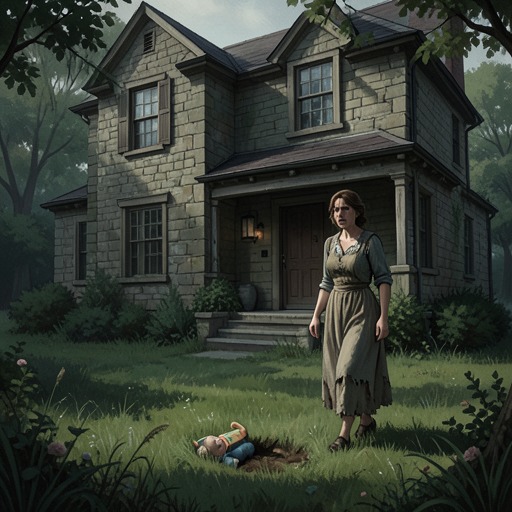
Clare is sitting on the floor in front of her mother’s desk, surrounded by white and yellow papers, when Henry comes to see what she is doing. The desk lamp makes a pool of light around her, but her face remains in shadow, her copper hair seeming to Henry like a bright aura. She holds out the paper and tells him that her mother wrote her a poem. The physical circumstances matter: the poem is found not in a formal memorial or public tribute, but amid scattered papers in the intimate, unsettled space of a desk. A private document becomes something Clare can share with Henry.
The poem’s images
The poem begins with a garden under snow and recasts the snow as a blank page marked by footprints. The image holds stillness and inscription together: the garden is covered, but not empty, and what has crossed its surface leaves a trace. The poem then addresses Clare by name and describes her as never belonging to her mother, but always belonging to herself. This distinction grants Clare an identity beyond possession even as the poem speaks to her within a relationship between mother and child.
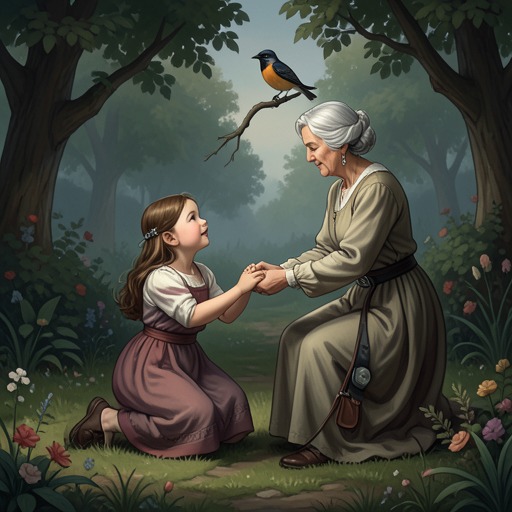
The poem shifts into the image of Sleeping Beauty beneath a crystalline blanket. She waits; then the language turns toward spring and sleeping becoming awakening. Waiting is not confined to the sleeping figure: everything waits for a kiss. The fairy-tale image makes awakening a possibility, but the poem does not present it as already accomplished. Its emotional force lies in the interval between enclosure and release, in the hope held open by the promised spring.
The later images move from the garden’s hidden life to motherhood. Tubers and roots take improbable shapes; the speaker recalls not having thought of something, then names a baby and an almost-face. The closing return to a garden waiting gathers these images without resolving them into a complete account of the loss. The poem brings together Clare, the mother’s lost baby, and a life imagined only at the edge of visibility. It offers a trace of feeling rather than an explanation of everything that happened.
Henry’s reading and response
Henry reads the poem beside Clare and says it is beautiful. Its effect on him is also shaped by his own memories of his mother: he remembers her singing lieder after lunch on summer afternoons, smiling with him at their reflection in a shop window, and twirling across her dressing room in a blue dress. He had never questioned that she loved him. By contrast, he thinks of Lucille as changeable as wind, and recognizes why Clare has needed something more definite than an impression or an inference.
To Henry, the poem is immutable evidence: a surviving record of an emotion that Clare could otherwise doubt. He thinks of it as a snapshot of feeling and is relieved that, among all the papers on the floor, something has risen to the surface to serve as Clare’s lifeboat. That image links the poem’s discovery to rescue without suggesting that it repairs the past. The evidence it provides is specific and limited: Lucille wrote to Clare, addressed her, and left a poem in which a mother’s love can be recognized.
Clare repeats in wonder that her mother wrote her a poem. Tears streak her cheeks as Henry puts his arms around her. He sees her as his wife again, safe at last after a shipwreck, weeping like a little girl whose mother is waving from the deck of a foundering boat. The poem does not remove the pain of the mother who is gone; it changes what Clare can know within that pain. For a moment, she can feel that her mother really did love her.
Significance
The poem’s seasonal and fairy-tale imagery gives form to a relationship whose meaning Clare has struggled to trust. Snow and the crystalline blanket suggest suspension; spring, awakening, and the awaited kiss point toward release. Yet the poem’s final garden is still waiting. Its hope remains open rather than conclusive, preserving the difference between receiving evidence of love and undoing grief.
Its appearance also binds two generations of maternal feeling. Henry can compare Clare’s newly found evidence with the unquestioned love he remembers from his own mother, while Clare receives something she had not been able to take for granted. The poem makes that contrast visible without making the mothers interchangeable. For Clare, its decisive gift is neither a full explanation of Lucille nor a resolution of the past, but a written sign she can return to: her mother did write to her, and the words allow her to feel loved.