before October 26, 1991
The Prologue of Waiting
[Clare](entity:character-recall-character-clare-f5b5c9a23a82) describes the life built around Henry’s involuntary disappearances: she waits without knowing where he is or whether he is safe, while he returns to domestic pleasures with a renewed sense of their value. Their marriage is already defined by absence as much as by companionship.
Henry explains the naked, disorienting arrivals, the hunger and danger of finding clothes, and his inability to control where or when he goes. The condition makes ordinary life precarious and establishes the novel’s central tension: one partner is continually taken away while the other remains behind.
June 16, 1968
The First Displacement
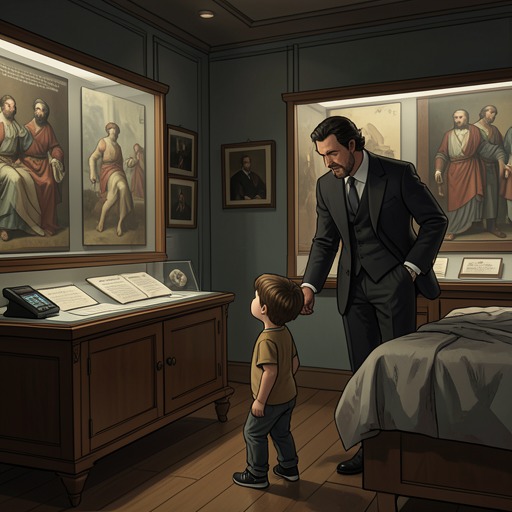
On his fifth birthday, Henry visits the [Field Museum of Natural History](entity:location-recall-location-field-museum-of-natu-e320524c335a) with his parents and is overwhelmed by its specimens, especially its birds. After a happy evening at home, he stands by his bedroom window and suddenly vanishes.
He reappears at the museum in 1988, where his twenty-four-year-old self realizes he has been sent to guide his younger self through the exhibits. The first known episode turns a private family memory into the beginning of Henry’s lifelong separation from ordinary time.
January 2, 1988
A Guide in the Museum
The older Henry steals clothes and food in the Field Museum, then meets his five-year-old self in the Great Hall. He explains time travel as best he can, shows him the museum’s hidden collections, and opens [Audubon’s Birds of America](entity:object-recall-object-audubon-s-birds-of-ame-da1ca98baa83) for him.
The child disappears back to his bedroom believing the encounter was a dream. The older Henry is left with a vivid memory of being both guide and lonely child, discovering that the mysterious companion who taught him survival was himself.
September 23, 1977
Clare’s First Visitor
Thirty-six-year-old Henry arrives naked in the [Meadow](entity:location-recall-location-meadow-70aaf56d8af2) before [Clare](entity:character-recall-character-clare-f5b5c9a23a82) has met him in her own chronology. Six-year-old Clare is practicing penmanship when she notices him; frightened, she throws a shoe and cuts his lip.
Henry persuades her that he is a time traveler, proves he knows her name and family, and asks for clothes and food. Before disappearing, he writes down when he will return, beginning Clare’s secret calendar of visits and her childhood habit of waiting for him.
October 27, 1984
The First Meeting with Her Father
[Clare](entity:character-recall-character-clare-f5b5c9a23a82) wakes believing Henry has called her and runs outside, where she finds him with [Philip](entity:character-recall-character-philip-f89be33d583c) and [Mark](entity:character-recall-character-mark-cfbb20016049) in the [Meadow](entity:location-recall-location-meadow-70aaf56d8af2). He keeps her from learning what the two men have seen and signals her not to reveal him.
Years later, Clare understands that this encounter was connected to Henry’s coming death, though she does not yet know how. The unexplained bloodied patch and Henry’s silence make the Meadow a place where the future’s violence has already begun to intrude on her childhood.
February 2, 1987
The News About Lucille
Henry accidentally uses the past tense while speaking about [Clare](entity:character-recall-character-clare-f5b5c9a23a82)’s mother, [Lucille](entity:character-recall-character-lucille-29eaf78c77aa). Clare fears the worst and guesses that her mother will die by suicide, but Henry tells her the truth: Lucille will die of ovarian cancer.
The disclosure leaves Clare grieving for a future loss she cannot prevent. Henry’s attempt to protect her by withholding knowledge fails, exposing the emotional cost of their unequal access to time.
September 1987
Jason’s Assault
[Clare](entity:character-recall-character-clare-f5b5c9a23a82) tells Henry about a date with [Jason Everleigh](entity:character-recall-character-jason-everleigh-173a6ff5f699) that became an assault. Jason took her to an isolated cottage, hurt her, and left her bruised and burned; Clare asks Henry to help her retaliate.
Henry and Clare confront Jason at his home, restrain him in the woods, and make him face the harm he caused. Clare later shows the injuries at school, and the girls respond with support. The episode marks a painful transition in Clare’s adolescence and complicates her understanding of protection, anger, and violence.
June 1988
The Picture of a Future Husband
[Clare](entity:character-recall-character-clare-f5b5c9a23a82) makes a photograph of Henry that he has not yet seen in his own chronology. Years later, [Gomez](entity:character-recall-character-gomez-2ebf5e447962) notices the dated picture and is unsettled by the fact that Clare possesses an image of a man she has not yet met in the present.
The photograph becomes one of the early clues that Clare’s private history with Henry is real. Their relationship is already producing artifacts that travel through ordinary time even as Henry himself moves unpredictably through it.
September 11, 1988 and January 13, 2000
The Drawing Without a Date
[Clare](entity:character-recall-character-clare-f5b5c9a23a82) draws Henry in the [Meadow](entity:location-recall-location-meadow-70aaf56d8af2) and begins to date the portrait, but Henry tells her he has already seen the drawing without a date. Curious, she adds the date anyway, then later trims it off because she worries that changing the picture might alter their future.
The small experiment leaves no visible catastrophe, but both remain uneasy. Their uncertainty reveals how fragile their confidence in fixed events can be, even when their lived experience seems to confirm that the past cannot be changed.
December 24, 1988
The Christmas Eve Story
Henry arrives in the [Meadow](entity:location-recall-location-meadow-70aaf56d8af2) on the anniversary of his mother’s death, carrying the knowledge that his younger self will drink himself into the hospital that night. He tells [Clare](entity:character-recall-character-clare-f5b5c9a23a82) the story of the crash that killed Annette, including his own impossible disappearance from the wreckage.
Henry’s grief is not only memory: he repeatedly returns to the accident from different points in time, unable to save his mother or himself from witnessing it. Clare listens and comforts him, gaining a more intimate understanding of the loss that shaped his life.
December 24, 1988
Christmas Eve Hospitalization
On the same [Christmas Eve](entity:time-recall-time-christmas-eve-4c9949af68dd) in his own chronology, Henry drinks heavily at the [Get Me High Lounge](entity:location-recall-location-get-me-high-lounge-81c8757872be) and collapses. Mia calls emergency services, and he wakes in [Mercy Hospital](entity:location-recall-location-mercy-hospital-db4748447078) after his stomach has been pumped.
The episode makes his self-destructive drinking impossible to dismiss as mere excess. It also becomes one of the painful facts [Clare](entity:character-recall-character-clare-f5b5c9a23a82) learns from his later visits, while Henry himself has not yet told her the story in his present.
April 8, 1989
Meeting Grandma Meagram
[Clare](entity:character-recall-character-clare-f5b5c9a23a82) takes her blind grandmother, [Elizabeth Meagram](entity:character-recall-character-elizabeth-meagram-6303efb8b971), for a walk to the [Meadow](entity:location-recall-location-meadow-70aaf56d8af2), where they encounter Henry. Clare introduces him as the man she has told her grandmother about, and Henry confirms that he and Clare will marry.
Elizabeth touches Henry’s face and worries aloud that he may be a demon or a strange new kind of human. She also warns Clare that fairy-tale adventures leave mothers waiting at home. Her recognition gives Clare’s secret a witness and makes the future marriage feel both blessed and troubling.
May 24, 1989
Clare’s Eighteenth Birthday
Henry arrives in the [Meadow](entity:location-recall-location-meadow-70aaf56d8af2) on [Clare](entity:character-recall-character-clare-f5b5c9a23a82)’s eighteenth birthday, dressed in a tuxedo that she has prepared for him. Clare has laid out a celebratory picnic and tells him that they had planned to make love on this day, though the conversation and promise belong to a later visit in Henry’s chronology.
Henry is surprised to learn that this is the final date on Clare’s list of visits before they meet in the present. He agrees to be with her, carefully acknowledging the difference between her lifelong knowledge of him and his first experience of her as an adult.
May 24, 1989
Their First Sexual Encounter
After the picnic, Henry and [Clare](entity:character-recall-character-clare-f5b5c9a23a82) make love for the first time in her chronology. Clare is frightened and in pain, while Henry tries to be gentle; the experience becomes a defining memory for her and, later, a revelation for him when he reaches this visit in his own timeline.
Clare cries afterward because Henry will disappear and she expects years before seeing him again. Henry comforts her, explains that their separations do not align, and asks her to be patient when he later meets her as a stranger. The scene binds intimacy to absence from the outset.
October 26, 1991
Henry Meets Clare in Chicago
At the [Newberry Library](entity:location-recall-location-newberry-library-6e2c5de5454d), twenty-year-old [Clare](entity:character-recall-character-clare-f5b5c9a23a82) sees Henry at twenty-eight, while he has no memory of her. She tells him that she has known him since childhood and invites him to dinner; he accepts, astonished by her beauty and by the possibility that she is part of his future.
At dinner, Clare gives him her list of visit dates and explains the [Meadow](entity:location-recall-location-meadow-70aaf56d8af2), their childhood meetings, and their expected marriage. Henry is overwhelmed by the future she knows and asks them to begin again as though this were an ordinary first date. Their shared present starts at radically different points in their lives.
October 26–27, 1991
A Night at Henry’s Apartment
Henry and [Clare](entity:character-recall-character-clare-f5b5c9a23a82) leave dinner for his apartment, where they kiss and make love. Clare wakes in the morning among his books and finds evidence of another woman in the medicine cabinet, an unsettling sign that Henry has a past she has not shared with him.
Henry explains that he was about to end that relationship and that his younger self does not yet know the Clare he has already become. They begin to negotiate the imbalance between her accumulated memories and his new experience, while recognizing that their attraction is immediate as well as fated.
October 1991
The Last Visit List
[Clare](entity:character-recall-character-clare-f5b5c9a23a82) explains that her childhood list records 152 of Henry’s visits, allowing her to know when to meet him in the [Meadow](entity:location-recall-location-meadow-70aaf56d8af2). The list was dictated by Henry himself during one of his visits, creating a loop in which its information has no ordinary beginning.
For Clare, the dates have been a practical defense against uncertainty; for Henry, they expose how much of his life has already been experienced by the woman he has only just met. Their relationship is both intimate and structurally unequal, shaped by knowledge that cannot be shared at the same time.
December 24–25, 1991
The First Family Christmas
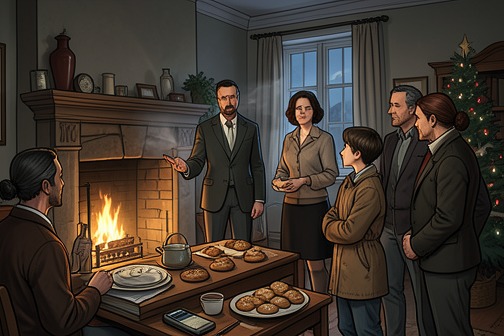
[Clare](entity:character-recall-character-clare-f5b5c9a23a82) brings Henry to [Meadowlark House](entity:location-recall-location-meadowlark-house-dddf7d96d327) for [Christmas](entity:time-recall-time-christmas-a573265d0167), where he meets her family, [Etta](entity:character-recall-character-etta-c995029911a9), [Nell](entity:character-recall-character-nell-aa2ee7238e97), and her friends. The visit is tense but affectionate: Henry learns the household’s complicated relationships, while Clare watches him encounter people and places she has known all her life.
At [Christmas Eve](entity:time-recall-time-christmas-eve-4c9949af68dd) dinner, [Lucille](entity:character-recall-character-lucille-29eaf78c77aa)’s mood collapses and the family’s strained history surfaces. Henry and Clare later discuss Lucille’s illness and the divide between what Clare remembers and what Henry has not yet experienced. The visit gives Henry a provisional place in Clare’s family while exposing how much remains hidden even between them.
December 24, 1991
The Mass Disappearance
During [Christmas Eve](entity:time-recall-time-christmas-eve-4c9949af68dd) Mass at St. Basil’s Church, Henry becomes nauseated and leaves to find the restroom. He reappears in his childhood school, then vanishes again, leaving [Clare](entity:character-recall-character-clare-f5b5c9a23a82) to wait through the service without knowing whether he will return.
Henry’s present-day self later reassures him that the disappearance will be brief in Clare’s chronology. He does return before the service ends, but the episode demonstrates how easily a shared family occasion can be broken apart by his condition.
December 14, 1991
Gomez Learns the Truth
Henry encounters [Gomez](entity:character-recall-character-gomez-2ebf5e447962) in an alley after beating up Gomez’s friend Nick and stealing clothes from a surplus store. Over dinner at Ann Sather’s Swedish Restaurant, he explains that he travels involuntarily through time, arriving naked and having to survive by theft and deception.
Gomez initially doubts him, then believes after Henry disappears in front of him. Their relationship shifts from wary acquaintance to lasting friendship, and Henry gives Gomez limited investment advice while refusing to reveal the details of his future.
December 22, 1991
The Violent Femmes Encounter
At the [Aragon Ballroom](entity:location-recall-location-aragon-ballroom-c75e6e061482), [Clare](entity:character-recall-character-clare-f5b5c9a23a82) sees Henry arguing with [Ingrid Carmichel](entity:character-recall-character-ingrid-carmichel-c248931ef052), his former girlfriend. A woman who cares for [Ingrid](entity:character-recall-character-ingrid-168d239eeb80) warns Clare that Henry has treated Ingrid badly, leaving Clare shaken and unsure whether she should trust the man she has waited for.
A future Henry appears and explains that he was miserable with Ingrid and did not know Clare existed when the relationship began. He tells Clare that he is trying to become a better person for her, making their courtship a process in which she must trust not only the man before her but the future version she already knows.
December 24, 1991
A House Full of Memories
During the family’s [Christmas](entity:time-recall-time-christmas-a573265d0167) visit, [Clare](entity:character-recall-character-clare-f5b5c9a23a82) shows Henry [Meadowlark House](entity:location-recall-location-meadowlark-house-dddf7d96d327) and the [Meadow](entity:location-recall-location-meadow-70aaf56d8af2), but he recognizes none of the places she has associated with him. The mismatch hurts her: her childhood is full of Henry, while his memory of those years is still ahead.
Henry attends Mass with the family, plays pool with [Alicia](entity:character-recall-character-alicia-1f68a746a0ea) and [Mark](entity:character-recall-character-mark-cfbb20016049), and slips into Clare’s bed. The visit offers warmth and belonging, but it cannot erase the asymmetry of memory or the disruptions of time travel.
May 9, 1992
Richard Gives the Rings
Henry visits [Richard](entity:character-recall-character-richard-cc7ee1eeaeeb) and finds him isolated, drinking, and unable to play the violin because his hands are shaking. Henry confronts him about neglecting his life, then reveals that he has repeatedly seen Annette alive in the past.
The confession breaks through Richard’s resentment and grief. Richard gives Henry Annette’s engagement and wedding rings, which Henry intends for [Clare](entity:character-recall-character-clare-f5b5c9a23a82), and the two men share a fragile moment of reconciliation.
May 31, 1992
Meeting Richard and Kimy
[Clare](entity:character-recall-character-clare-f5b5c9a23a82) visits Henry’s childhood home and meets [Richard](entity:character-recall-character-richard-cc7ee1eeaeeb) and [Kimy](entity:character-recall-character-kimy-3e32ca27c257). Richard is guarded, but Clare wins him over by speaking about Annette and explaining why she wants to marry Henry despite the pain his condition will bring.
Kimy welcomes Clare warmly, and Richard gives his blessing in his restrained way. The visit connects Clare to the family that formed Henry and helps Henry approach his father’s grief with less isolation.
May 24, 1992
Henry’s Proposal
On [Clare](entity:character-recall-character-clare-f5b5c9a23a82)’s twenty-first birthday, Henry prepares dinner and asks whether their sexual intensity is too much for her. Their conversation makes room for Clare to state her needs rather than treating desire as something she must continually prove.
Henry then gives her a ring and asks her to marry him. Clare says yes, adding that in a deeper sense she already has; her answer captures the novel’s circular romance, in which the marriage is both a future promise and a life she has been moving toward since childhood.
September–October 1993
The Wedding Drug
Fearing that he will disappear during the wedding, Henry asks [Ben Matteson](entity:character-recall-character-ben-matteson-16df2b273e1e) to reproduce [Risperdal](entity:object-recall-object-risperdal-a55b3b598e4a) before it is commercially available. The drug is an attempt to control his condition long enough to remain present for the ceremony.
A test dose causes a severe reaction resembling Parkinsonism, and [Clare](entity:character-recall-character-clare-f5b5c9a23a82) has Henry taken to the hospital. She tells [Ben](entity:character-recall-character-ben-964df7d0a5ee) to stop experimenting with drugs, while Henry remains determined to find some way to endure the wedding day.
October 23, 1993
The Wedding Day
On the morning of the wedding, Henry runs through a storm to manage his anxiety. A time-displaced version of himself arrives at a gas station with no clothes, discovers the date, and rushes toward the church; another self appears outside while the groom waits inside.
Henry arrives soaked and disheveled, but present, and he and [Clare](entity:character-recall-character-clare-f5b5c9a23a82) marry at St. Basil’s Church. At the reception, his older self briefly replaces him and then vanishes again. The wedding succeeds through improvisation rather than cure, making their vows an act of commitment to an unstable life.
October 25, 1993
The Second Wedding
Henry and [Clare](entity:character-recall-character-clare-f5b5c9a23a82) have a civil ceremony at [Chicago City Hall](entity:location-recall-location-chicago-city-hall-7957dc6a191f), with [Gomez](entity:character-recall-character-gomez-2ebf5e447962) and [Charisse](entity:character-recall-character-charisse-787e6a0b915f) as witnesses. The small legal wedding follows the elaborate family celebration and gives the couple a quieter moment to acknowledge that they are married.
When Gomez asks whether Henry is the same person after marriage, Henry answers that he is the same, but more so. The exchange closes the sequence of wedding events with the couple accepting that their shared life will continue to be shaped by change.
April 13, 1994
The Lottery Ticket
Henry buys a winning Illinois lottery ticket after looking up the future numbers. He uses the money to give [Clare](entity:character-recall-character-clare-f5b5c9a23a82) the possibility of a larger studio, while Clare struggles with the sense that winning by foreknowledge is cheating.
Henry leaves the decision to her rather than forcing the money on her. Clare accepts the gift, understanding that Henry has chosen to abandon his usual insistence on living normally because her work needs room to grow.
May–July 1994
The Ainslie House
While house-hunting, Henry recognizes a backyard view he has already seen during a time displacement: a grape arbor and [Clare](entity:character-recall-character-clare-f5b5c9a23a82) working in a studio. He does not initially tell her, allowing her to search in the ordinary way and decide for herself.
Clare eventually finds the red-brick bungalow on Ainslie Avenue and recognizes the future Henry described. The couple buys it and moves in, gaining the studio space that will support Clare’s art and a more settled home for their family.
February 3, 1995
The Kitchen Collision
While Henry, [Clare](entity:character-recall-character-clare-f5b5c9a23a82), [Gomez](entity:character-recall-character-gomez-2ebf5e447962), and [Charisse](entity:character-recall-character-charisse-787e6a0b915f) play a political version of Monopoly, a time-displaced Henry crashes through the kitchen cabinet and lands amid broken dishes. The present Henry tries to help his injured double, who expects to disappear soon.
The episode is more violent than Henry’s usual arrivals, leaving glass and porcelain scattered through the kitchen and a cut on Charisse. It foreshadows the increasing physical danger of his episodes and makes his condition a shared household emergency.
1995
The Cage at Work
Henry’s repeated unexplained absences alarm his colleagues at the [Newberry Library](entity:location-recall-location-newberry-library-6e2c5de5454d). After one disappearance leaves him injured and missing for nearly a day, Roberto confronts him, but Henry cannot offer a believable explanation.
The library’s metal Cage becomes a particular source of dread for Henry, who fears being trapped inside it. His work remains a fragile claim to normal life, dependent on colleagues who know something is wrong but do not yet know the truth.
Spring 1996
Clare Wants a Child
[Clare](entity:character-recall-character-clare-f5b5c9a23a82) and Henry begin trying to have a baby. Clare imagines a child who will resemble Henry and remain with her when he disappears; Henry wants a child too, but fears that the baby could inherit his condition.
His hope is shadowed by knowledge he cannot explain, while Clare avoids asking whether Henry has seen their future without children. Their longing becomes a source of tenderness and dread, turning pregnancy into both a promise of continuity and a risk to Clare’s life.
March–April 1996
Kendrick’s Discovery
Henry seeks out geneticist [David Kendrick](entity:character-recall-character-david-kendrick-61500efb0649) and tells him that he time travels involuntarily. To prove his knowledge, he gives Kendrick the exact details of a child who has not yet been born, including the child’s diagnosis; when the baby arrives as predicted, Kendrick is shaken.
Kendrick begins investigating Henry’s condition, eventually locating genetic abnormalities that may explain the episodes. His research offers the first scientific framework for Henry’s experience, though it cannot yet provide a safe remedy.
June 3, 1996
The First Miscarriage
[Clare](entity:character-recall-character-clare-f5b5c9a23a82) begins bleeding during her eighth week of pregnancy while Henry is absent. [Charisse](entity:character-recall-character-charisse-787e6a0b915f) and [Gomez](entity:character-recall-character-gomez-2ebf5e447962) take her to [Illinois Masonic Medical Center](entity:location-recall-location-illinois-masonic-med-c99672507423), where she miscarries; Henry returns too late to be with her during the loss.
The miscarriage makes their imagined future suddenly tangible as grief. Henry arrives to find Clare devastated, and neither can make the loss easier by explaining it as part of a larger pattern.
January 14, 2000
The Time-Traveling Mice
Kendrick shows Henry and [Clare](entity:character-recall-character-clare-f5b5c9a23a82) a mouse engineered with Henry’s altered genetic material. When Kendrick flashes a light, the animal disappears and later returns, demonstrating that the genetic mechanism can be reproduced in another species.
The experiment gives the couple hope that science may eventually control or prevent the condition. But the mouse’s existence does not explain why the displacement happens or whether a human treatment can be made safe.
September 1997
The Sixth Miscarriage
[Clare](entity:character-recall-character-clare-f5b5c9a23a82) wakes in a bed soaked with blood after another pregnancy ends. Henry is beside her as she realizes that the baby has died, and the two grieve together.
The repeated losses deepen the couple’s fear that any successful pregnancy may endanger Clare. Their hope persists, but it is no longer separable from exhaustion and the knowledge that their bodies have already failed them several times.
August 12, 1998
Lucille’s Death
[Clare](entity:character-recall-character-clare-f5b5c9a23a82) keeps vigil beside [Lucille](entity:character-recall-character-lucille-29eaf78c77aa) as her mother dies at [Meadowlark House](entity:location-recall-location-meadowlark-house-dddf7d96d327). After a night of confusion and pain, Lucille’s breathing stops at dawn, and Clare holds her body for a final moment before [Etta](entity:character-recall-character-etta-c995029911a9) enters.
Henry later remembers how deeply Lucille’s illness and death remove Clare from him. Clare’s grief is not a single event but a prolonged absence, and her mother’s loss becomes part of the family’s history that Henry must learn after it has already happened to Clare.
November 26, 1998
The Poem in the Desk
[Clare](entity:character-recall-character-clare-f5b5c9a23a82) opens [Lucille](entity:character-recall-character-lucille-29eaf78c77aa)’s desk and finds pages of fragmented poems, notes, and private writing. Among them is a poem addressed to Clare, connecting the garden beneath snow to her childhood and to the lost baby Lucille once carried.
The poem offers Clare concrete evidence that her mother loved her, even when Lucille’s illness made that love difficult to express. Henry recognizes that the discovery brings Clare back from her emotional withdrawal and gives her a small lifeline in grief.
January 2, 1994, encountered in December 2006
The Failed Intervention
[Ingrid](entity:character-recall-character-ingrid-168d239eeb80), already dead in Henry’s present, appears to him during a time displacement. She gives him pain medication for his amputated legs, then confronts him about how he treated her and whether he ever loved her.
Ingrid produces a gun and asks Henry whether her suicide happens. He tries to stop her but cannot alter the event; she shoots herself. The encounter forces Henry to face the harm he caused and the limits of his ability to intervene in the past.
December 31, 1999
The Ninth Anniversary
Henry and [Clare](entity:character-recall-character-clare-f5b5c9a23a82) stand with friends on a [Chicago](entity:location-recall-location-chicago-eb77a855d5aa) rooftop to welcome the new year. As fireworks begin, they hold each other and hope for what lies ahead, while Henry reflects on the city and the coming century.
The celebration is a rare shared moment in which the future seems open rather than foreknown. Their hope is real, but the novel’s later events will reveal how fragile that sense of forward possibility is.
November 16, 2011
Henry Finds Alba
Henry travels forward to the [Chicago](entity:location-recall-location-chicago-eb77a855d5aa) Academy of Art and recognizes his ten-year-old daughter, [Alba](entity:character-recall-character-alba-1f3239d4cb61), during a school visit. She explains that she is a time traveler (CDP) like him and that she can sometimes choose where she goes. Alba tells him he died when she was five
April 2000
Clare’s Fifth Miscarriage
After another pregnancy ends, [Clare](entity:character-recall-character-clare-f5b5c9a23a82) is overwhelmed by grief and begins to withdraw from her art and daily life. Henry finds her standing before a shop window of baby clothes and tells her that, in his present, they have a child.
Clare takes his words as a reason to continue, though Henry admits that he did not know this when he said it and had previously tried to prevent another pregnancy. Their future child is sustained by a message that is itself part of the causal loop.
June 3, 2000
The Decision to Stop Trying
Henry tells [Clare](entity:character-recall-character-clare-f5b5c9a23a82) that he cannot keep trying for a baby after five miscarriages and fears that the next pregnancy could kill her. Clare is furious and leaves the room, grieving not only the lost pregnancies but the possibility of losing the child she has imagined.
Henry secretly decides to seek a vasectomy, believing he must end the cycle even if Clare cannot accept it. Their disagreement is one of the most painful tests of their marriage, because both act out of love while imagining incompatible forms of protection.
June 9, 2000
The Interrupted Vasectomy
Henry goes to a doctor to have a vasectomy without telling [Clare](entity:character-recall-character-clare-f5b5c9a23a82), hoping to prevent another dangerous pregnancy. Before the procedure begins, he becomes ill and time travels to the [Meadow](entity:location-recall-location-meadow-70aaf56d8af2) in 1986, where fifteen-year-old Clare confronts him about his distress.
The younger Clare bites his hand and draws from him a rough confession that something is wrong, though he cannot explain the future conflict. Back in 2000, the older Clare discovers what he attempted and tells him she agrees that they should stop trying for a child.
June 2000
The Sixth Pregnancy
A few weeks after [Henry’s vasectomy](entity:action-recall-action-henry-s-vasectomy-37225695deb5), [Clare](entity:character-recall-character-clare-f5b5c9a23a82) discovers that she is pregnant again. The pregnancy arrives after the couple has agreed to stop trying, making it an unexpected and frightening possibility rather than a deliberate new attempt.
Clare and Henry continue despite their fear, knowing that the baby may inherit Henry’s condition and that Clare’s body has endured repeated losses. Their hopes gather around this pregnancy, but neither can be certain that it will survive.
September 27, 2000
The Last Miscarriage
[Clare](entity:character-recall-character-clare-f5b5c9a23a82) goes into premature labor and gives birth to a baby who dies. She wakes in the hospital and learns that the child is gone, while Henry remains with her through another devastating loss.
The scene brings their repeated miscarriages to a breaking point. Clare’s grief and the physical danger of pregnancy make the prospect of trying again unbearable, even as the future Henry has glimpsed remains unknown to his younger self.
February–April 2001
The Pregnancy That Survives
Henry learns that [Clare](entity:character-recall-character-clare-f5b5c9a23a82) is pregnant again, a consequence of a visit from a version of himself who had been with her in 1996. Clare is frightened by what has happened before, but she wants to continue the pregnancy.
At an ultrasound, [Amit Montague](entity:character-recall-character-amit-montague-d1a6b0c65490) confirms that the baby is a girl and appears healthy. Henry and Clare finally allow themselves to hope, though their relief remains tempered by the long history of loss.
August 20, 2001
Naming Alba
Near the end of the pregnancy, Henry and [Clare](entity:character-recall-character-clare-f5b5c9a23a82) search a book of names and reject several possibilities. They settle on [Alba](entity:character-recall-character-alba-1f3239d4cb61), drawn to its associations with whiteness and dawn.
The name becomes a small act of welcome for a child they have feared naming too soon. Their tenderness and anxiety coexist as Clare’s body carries the baby toward birth.
September 5–6, 2001
Alba’s Birth
[Clare](entity:character-recall-character-clare-f5b5c9a23a82) goes into labor and Henry accompanies her to [Mercy Hospital](entity:location-recall-location-mercy-hospital-db4748447078) with help from [Gomez](entity:character-recall-character-gomez-2ebf5e447962) and [Charisse](entity:character-recall-character-charisse-787e6a0b915f). During delivery, Henry disappears briefly, then returns in time to receive [Alba](entity:character-recall-character-alba-1f3239d4cb61) as she is born.
The birth gives the couple the child they have repeatedly feared they could not have. [Richard](entity:character-recall-character-richard-cc7ee1eeaeeb) visits the hospital and agrees to teach Alba violin, restoring a role for Henry’s father and linking the baby to Annette’s musical legacy.
September 11, 2001
The September Attacks
[Clare](entity:character-recall-character-clare-f5b5c9a23a82) and Henry spend the morning at home with newborn [Alba](entity:character-recall-character-alba-1f3239d4cb61), watching ordinary television until the broadcast shows the attacks on the World Trade Center. The day’s calm domestic routine is abruptly replaced by images of mass death.
The event makes the couple’s private vulnerability part of a larger historical rupture. Henry has wanted to listen to the world being normal for a little longer, but the world’s violence enters their home through the screen.
June 12, 2005
The Older Alba Visits
[Clare](entity:character-recall-character-clare-f5b5c9a23a82) and Henry see a seven-year-old version of [Alba](entity:character-recall-character-alba-1f3239d4cb61) playing in the yard with her three-year-old self. The older girl recognizes Henry as her father and cries in his arms, while Clare tries to understand what the encounter means.
Henry quietly asks the older Alba not to tell her younger self that he dies. The family goes for ice cream together, carefully avoiding details that would burden the child. When the older Alba vanishes, Clare is left with the knowledge that Henry’s future death is already part of their daughter’s life.
January 7, 2006
The Parking Garage Search
Henry calls home from the [Monroe Street Parking Garage](entity:location-recall-location-monroe-street-parkin-5523d25c16f3), naked and freezing, and [Clare](entity:character-recall-character-clare-f5b5c9a23a82) drives with [Alba](entity:character-recall-character-alba-1f3239d4cb61) to find him. They reach the garage but he is gone, leaving them unsure whether he returned to his present or disappeared elsewhere.
The search foreshadows the exposure that will soon end in catastrophic frostbite. Clare senses that the episode will have consequences, but the couple has no way to trace or protect Henry across time.
June 15–16, 2006
The Final Birthday Gift
For Henry’s forty-third birthday, [Clare](entity:character-recall-character-clare-f5b5c9a23a82) arranges a dinner with [Nell](entity:character-recall-character-nell-aa2ee7238e97) and a recording of Annette singing. The music moves Henry deeply, bringing his mother into a celebration that would otherwise be shadowed by his grief and failing health.
The day is full of family, food, and tenderness, but Henry speaks of wanting time to stop. His happiness is genuine and precarious, a farewell that Clare does not yet know she is hearing.
June 28, 2006
Henry Reveals the Cage
Henry arrives naked and injured inside the [Newberry Library](entity:location-recall-location-newberry-library-6e2c5de5454d)’s Cage, where security staff find him at opening time. His colleagues try to free him, and Roberto demands an explanation.
A second Henry arrives from the future and tells Roberto, Matt, and Catherine the truth about the time travel. The disclosure costs Henry his secrecy at work but secures his place among people who had previously treated his disappearances as an inexplicable joke.
July 7–14, 2006
The Genetic Safety Net
Kendrick tells Henry that the proposed treatment will not work for him: his age, immune system, and the number of genes involved make a cure unlikely. Henry asks whether the research could still help [Alba](entity:character-recall-character-alba-1f3239d4cb61) when she is old enough to choose.
He secretly gives Alba a sample so Kendrick can begin work on her condition. [Clare](entity:character-recall-character-clare-f5b5c9a23a82) is furious when she finds out, but Henry pleads for a chance to leave their daughter a safety net. Clare relents, though the decision leaves her grieving the future they cannot control.
January 1, 2007
Henry’s Death
Henry arrives in 1984, where [Mark](entity:character-recall-character-mark-cfbb20016049)’s hunting shot opens his body and leaves him dying in the [Meadow](entity:location-recall-location-meadow-70aaf56d8af2). [Clare](entity:character-recall-character-clare-f5b5c9a23a82) and [Alba](entity:character-recall-character-alba-1f3239d4cb61) reach him, and he tells them he loves them before he dies.
The death fulfills the future Henry had feared and the childhood scene Clare had never understood. His family is left holding a body made suddenly fragile and finite, while the life they shared continues as memory and absence.
February 2, 2007
Clare’s First Days Without Henry
After Henry’s death, [Clare](entity:character-recall-character-clare-f5b5c9a23a82) sleeps through entire days and refuses calls, food, and the ordinary demands of life. She turns off the answering machine because it carries Henry’s voice, while [Alba](entity:character-recall-character-alba-1f3239d4cb61) and [Kimy](entity:character-recall-character-kimy-3e32ca27c257) try to draw her back into the household.
Alba crawls into bed beside her, and Clare finally wakes enough to hold her daughter. The family’s grief is not resolved, but Alba’s presence begins to interrupt Clare’s effort to disappear into sleep.
February 2007
Henry’s Letter
[Clare](entity:character-recall-character-clare-f5b5c9a23a82) opens Henry’s letter, written before his death. He tells her that their love has been the reliable thread through his life and asks her to stop waiting once he is gone, to live fully in the world and care for herself and [Alba](entity:character-recall-character-alba-1f3239d4cb61).
He also describes a visit to an old Clare in the future, a vision that confirms he will see her again when she is elderly. The letter gives Clare a reason to continue waiting, even as Henry asks her not to let waiting consume her life.
December 4, 2008
Clare Returns to Art
After two years away, [Clare](entity:character-recall-character-clare-f5b5c9a23a82) enters her studio and finds her tools, paper, and materials preserved in stillness. She feels drawn back to art but initially cannot find an idea, sitting with a blank sheet of indigo paper and memories of Henry at the window.
At last she draws a floating figure in white, pricking the paper with tiny holes until it becomes a field of stars. The work gives form to absence and makes Clare’s return to creation a small but decisive act of living again.
2008
Clare and Gomez
[Clare](entity:character-recall-character-clare-f5b5c9a23a82) visits [Gomez](entity:character-recall-character-gomez-2ebf5e447962) and [Charisse](entity:character-recall-character-charisse-787e6a0b915f) and is urged to stop waiting for Henry and consider a new relationship. Gomez approaches her physically, and Clare briefly imagines Henry in his place before she recognizes what is happening and stops.
She leaves shaken, confronted by how thoroughly grief has shaped her desires. The episode does not become an affair; instead, it reveals that Clare has begun to experience herself as a traveler through memory, carrying Henry’s presence into the lives she still must live.
July 26, 2008
Alba’s Visit Promise
At lunch with [Clare](entity:character-recall-character-clare-f5b5c9a23a82) and [Charisse](entity:character-recall-character-charisse-787e6a0b915f), [Alba](entity:character-recall-character-alba-1f3239d4cb61) asks when her father is coming home. Clare answers that he will visit on August 29, a date Henry gave her, even though she knows she will not see him herself.
Charisse asks whether Alba understands that Henry is dead. Clare confirms that Alba has seen him, but does not explain why she continues to name a future date. Her answer preserves Alba’s relationship with her father while making Clare’s own exclusion from their reunions painfully clear.
July 29, 1979
Henry Finds Alba on the Beach
Henry spends an evening at [Lighthouse Beach](entity:location-recall-location-4d67c3c46e96) with ten-year-old [Alba](entity:character-recall-character-alba-1f3239d4cb61), who is displaced through time as well. He tells her the story of his first meeting with [Clare](entity:character-recall-character-clare-f5b5c9a23a82), using the tale to connect their family’s beginning to the present encounter.
Alba asks why Henry never visits Clare in the future. He has no answer; when she disappears, he is left holding her nightgown and staring at her footprints. The visit shows that Henry’s bond with Alba can cross time even as Clare remains unable to share it.
July 24, 2053
The Old Clare Reunion
Henry enters a bright room in an unfamiliar house and sees an elderly woman with white hair sitting by a window. She turns, recognizes him, and comes into his arms; he realizes that the woman is [Clare](entity:character-recall-character-clare-f5b5c9a23a82) in old age.
The meeting fulfills the promise in Henry’s letter and gives their story a final image of reunion beyond his death. For once, time delivers him to Clare rather than taking him away, allowing their love to arrive at the old age they could not share in life.
July 14, 2053
Clare Keeps Waiting
At eighty-two, [Clare](entity:character-recall-character-clare-f5b5c9a23a82) lives by the lake and follows the same quiet morning routine, knowing Henry will come eventually. She makes tea, watches the water, and waits without certainty about the day or hour.
Her expectation is no longer a denial of his death but a final act of faith in the promise he left her. When Henry arrives, they embrace, completing the long pattern of separation and reunion that has defined their life together.