
Henry and Clare’s Debate About Fate
The Time Traveler's WifeThis thread follows the couple’s changing arguments about free will, fixed history, belief, and the possibility of choice.
increasing Bearing strength in each event
 decreasing
Bearing strength in each eventdecreasingA Child Questions the Future
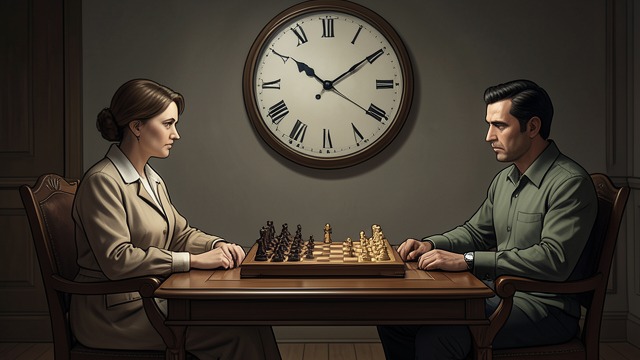
A Child Questions the Future
Clare tests what Henry knows
During a chess game, Clare asks Henry whether she will marry and whether he loves his wife. Henry answers carefully, revealing enough to unsettle her without giving a full account of their future.
Knowledge shapes desire
The conversation makes Clare’s future feel already occupied. She learns that Henry’s knowledge can comfort her, but it can also limit her sense that her life belongs to her.
The Tape Analogy
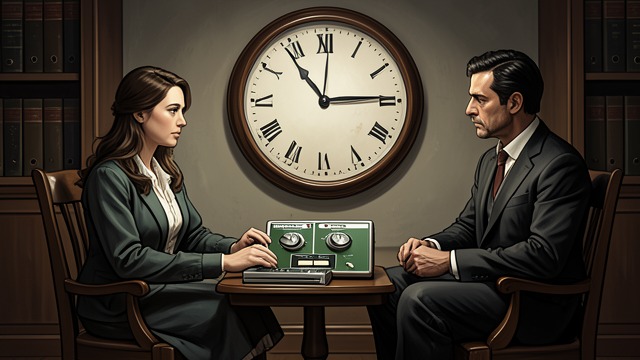
The Tape Analogy
A simple model for displacement
Henry explains time travel to young Clare by comparing her life to a tape played in sequence and his to a recording repeatedly rewound and advanced. The analogy helps her grasp his confusion about dates.
Understanding cannot create control
The explanation clarifies why Henry sometimes does not know where he is. It does not give him command of his route, and Clare begins learning that affection cannot make his condition orderly.
The Argument Over Free Will

The Argument Over Free Will
Small choices and large systems
Henry and Clare debate determinism, chaos, and God while sharing coffee in the meadow. Clare points out that even ordinary preferences feel changed when Henry tells her what she will like.
Meaning remains unresolved
Henry thinks events may already be fixed, while Clare wants a universe in which choices and divine purpose can coexist. Neither wins the argument, but their disagreement gives emotional weight to the problem of living without certainty.
The Past Cannot Be Rewritten

The Past Cannot Be Rewritten
A failed warning
Henry’s older self cannot prevent his younger self from being discovered by their father. He explains that his presence in the past has not given him the power to alter what has already happened.
Responsibility persists
The conversation suggests that Henry must still behave as though his actions matter, even when he cannot change the larger sequence. The rule is emotionally unsatisfying but necessary for living with consequences.
Living in the Present

Living in the Present
A warning against foreknowledge
Henry tells Gomez that knowing the future can make a person feel trapped, since events cannot simply be changed by learning about them early. He withholds details even when Gomez asks directly.
The present as a space of action
Henry argues that people can act freely while they are in their own present, even if time travel makes past and future seem fixed. The idea becomes a practical discipline rather than a complete solution.
April 12, 1984
September 29, 1977
September 23, 1984
December 10, 1978
December 22, 1991
